内页banner

Blog

Home

Blog

  • GRP FRP manhole cover choices for safer streets
    GRP FRP manhole cover choices for safer streets Jun 30, 2026
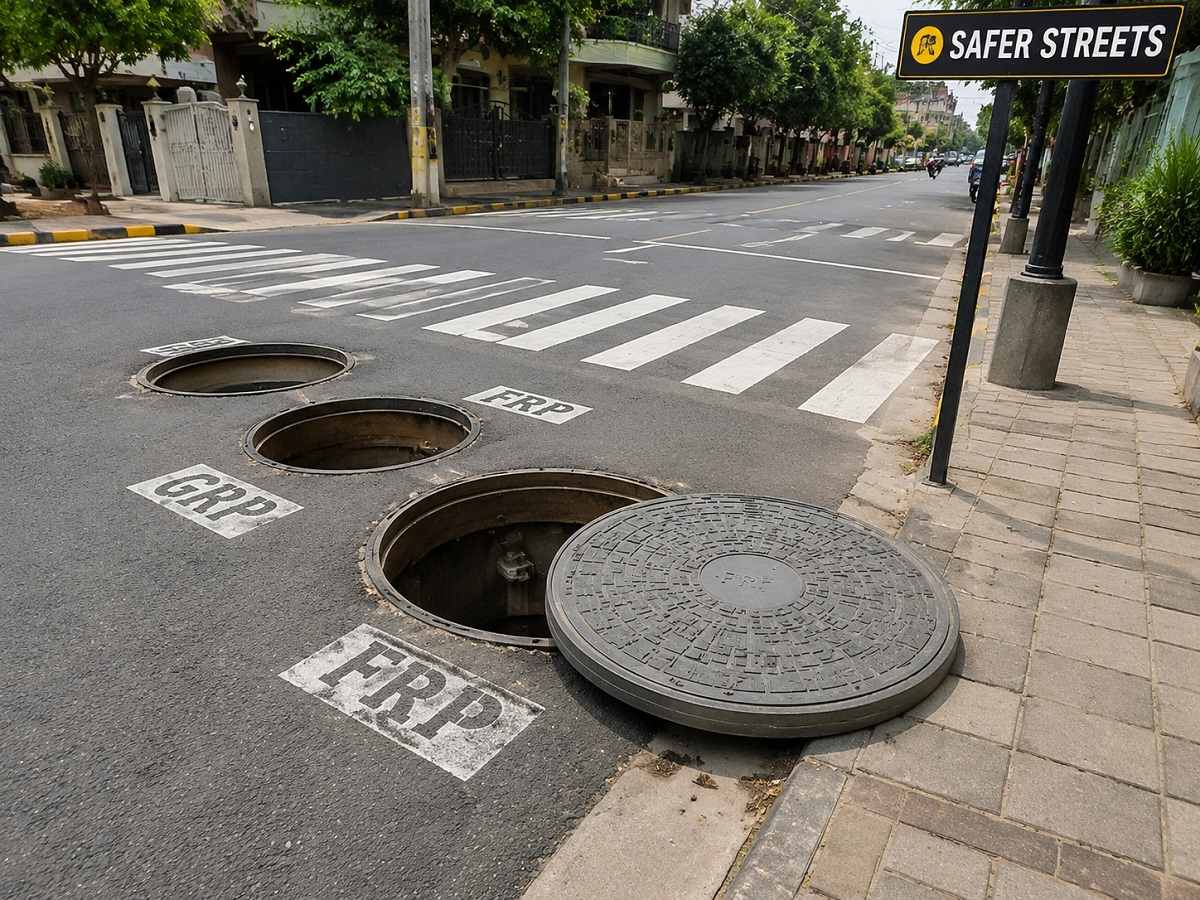
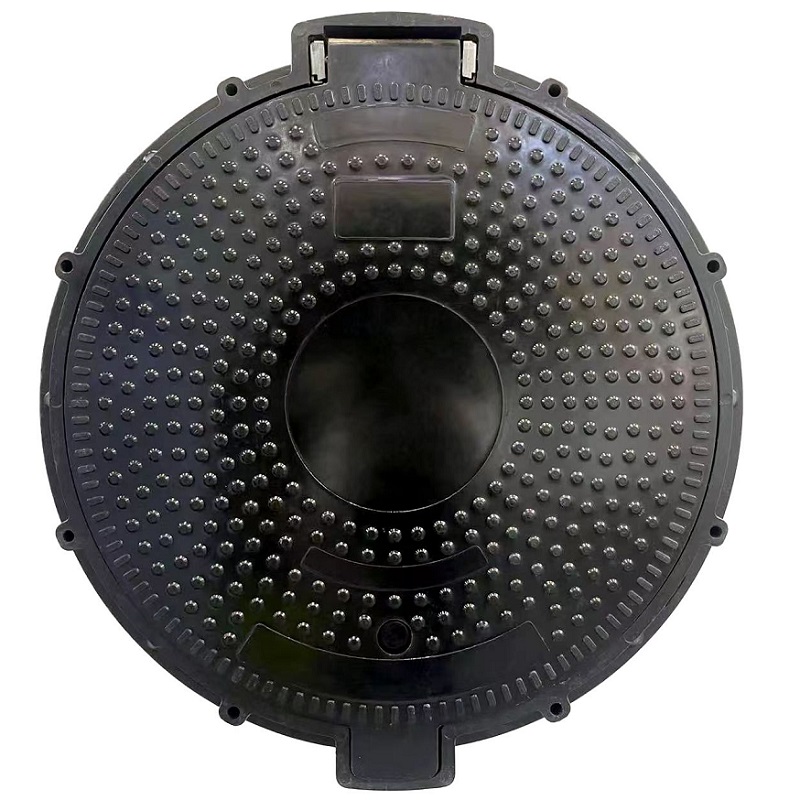
    Street safety depends on reliable infrastructure. Cities now choose the GRP FRP manhole cover for strength, corrosion resistance, and theft prevention. FEILONG’s φ700*70 EN124 Composite Manhole Cover sets a new standard in durability and ergonomic handling, ensuring urban environments remain safe for both pedestrians and vehicles.   What is a GRP FRP manhole cover?   Material overview   A GRP FRP manhole cover uses advanced composite materials to deliver superior performance in urban infrastructure. GRP stands for Glass Reinforced Plastic, while FRP means Fiberglass Reinforced Plastic. Both materials combine glass fibers with a polymer resin, creating a strong and lightweight structure. Manufacturers mold these materials into covers and frames that fit a variety of applications. The result is a product that resists corrosion, handles heavy loads, and maintains its shape over time. Many cities now choose a GRP FRP manhole cover for its durability and efficiency. Products like the 700Mm Grp Manhole Cover and the Round Fiberglass Manhole Cover demonstrate the versatility of these composites. The composite manhole cover also allows for customization in size, color, and surface texture.   Safety relevance   Safety remains a top priority for any street or public space. The GRP FRP manhole cover offers several features that enhance safety. Its non-slip surface reduces the risk of slips and falls, especially in wet conditions. The lightweight design allows workers to lift and install covers without heavy machinery, lowering the chance of workplace injuries. These covers resist theft because they have no scrap value, unlike metal alternatives. Their corrosion resistance ensures long-term reliability, even in harsh environments. Cities benefit from fewer replacements and less maintenance, which keeps streets safer for everyone.   Types and features   Load classes and uses   A GRP FRP manhole cover comes in several load classes, each designed for specific environments.   A15: Suitable for pedestrian walkways, parks, and green areas. B125: Used in driveways, parking lots, and areas with light vehicle traffic. C250: Ideal for curbside drainage and areas with moderate traffic. D400: Built for roads, highways, and locations with heavy vehicles.   The 700Mm Grp Manhole Cover meets a wide range of these classes, making it adaptable for both new projects and replacements. Engineers select the right load class based on expected traffic and site requirements.   Surface and anti-slip   Safety on streets depends on surface design. Most covers, including the Round Fiberglass Manhole Cover, feature textured or patterned surfaces. These designs provide excellent grip, reducing the risk of slips in wet or oily conditions.   Note: Anti-slip surfaces help prevent accidents for both pedestrians and workers during installation.   Customizable options allow cities to choose colors and textures that match their environment or branding.   Frame options   Frame design affects installation and long-term performance. Composite Manhole Cover frames come in various shapes and sizes to fit different chambers.   Round frames offer easy alignment and sealing. Square or rectangular frames suit specific site layouts.   Manufacturers like FEILONG provide frames that match existing infrastructure, ensuring a secure fit and reliable performance.   Benefits for safer streets     Strength and durability   A GRP FRP manhole cover provides exceptional strength for urban infrastructure. Engineers design these covers to withstand heavy loads and constant traffic. The composite structure resists cracking and deformation, even under challenging conditions. Products like the 700Mm Grp Manhole Cover demonstrate long service life, often lasting up to two decades. This durability reduces the need for frequent replacements, which helps cities maintain safer streets with less disruption.   Corrosion and theft resistance   Composite materials offer superior resistance to corrosion. Rain, chemicals, and road salts do not affect the integrity of a Round Fiberglass Manhole Cover. Unlike metal covers, these products do not rust or deteriorate over time. The lack of scrap value also deters theft, which remains a common issue with traditional metal covers. Cities benefit from fewer replacements and reduced risk of open or missing covers, which improves public safety.   Lightweight handling   A Composite Manhole Cover weighs much less than a cast iron alternative. Workers can lift and install these covers without mechanical equipment. This ergonomic advantage lowers the risk of back injuries and speeds up maintenance tasks. The lightweight design also simplifies transportation and storage. FEILONG’s covers meet international certifications such as ISO9001 and CE, which ensures consistent quality and safety standards.   Tip: Lightweight covers help maintenance teams respond quickly to emergencies, keeping streets safe and accessible.   Choosing the right GRP FRP manhole cover   Assessing site needs   Selecting the correct GRP FRP manhole cover starts with a careful evaluation of the installation site. Engineers must consider the type and volume of traffic that will pass over the cover. For pedestrian zones, a cover with an A15 load class often provides sufficient strength. Areas with light vehicle movement, such as parking lots, require a B125 load class. Streets with moderate or heavy traffic need C250 or D400 covers. Environmental factors also play a role. Locations exposed to chemicals, saltwater, or extreme weather benefit from the corrosion resistance of composite materials. The size and shape of the chamber opening must match the cover and frame. Customizable options, such as those available for the 700Mm Grp Manhole Cover, allow for a precise fit in both new and replacement projects.   Tip: Always measure the clear opening and frame dimensions before ordering to ensure compatibility and safety.   Safety standards   Compliance with safety standards ensures reliable performance and public protection. International certifications, such as ISO9001 and CE, indicate that the product meets strict quality and safety requirements. Local regulations may specify minimum load classes or anti-slip surface ratings. Engineers should verify that the selected cover meets or exceeds these standards. The Round Fiberglass Manhole Cover, for example, features a textured surface that reduces slip hazards in wet conditions. Proper labeling and traceability also help with future inspections and maintenance. Choosing certified products demonstrates a commitment to safety and regulatory compliance.   Check for EN124 or equivalent certification. Confirm anti-slip surface requirements. Ensure the product includes clear identification marks.   Maintenance and value   Long-term value depends on durability, ease of maintenance, and total lifecycle cost. A Composite Manhole Cover resists corrosion and does not rust, even in harsh environments. This feature reduces the need for frequent replacements and lowers maintenance expenses. The lightweight design allows workers to handle and install covers without special equipment, which minimizes labor costs and reduces the risk of injury. Many covers, such as the GRP FRP manhole cover, offer a service life of up to twenty years. Customization options, including color and logo, add value for municipalities and utility companies. Over time, the initial investment pays off through reduced downtime, fewer replacements, and improved safety.   Note: Investing in high-quality composite covers supports sustainable infrastructure and delivers cost savings over the product’s lifespan.   Comparison table of options   Selecting the right GRP FRP manhole cover requires a clear understanding of available options. Engineers and city planners often compare covers based on their features, load capacity, and safety enhancements. The table below outlines the main characteristics of popular types, including the Round Fiberglass Manhole Cover, 700Mm Grp Manhole Cover, and Composite Manhole Cover.   Product Type Load Class Range Surface Feature Frame Compatibility Safety Benefit Typical Application Round Fiberglass Manhole Cover A15–D400 Anti-slip textured Round, square Corrosion and theft resistant Urban streets, sidewalks 700Mm Grp Manhole Cover A15–D400 Customizable finish Multiple shapes Lightweight, easy handling Driveways, car parks Composite Manhole Cover A15–D400 Patterned surface Custom sizes Long service life Utility chambers, parks Note: All options in the table meet international safety standards and offer customizable features to suit different site requirements.   City planners should review the table to match product features with project needs. The anti-slip surface on each cover type improves pedestrian safety. Lightweight construction allows for easier installation and maintenance. Corrosion resistance ensures long-term performance, even in challenging environments. These covers support sustainable infrastructure by reducing replacement frequency and minimizing maintenance costs.   Careful comparison helps decision-makers select the most effective solution for safer streets and reliable infrastructure.       A GRP FRP manhole cover improves street safety through strength, corrosion resistance, and theft prevention. Decision-makers should match cover features to site needs and safety standards. Certified, customizable solutions deliver reliable performance. For best results, they should consult industry experts or suppliers for tailored recommendations.   FAQ What makes a Composite Manhole Cover safer than traditional options? Composite Manhole Covers resist corrosion and theft. Workers handle them easily due to their lightweight design. Cities benefit from improved safety and reduced maintenance.   Where can engineers use a 700Mm Grp Manhole Cover? Engineers install the 700Mm Grp Manhole Cover in driveways, car parks, and areas with slow-moving heavy traffic. Its load class range suits multiple urban applications.   How does a Round Fiberglass Manhole Cover prevent accidents? The anti-slip surface on a Round Fiberglass Manhole Cover reduces slip risks for pedestrians and workers. Textured patterns enhance grip in wet or oily conditions.
  • What Are the Standard Weights and Materials for Manhole Covers in 2026
    What Are the Standard Weights and Materials for Manhole Covers in 2026 Jun 25, 2026
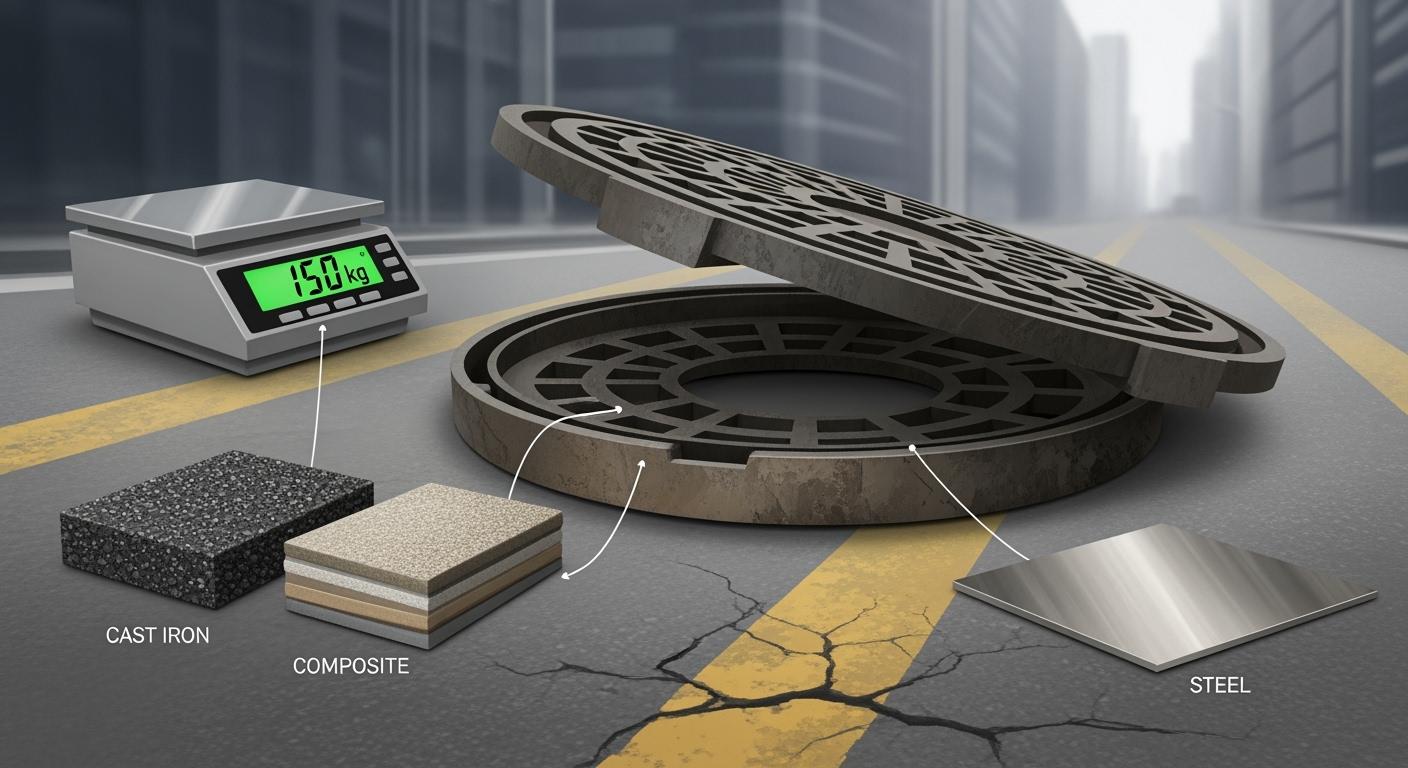
    When you ask what is a manhole cover, you need to consider both weight and material. In 2026, most manhole covers use cast iron, duct iron, or composite materials. The table below shows standard weight ranges by type and diameter: Type of Manhole Cover Diameter Weight Range Composite 18 in 15 – 30 lbs Composite 24 in 30 – 55 lbs Composite 30 in 50 – 70 lbs Composite 36 in 65 – 90 lbs Cast Iron 18 in 80 – 130 lbs Cast Iron 24 in 150 – 275 lbs Cast Iron 30 in 240 – 375 lbs Cast Iron 36 in 340 – 500 lbs Mild Steel 24 in 35 – 70 lbs Mild Steel 30 in 70 – 100 lbs Mild Steel 36 in 110 – 150 lbs Galvanized Steel 24 in 40 – 80 lbs Galvanized Steel 30 in 80 – 120 lbs Galvanized Steel 36 in 120 – 160 lbs You see cast iron dominating where strength matters, while composite covers suit lighter, low-traffic placements. Knowing what is a manhole cover and its material helps you match the right product to your site. Standards exist to protect safety and durability. These requirements prevent accidents, lengthen infrastructure life, and shield utilities from damage. Cast iron: strong, handles heavy loads. Duct iron: lighter, resists cracking. Composite: light, corrosion-resistant. Always follow local standards when selecting a manhole cover to keep your project safe and compliant.   Key Takeaways Manhole covers come in various materials like cast iron, ductile iron, and composite. Each material has unique properties that affect weight and performance. Weight standards for manhole covers vary by type and application. Cast iron covers are heavier and suited for high-traffic areas, while composite covers are lighter and ideal for low-traffic locations. Always match the manhole cover's load rating to its intended use. For roads, an H-20 rating is standard, while lighter ratings are suitable for sidewalks and green spaces. Local regulations dictate minimum weight and load capacity for manhole covers. Always verify compliance to ensure safety and avoid penalties. Trends in 2026 show a shift towards sustainable materials and smart technology in manhole covers, enhancing safety and reducing maintenance costs.   Manhole Cover Weight Standards How Much Does a Manhole Cover Weigh? You often ask how much does a manhole cover weigh when planning a project. The answer depends on the material, diameter, and load class. Standard cast iron manhole cover options weigh much more than composite or steel covers. You see standard round manhole covers in cast iron ranging from 80 to 500 lbs, while composite covers weigh between 15 and 90 lbs. Steel covers fall in the middle, and FRP covers offer lightweight alternatives. Square manhole covers may weigh slightly more due to their shape and reinforcement. Here is a quick summary of typical weight ranges for manhole covers by material: Material Typical Weight Range (24 in) Cast Iron 150 – 275 lbs Composite 30 – 55 lbs Mild Steel 35 – 70 lbs FRP (Fiberglass) 25 – 50 lbs You must consider the weight of a manhole cover for installation and maintenance. Heavy-duty manhole covers require special handling equipment. Lightweight composite covers allow easier access and reduce labor costs. Feilong offers a wide range of manhole covers to suit every weight and load class requirement.   Load Ratings & Weight Classes Manhole cover weight standards rely on load ratings and load class. You need to match the load class to the expected traffic and application. The most common load rating systems in 2026 include H-20, H-25, and EN124. These standards define the minimum load a manhole cover must withstand. Load Rating Axle Weight Wheel Weight Application H-20 32,000 lbs 16,000 lbs Minimum for road installations H-25 40,000 lbs 20,000 lbs Heavy industrial roads, ports, container yards You select an H-20 load rating for most road installations. This rating ensures the manhole cover weight and structure can handle a 32,000 lb axle load. For heavy-duty manhole covers in industrial areas, you choose H-25 load class. EN124 defines load classes from A to F, covering pedestrian to special applications. Load Class Description Minimum Compressive Test Load Class A Pedestrian areas 1.5 kN Class B Light vehicular areas 5 kN Class C Medium vehicular areas 12 kN Class D Heavy vehicular areas 25 kN Class E Very heavy vehicular areas 40 kN Class F Special applications 60 kN You must always check the standard specification for manhole cover standards before selecting a product. The right load class prevents premature failure and ensures safety.   Minimum Weight Requirements You need to understand minimum weight requirements for manhole covers and rings. According to 2026 standards, manhole covers with an H-20 load rating must withstand a proof load of 40,000 lbs. This requirement gives you a safety margin above the design load of 16,000 lbs, which matches a standard 20-ton truck. The minimum combined weight of a manhole cover and ring ensures the structure resists deformation and cracking under traffic. You find that cast iron manhole covers meet these requirements for most urban roads. Composite and FRP covers suit lighter applications but must still comply with the minimum load class. Local regulations may set higher standards for critical infrastructure. Feilong engineers design manhole covers to exceed these minimums, giving you peace of mind and long-term durability. Always verify the weight of a manhole cover and its load class before installation. You protect your project and ensure compliance with manhole cover standards.   Types of Manhole Covers and Materials When you consider what is manhole cover made of, you find several main types in 2026. Each material brings unique properties that affect performance, weight, and cost. Understanding the types of manhole covers helps you select the right solution for your project.   Cast Iron and Ductile Iron Cast iron manhole covers remain a popular choice for many urban and industrial settings. You see these covers where strength and durability matter most. Ductile iron manhole covers offer improved flexibility and shock resistance, making them ideal for high-traffic areas. Feilong, a leader in the industry, manufactures both cast iron and ductile iron covers that meet strict standards. Feature Cast Iron Manhole Covers Ductile Iron Manhole Covers Corrosion Resistance Non-corrosive but limited in harsh environments Very high resistance to corrosion Strength Sturdier but brittle, limited impact resistance Strong, flexible, and shock-resistant Weight Heavier, making transport and installation harder Lighter, easier to transport and install Cost Generally cheaper to produce and distribute More expensive due to advanced manufacturing process Best Use Areas Suitable for moderate environments Ideal for busy areas like highways and airports You benefit from the high load capacity of these manhole cover types, but you must consider the extra weight and handling needs.   Composite and FRP Covers Composite manhole cover options have grown rapidly from 2020 to 2026. You now see these covers in more municipal and commercial projects. FRP (Fiberglass Reinforced Plastic) covers, a type of composite, offer lightweight, rust-resistant solutions. Advantages of Composite Manhole Covers Traditional Materials Limitations Lightweight with high load-bearing capacity Heavy weight Excellent corrosion and chemical resistance Corrosion risks Non-conductive and anti-theft properties High transportation costs Stable quality and repeatable production   Lighter weight: Composite covers can be up to 70% lighter than ductile iron. Corrosion resistance: Composites do not rust, reducing maintenance. Non-conductive: Safe for use near electrical utilities. Low theft incentive: No scrap value, so fewer thefts. Safer surfaces: Molded anti-slip textures improve safety. Lower total cost of ownership: Less maintenance and fewer replacements. Higher initial cost: You may pay more upfront. Limited awareness: Some users still prefer traditional types. The growing use of FRP manhole covers improves safety and reduces maintenance. You reduce worker strain and avoid theft risks. Feilong leads the market with advanced composite and FRP covers designed for modern infrastructure.   Steel Manhole Covers Steel manhole cover products offer a balance between strength and design. You often choose these covers for facilities that require both durability and a modern look. Advantages Disadvantages Long lasting More costly to produce compared to cast iron or concrete Visually appealing due to contemporary design   Durable structure   Suitable for facilities requiring functionality and perception   You find steel covers in commercial complexes and areas where aesthetics matter.   Pros and Cons of Each Type You need to compare the main manhole cover types to make the best choice: Material Weight (kg) Durability Cost Cast Iron 75 Medium Cheaper Ductile Iron 80 High Moderate Stainless Steel N/A Very High More Expensive Fiberglass 50 High Middle-range Concrete 100 Medium Affordable Concrete manhole covers remain an affordable option for low-traffic areas, but you face challenges with their weight and installation. You see that manhole cover types like composite and FRP now dominate where lightweight, corrosion resistance, and safety matter most. When you ask what is manhole cover made of, you must consider the application, weight, and long-term costs. Feilong continues to innovate across all types of manhole covers, offering solutions for every need.   Factors Affecting Manhole Cover Weight Size and Shape You must consider size and shape when selecting manhole covers for your project. Larger covers require more material, which increases their weight and enhances their load-bearing capacity. The thickness of a manhole cover also plays a critical role in supporting heavy vehicles. Round covers remain the most common choice because they cannot fall through their openings, providing extra safety. The shape affects how well the cover fits and functions in different environments. You see round covers in sizes like 18, 24, and 30 inches, while square or rectangular covers are used for specialized access points. Shape Common Sizes (mm) Common Sizes (inches) Round 450, 600, 750 18, 24, 30 Square/Rectangular 300x300, 400x400, 900x900 N/A   Application and Load Needs The application determines the required load and capacity for manhole covers. You must match the cover to the expected traffic and environment. Roadways demand heavy-duty manhole covers with high load ratings, such as H-20, to withstand vehicle traffic. Sidewalks and green spaces require lighter covers, but you must ensure they can handle occasional maintenance vehicles. Interior mechanical rooms and building vaults need covers designed for foot traffic and equipment loads. The load-bearing capacity must align with the application to prevent premature failure. Application Type Required Load Rating Notes Roadways H-20 Minimum requirement for any cover in or adjacent to traveled roadways. Sidewalks or pedestrian access Light/Medium Duty Suitable unless vehicles can mount the curb. Interior mechanical rooms/building vaults Foot traffic only Designed for foot traffic and equipment loads. Green spaces Light Duty Adequate unless maintenance vehicles cross the cover. Load Class Typical Application A15 Pedestrian areas, gardens, and light foot traffic zones B125 Sidewalks, pedestrian streets, and small parking areas C250 Kerbside areas, road shoulders, and light traffic zones D400 Main roads, carriageways, and heavy vehicle traffic areas E600 Industrial yards, docks, and heavy-duty working areas F900 Airports, ports, and extreme load environments You protect your infrastructure by choosing manhole covers with the right load-bearing capacity for each application. Feilong engineers design covers to meet these demands, ensuring safety and durability.   Local Regulations Local regulations set minimum standards for manhole cover weight and load capacity. You must comply with these rules to avoid penalties and ensure public safety. Regulations specify the minimum load a cover must withstand, often based on traffic patterns and environmental conditions. You find that urban areas require heavy-duty manhole covers, while rural or low-traffic zones allow lighter options. Feilong provides covers that meet or exceed local standards, helping you achieve compliance and long-term reliability. Always check local codes before installation. You ensure your manhole covers meet all requirements and deliver lasting performance.   Choosing the Right Manhole Cover Matching Weight to Application Selecting the right manhole covers for your project starts with understanding the application. You need to confirm the load rating from your project drawings. For municipal roadway applications, you must use H-20 as the minimum standard. Sidewalks or non-traffic areas can use lighter ratings. The material matters as well. Cast iron works best for traditional service, while composite covers offer corrosion resistance. Steel covers suit non-traffic access points. You should choose round covers for roadways and square or rectangular shapes for vaults. Always verify the clear opening dimension to ensure compatibility. Include all necessary accessories in your submittal to avoid costly change orders. When heavy vehicles like buses or trucks pass over a cover, the pressure can cause movement or even open a hole in the road. This creates hazards for both pedestrians and vehicles. Lightweight covers are easier to tamper with or steal, which increases accident risk. You should always select load-rated and weight-appropriate covers for safety and compliance.   Balancing Cost, Durability, and Compliance You must balance cost, durability, and compliance when choosing manhole covers. Start by evaluating material performance. Cast iron provides strength for heavy-duty manhole covers in high-traffic zones. Composite materials reduce weight and resist corrosion, making them ideal for lighter uses. Design features like anti-slip surfaces and secure fastening improve safety and help you meet regulations. Compliance with standards such as EN 124 and AASHTO ensures durability and reduces future costs from accidents or replacements. Feilong offers a range of covers that meet these requirements, giving you reliable options for every project. Trends in Manhole Covers for 2026 In 2026, you see a shift toward sustainable and durable materials. Ductile iron and composite covers are popular for their long service life. The market values longevity to lower maintenance costs. Enhanced grip designs and reflective elements improve safety in urban areas. Aesthetic appeal matters more, with custom designs reflecting local culture. Smart technology features, such as locking mechanisms and sensors, are becoming standard. Compliance with load ratings remains critical, as many regions enforce strict standards to protect public safety. Feilong leads with innovative solutions that address these trends and help you meet every project requirement.   You now understand the standard weights and materials for manhole covers in 2026. Feilong offers solutions that help you meet safety and durability requirements. Always match the manhole cover to your application and follow local regulations. Monroe County provides detailed resources for specifications and selection criteria, ensuring you stay compliant. Review these documents before starting your project to avoid costly mistakes.   FAQ What is the most common material for manhole covers in 2026? You see cast iron as the most common material for manhole covers. It provides excellent strength and durability for urban and industrial environments. How do you choose the right manhole cover weight? You match the cover weight to the expected traffic and application. Heavier covers suit roads and highways. Lightweight options work best for sidewalks and green spaces. Are composite manhole covers safe for heavy traffic? Composite covers can handle heavy loads if you select the correct load rating. Always check the manufacturer’s specifications and local standards before installation. Where can you find reliable manhole covers? You can find reliable manhole covers from trusted brands like Feilong. They offer a wide range of products that meet international standards and local regulations.
  • Are Composite Manhole Covers and Frames Safer Than Iron Ones?
    Are Composite Manhole Covers and Frames Safer Than Iron Ones? Jun 15, 2026
    You can rely on Composite Manhole Covers and frames manhole cover for improved safety in public spaces and work environments. Composite materials offer lightweight design, corrosion resistance, and durability. These features protect workers from lifting injuries and prevent rust-related failures. Molded anti-slip surfaces ensure safer pedestrian access, even during wet conditions. Key Takeaways Composite manhole covers are lightweight and easy to handle, reducing the risk of worker injuries during installation and maintenance. These covers resist corrosion and theft, making them safer and more durable for public infrastructure compared to traditional iron covers. Composite materials provide superior slip resistance, ensuring safer pedestrian access in wet conditions, which enhances public safety. Composite Manhole Covers and Frames Overview What Is a Composite Manhole Cover? You encounter composite manhole covers in many modern infrastructure projects. These covers use advanced materials to deliver safety and performance. Unlike traditional options, composite manhole covers rely on a blend of engineered materials that include resin, fiberglass, and polyethylene. You benefit from their lightweight design, which makes handling and installation much easier. These covers offer a secure fit, helping you keep contaminants out of sewer or stormwater systems. Their non-conductive nature also protects you in environments with electrical or communication lines. Materials and Key Properties You should understand the importance of materials when selecting manhole cover materials. The right materials ensure safety, durability, and ease of use. Here is a table that highlights the main materials used in composite manhole covers and frames, along with their benefits and safety contributions: Material Benefits Contribution to Safety Fiberglass Resistant to corrosion, lightweight, strong enough for substantial loads Reduces risk of injuries during installation and maintenance Resin Provides a longer lifespan in corrosive environments Prevents corrosion that can weaken covers Polyethylene Lightweight and durable Easier handling reduces back injuries Composite manhole covers feature several key physical properties. Their lightweight nature means you can move and install them with less effort, reducing the risk of back injuries. The high strength-to-weight ratio of these materials ensures durability while keeping the covers easy to handle. Corrosion resistance makes these covers ideal for harsh environments, such as sewer systems exposed to chemicals or saltwater. You also gain safety from their non-conductive and non-magnetic properties, which are essential for electrical and communication infrastructure. The ability to engineer these materials for specific load-bearing needs further enhances safety and reliability. Safety Comparison: Composite vs. Iron Manhole Covers   Strength and Load Capacity You need to consider strength and load capacity when selecting covers for stormwater systems or stormwater manholes. Composite manhole covers and frames manhole cover products, such as the CO Dia 600*100 EN124 D400 GRP SMC Composite Manhole Cover and Frame Direct Sale, meet international standards for a wide range of load classes. According to EN 124, composite covers support classes from A15 to C250, making them suitable for lighter to medium loads. Traditional iron covers, on the other hand, cover a broader range, from A15 to F900, and can handle very heavy loads, such as those found in airports or freight terminals. Material Type EN 124 Load Class Range Description of Load Capacity Composite Covers A15 to C250 Suitable for lighter to medium loads Cast Iron Covers A15 to F900 Suitable for light to very heavy loads Field studies show that composite manhole covers and frames manhole cover solutions resist fatigue cracking and edge chipping better than iron in many municipal applications. While iron covers may suffer from corrosion and impact stress, composites maintain their structural integrity, especially in harsh environments. Material Failure Mechanisms Cast Iron Fatigue cracking, edge chipping, corrosion weakening Composite UV degradation (low-grade), resin fatigue, improper installation Slip Resistance and Surface Safety You want to ensure public safety and security, especially in areas with high pedestrian traffic. Composite manhole covers and frames manhole cover products, including Composite Gully Channel Trench Gratings, feature engineered anti-slip surfaces. These surfaces provide superior slip resistance compared to untreated traditional iron covers, which can become slick and hazardous when wet. Feature FRP Manhole Covers Cast Iron Covers Anti-slip properties Superior, effectively prevents slipping Generally less effective Corrosion resistance Excellent, not prone to rust Prone to rust Weight Lightweight, easier to handle Heavier Maintenance frequency Lower, longer service life Higher, more frequent You reduce the risk of accidents and injuries by choosing composite solutions for stormwater systems, especially in public walkways and busy intersections. Theft and Tampering Risks You face significant risks of theft with traditional iron covers due to their scrap value. Major cities have reported thousands of stolen iron covers, leading to dangerous open manholes and increased maintenance costs: In Beijing, China, approximately 240,000 manhole and street-drain covers were stolen in 2004. In Kolkata, India, over 10,000 manhole covers were stolen within two months in 2004. In Newham, East London, nearly 200 grates and covers were reported stolen in 2004. Ajax and Niagara Falls, Ontario, experienced dozens of manhole cover thefts in March and April 2012. Chatham County, Georgia, reported 30 manhole covers stolen in a single day in December 2021. Composite manhole covers and frames manhole cover products have no scrap value, which greatly reduces theft and tampering risks. This feature enhances safety and security for both the public and utility workers. Corrosion and Longevity You need covers that withstand harsh environments, especially in stormwater systems exposed to chemicals, saltwater, or hydrogen sulfide. Composite manhole covers and frames manhole cover solutions offer superior durability and longevity compared to traditional iron covers. Composite manhole covers have a significantly longer lifespan than metal covers. Metal covers are susceptible to rust and corrosion, requiring frequent replacement. Composite materials maintain their integrity for decades. Composite systems are corrosion-free, which enhances their longevity in corrosive environments. Corrosion in iron covers leads to rust, surface degradation, and structural weakening. Composite covers, especially those made from fiberglass reinforced plastic, resist corrosion and require less maintenance. This resistance results in lower maintenance needs and a longer service life, making them ideal for stormwater systems and municipal infrastructure. Electrical and Thermal Safety You must consider electrical and thermal safety, especially when covers are installed near electrical or communication lines. Composite manhole covers and frames manhole cover products are non-conductive and non-sparking, which protects workers and the public from electrical hazards. Feature Composite Manhole Covers Iron Manhole Covers Electrical Conductivity Non-Conductive Conductive Safety in Electrical Hazards Enhanced Lower Heat Transfer Reduced Standard Non-conductive properties make composite covers safe for electrical utilities and stormwater systems with integrated sensors. You also avoid the risk of sparking, which is crucial in environments with flammable gases. Installation and Handling Safety You improve worker safety and efficiency by choosing composite manhole covers and frames manhole cover solutions. Composite covers are lightweight, which reduces the risk of back injuries and fatigue during installation and maintenance. According to industry reports, handling heavy iron covers is a leading cause of workplace injuries in the utility sector. Composite manhole covers are significantly lighter than iron covers, making them easier to handle and reducing the risk of workplace injuries during installation and maintenance. The lighter weight of composite manhole covers reduces the risk of back injuries and fatigue for workers. Compliance with occupational safety regulations is supported, leading to lower injury-related costs for municipalities and contractors. Faster handling of lighter covers increases productivity, allowing crews to complete more maintenance tasks in less time, which is crucial in high-traffic areas. Installation of lightweight access covers eliminates the need for cranes and extra crew, allowing for quicker and safer handling. This efficiency frees up labor and equipment for other tasks, enhancing overall job site productivity and reducing workers' compensation risks. Back strain injuries from traditional manhole covers can cost utility operations between $700,000 to over $1,000,000 annually, with each incident averaging $70,000. The reduced weight of composite covers leads to lower injury rates, creating a safer and more cost-efficient work environment. You can see these benefits in products like the People Passby Light Weight FRP Composite Gully Channel Trench Gratings, which are designed for easy installation and safe handling. Maintenance and Lifecycle You want to minimize maintenance and maximize the service life of your infrastructure. Composite manhole covers and frames manhole cover solutions require less maintenance than traditional iron covers. Over a 10-year period, you will find that composites offer a maintenance-free experience, with no rusting or pollution. Feature Composite Manhole Cover Cast Iron Manhole Cover Maintenance Requirements Maintenance free, no rusting, no pollution Requires regular maintenance, prone to rusting Service Life 20-50 years 5-10 years Corrosion Resistance High resistance to corrosion Moderate resistance, can corrode over time Theft Resistance Anti-theft properties, no recycling value Prone to theft due to material value Customization Customizable patterns and designs Limited customization options You should regularly check for debris, cracks, or damage, and verify that the structure is sound and securely connected. However, composite covers require fewer interventions, which reduces manhole maintenance costs and disruptions to stormwater systems. When you factor in lifecycle costs, composite manhole covers and frames manhole cover solutions offer clear advantages: Factor Composite Manhole Covers Cast Iron Manhole Covers Replacement Frequency 20–50 years 5–10 years Maintenance Costs No painting, no rust Requires regular upkeep Theft Replacement Costs Lower risk Higher loss rates Worker Injury Costs Fewer handling injuries More handling injuries Transport Efficiency 3–4× more per truck load Less efficient You benefit from no corrosion maintenance, fewer injuries, reduced theft risk, and extended service life. Composite manhole covers and frames manhole cover products, such as the CO Dia 600*100 EN124 D400 GRP SMC Composite Manhole cover and Frame in Round Shape Manufacturer Direct Sale, deliver durability and longevity for stormwater systems and public infrastructure. Composite covers are often touted for their environmental benefits. They are typically made from recyclable materials and require less energy to produce than iron or steel covers. Additionally, their lighter weight reduces transportation costs and associated carbon emissions. Summary Table: Safety Aspects Comparison Safety Aspect Composite Manhole Covers and Frames Manhole Cover Traditional Iron Covers Strength & Load Medium to heavy loads, high durability Light to very heavy loads, can corrode Slip Resistance Superior, anti-slip surface Less effective, can be slippery Theft Risk Very low, no scrap value High, valuable for scrap Corrosion Resistance Excellent, no rust Prone to rust and corrosion Electrical Safety Non-conductive, non-sparking Conductive, sparking risk Installation Safety Lightweight, easy to handle Heavy, injury risk Maintenance Minimal, long service life Frequent, shorter service life Environmental Impact Sustainable, recyclable Higher carbon footprint You can see that composite manhole covers and frames manhole cover solutions provide clear advantages in safety and security, durability and longevity, and maintenance for stormwater systems and public safety. By choosing advanced GRP/composite products, you ensure reliable performance, reduced risks, and lower long-term costs for your infrastructure.   You gain superior safety with composite manhole covers and frames. Their corrosion resistance, theft-proof design, and lightweight handling make them ideal for: Wastewater and drainage systems Telecom access chambers Coastal, industrial, and public spaces You improve worker safety and reduce maintenance costs by choosing composites for demanding environments. FAQ How do composite manhole covers improve safety in stormwater systems? You gain safer access to stormwater manholes because composite manhole covers resist corrosion, reduce theft, and offer slip-resistant surfaces. Workers handle them easily, lowering injury risks. Can you use composite manhole covers in sewer environments? You can install composite manhole covers in sewer manholes. These covers resist chemicals and moisture, ensuring long-lasting performance and reducing maintenance needs in harsh sewer conditions. Are composite manhole covers part of eco-friendly practices? You support eco-friendly practices when you choose composite manhole covers. Their lightweight design reduces transport emissions, and many covers use recyclable materials for sustainable stormwater and sewer solutions.
  • What Makes Gully Grating So Important for Roads?
    What Makes Gully Grating So Important for Roads? Jun 08, 2026
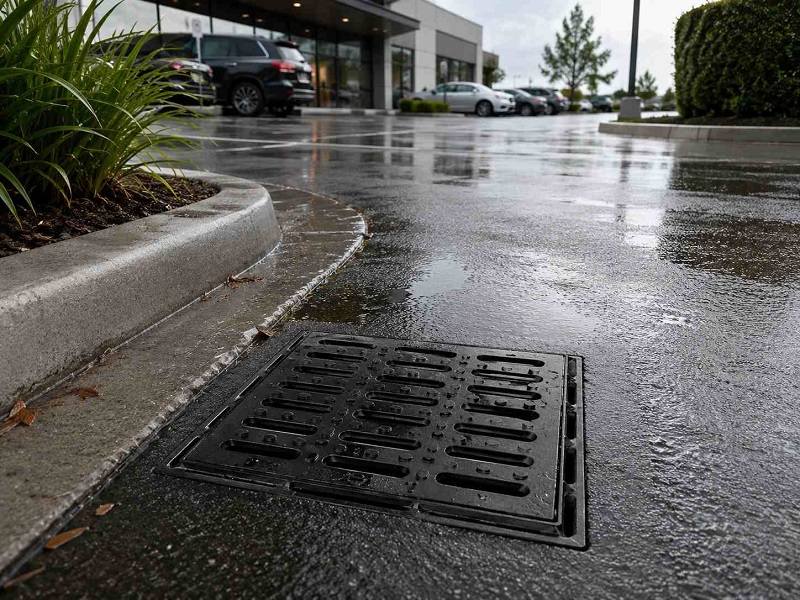
      Gully Grating plays a crucial role in ensuring road safety and long-term durability. Heavy duty options, such as FEILONG’s D400 model, provide reliable drainage and structural support for roads exposed to intense traffic. These solutions help prevent hazards and maintain smooth operation in modern infrastructure projects.   Gully Grating and Road Safety   Accident Prevention   Road safety depends on effective drainage systems. Gully grating plays a vital role in preventing accidents by allowing water to drain quickly from the road surface. When rainwater accumulates, it creates slippery conditions that increase the risk of skidding and hydroplaning. Properly installed grating ensures that water does not pool on the roadway, reducing the likelihood of vehicles losing control.   Heavy-duty solutions, such as the D400 Gully Grating, withstand the pressure of constant traffic and heavy loads. These products maintain their structural integrity even under challenging conditions. Ductile iron drain grates, known for their strength, resist deformation and breakage. This reliability helps keep roads safe for all users, especially in high-traffic urban areas.   Note: Consistent drainage performance reduces the risk of unexpected hazards, such as potholes and surface cracks, which often result from standing water.   Vehicle and Pedestrian Protection   Gully grating not only protects vehicles but also safeguards pedestrians and cyclists. Roads often serve a diverse group of users, including those with prams, trolleys, scooters, and bicycles. Poorly designed grates can trap wheels or cause trips and falls. Modern ductile iron gully grating manufacturers design their products with safety in mind, ensuring that the openings are small enough to prevent wheels from becoming stuck.   Pedestrian-friendly grates help prevent: Prams and strollers from getting trapped Trolleys and carts from tipping over Scooter and bicycle wheels from becoming lodged   These features make urban environments safer for everyone. The FEILONG D400 Gully Grating, for example, uses a robust ductile iron construction that supports both vehicular and pedestrian traffic. Its design minimizes the risk of accidents by providing a stable, slip-resistant surface. The bitumen coating adds another layer of protection, making the grating resistant to corrosion and extending its service life.   Municipalities and infrastructure planners rely on high-quality grating to meet safety standards. By choosing products from reputable ductile iron gully grating manufacturers, they ensure that roads remain accessible and secure for all users.   Road Longevity   Structural Support   Gully Grating plays a vital role in maintaining the structural integrity of road surfaces. Engineers rely on products like the D400 Gully Grating to enhance drainage efficiency and prevent water accumulation. Roads exposed to heavy traffic require robust solutions. Ductile Iron Drain Grate designs withstand intense loads, ensuring stability even during peak usage. Municipalities select these gratings because they facilitate quick water drainage, which helps preserve the road’s foundation and reduces the risk of damage caused by standing water.   Enhances drainage efficiency, preventing water accumulation. Withstands heavy loads, ensuring stability under high traffic conditions. Maintains structural integrity by facilitating rapid water removal.   Water Damage Prevention   Water damage remains a leading cause of road deterioration. Kerb gully gratings act as gateways for rainwater, directing it into the drainage system while trapping debris that could clog pipes. Ductile Iron Gully Grating Manufacturer designs prioritize strategic placement to capture surface water early. This prevents hazards such as longer braking distances and aquaplaning. Their design allows for quick drainage during heavy rainfall, which preserves road structure and reduces maintenance costs.   Provides a direct path for surface water to enter the drainage system. Removes water promptly, preventing collection on the road. Helps avoid costly repairs by managing surface water effectively. Regular maintenance of gully drains significantly reduces the risk of water damage to properties and infrastructure. Effective grating solutions help municipalities save on repair costs and extend the lifespan of their roads.   Gully Grating Features   Heavy duty gully grating forms the backbone of modern road drainage systems. Engineers and municipal planners rely on advanced products like the D400 Gully Grating to deliver performance and reliability. The following table presents general specifications commonly found in high-performance gully grating:   Feature Specification Material Ductile Iron Surface Coating Bitumen Paint Load Class D400 Aperture Size 400mm x 400mm Certification ISO9001, ISO14001, ISO45001, CE Customization Available Maintenance Easy Access   Load Capacity   Roads experience a wide range of traffic, from light vehicles to heavy trucks. Gully grating must withstand these loads without deforming or failing. The D400 Gully Grating, manufactured by FEILONG, meets medium load capacity requirements, making it suitable for urban carriageways and municipal projects. The following table illustrates typical load class ratings:   Load Class Description C250 Light load capacity D400 Medium load capacity F600 Heavy-duty capacity   Ductile Iron Drain Grate products offer superior strength compared to traditional materials. Their robust construction ensures that roads remain safe and functional, even under intense traffic conditions. Municipalities trust Ductile Iron Gully Grating Manufacturer standards to deliver consistent performance.   Durability   Durability remains a critical factor in selecting gully grating for infrastructure projects. Ductile iron provides exceptional resistance to mechanical stress and environmental factors. Bitumen coating enhances this durability by forming a protective layer that resists high temperatures up to 65°C and maintains flexibility at low temperatures down to 0°C. This prevents brittleness and chipping, allowing the grating to withstand various climates. Installations in corrosive soil benefit from an extra layer of bituminous coating, which extends the service life of the product.   FEILONG’s D400 Gully Grating features a bitumen-coated surface, ensuring long-term protection against corrosion and chemical exposure. Certification under ISO9001, ISO14001, ISO45001, and CE standards guarantees quality and safety. Customization options allow engineers to tailor the grating to specific project needs, while easy maintenance ensures minimal downtime.   Note: Durable gully grating reduces the frequency of repairs and replacements, saving municipalities time and resources.   Anti-Clog Design   Efficient drainage depends on the ability of gully grating to prevent debris accumulation. Anti-clog designs, such as slot opening patterns, minimize the risk of blockages. Removable, hinged, or lockable structures provide easy access for cleaning. The choice of slot design and frame structure significantly influences maintenance frequency.   Slot opening patterns reduce debris buildup. Removable or hinged gratings simplify cleaning. Proper frame structure lowers maintenance needs.   FEILONG’s D400 Gully Grating incorporates these features, supporting efficient water flow and reducing the risk of flooding. Engineers value products that combine high performance with easy maintenance, ensuring roads remain safe and operational.   Municipal planners select Ductile Iron Gully Grating Manufacturer products for their reliability and adaptability. Customization and straightforward installation make these gratings ideal for diverse infrastructure projects.   Risks of Inadequate Gully Grating   Flooding   Inadequate gully grating poses a significant risk of flooding in urban environments. When drains and gullies become blocked, water cannot flow freely. Leaf litter, silt, and debris often accumulate, causing water to back up onto the road surface. Collapsed or displaced pipework from aging infrastructure also contributes to drainage failures. Grease and fat buildup in areas near food establishments further restricts water movement. As cities expand, drainage capacity sometimes fails to keep pace with increased demand. Pump station failures can lead to effluent backup, worsening the situation.   Blocked drains and gullies from debris buildup Collapsed pipework due to ground movement Grease and fat accumulation in food-related zones Insufficient drainage capacity in expanding sites Pump station failures causing effluent backup   Many urban areas, such as Gurugram, experience severe flooding during monsoon seasons. Obstructed stormwater channels result in prolonged street flooding. Cities with well-maintained drainage, like Noida and Mumbai, manage heavy rainfall more effectively.   Road Collapse   Flooding caused by poor drainage can weaken road foundations. Water seeps beneath the surface, eroding soil and destabilizing the structure. Over time, this process leads to potholes, cracks, and eventual road collapse. Engineers rely on D400 Gully Grating and Ductile Iron Drain Grate products to prevent these issues. Proper grating ensures water flows away quickly, preserving the integrity of the road.   Roads with inadequate drainage face higher risks of collapse, especially during heavy rainfall or rapid snowmelt.   Maintenance Costs   Inadequate gully grating increases maintenance costs for municipalities. Safety concerns arise when water pools on the road, requiring frequent repairs. Poor drainage performance leads to standing water, which damages the surface and substructure. Small issues, such as loose gratings, can escalate into larger problems, demanding unexpected maintenance work.   Higher maintenance costs from safety concerns Road damage caused by standing water Escalation of minor issues into major repairs Ductile Iron Gully Grating Manufacturer products help reduce these risks by providing reliable drainage solutions. Investing in quality grating minimizes repair expenses and extends the lifespan of road infrastructure.   Choosing Gully Grating for Roads   Traffic and Load Needs   Engineers assess traffic patterns and load requirements before selecting gully grating for municipal roads. High-strength materials, such as ductile iron, provide excellent load-bearing capacity. These gratings withstand heavy vehicles and pedestrian traffic, making them suitable for urban environments. Superior corrosion resistance ensures durability in harsh conditions. Optimized grid designs allow efficient drainage and debris filtration, reducing maintenance needs. FEILONG’s D400 Gully Grating offers a robust solution for areas exposed to intense traffic, supporting up to 40 tonnes and maintaining structural integrity.   Municipal planners prioritize products that deliver reliable performance under heavy loads and frequent use.   Material Selection   Material choice impacts the lifespan and performance of gully grating. The following table summarizes common materials and their properties:   Material Properties Ductile Iron Grates Ideal for heavy-duty and high-traffic areas. Stainless Steel Grates Excellent corrosion resistance for long-term use. FRP (Fiberglass Reinforced Plastic) Lightweight, durable, and non-corrosive, suitable for chemical and food industries.   Factors such as load-bearing capacity, corrosion resistance, maintenance needs, compliance with standards, and surface finish influence durability and safety. Ductile Iron Drain Grate products from reputable manufacturers, like FEILONG, meet stringent benchmarks and offer customization for specific project requirements.   Installation and Maintenance   Proper installation and maintenance extend the service life of gully grating. Best practices include leveling storm drain grates with pavement, using advanced surveying tools for precision, and ensuring a tight fit between the grate and frame. Routine inspections after rainfall events help identify debris accumulation and corrosion. Maintenance teams use high-pressure water jetting, suction vacuum trucks, and manual cleaning for hard-to-reach areas. FEILONG’s Ductile Iron Gully Grating Manufacturer designs products for easy access and straightforward upkeep, supporting efficient urban infrastructure management.   Selecting the right gully grating ensures safety, longevity, and cost-effective maintenance for municipal projects.     Gully grating ensures road safety and longevity by maintaining surface stability under heavy traffic. D400 Gully Grating from FEILONG, crafted by a leading Ductile Iron Gully Grating Manufacturer, delivers durability and reliability. Recent studies confirm that high-quality Ductile Iron Drain Grate solutions reduce lifecycle costs and support robust infrastructure.   FAQ   What is a D400 Gully Grating used for? D400 Gully Grating supports drainage in urban roads. Engineers select it for areas with heavy traffic. Its robust design ensures safety and efficient water management.   Why choose a Ductile Iron Drain Grate over other materials? Ductile Iron Drain Grate offers superior strength and durability. It resists corrosion and deformation. Municipalities trust this material for long-lasting road infrastructure.   How does a Ductile Iron Gully Grating Manufacturer ensure product quality? Manufacturers follow strict standards like ISO9001 and CE. They use advanced casting techniques and quality checks. This process guarantees reliable performance for every project.
  • Composite Manhole Covers Versus Traditional Covers Pros and Cons
    Composite Manhole Covers Versus Traditional Covers Pros and Cons Jun 04, 2026
    When you compare composite manhole covers with traditional cast iron covers, you see big differences in how they work and last. Here is a quick look at their main features: Feature Composite Manhole Covers Traditional Cast Iron Covers Weight Light and easy to carry Heavy and hard to lift Corrosion Resistance Very good against rust Can rust over time Theft Risk Very low Higher risk of theft Maintenance Needs less care Needs more upkeep in tough places Installation Efficiency Quick and simple Takes longer and needs more work Design Flexibility Comes in many sizes and styles Less options for design Lifecycle Value Usually costs less overall Can cost more in the long run The best choice depends on what you need and where you want to use the cover.   Key Takeaways Composite manhole covers do not weigh much. They are easy to move and use. This helps stop people from getting hurt when putting them in. They do not rust or get damaged by chemicals. This means you do not need to fix them often. They last longer than cast iron covers. Composite covers can be made in many shapes and colors. This helps them fit what people want. If you pick composite covers, people will not want to steal them. They are not worth money as scrap. This makes streets safer. In places with lots of cars, cast iron covers might be better. But you should always check the load ratings to stay safe.   Material Comparison   Composite Manhole Covers Materials Composite manhole covers use special materials. Fiberglass is often added to make them stronger. These covers are lighter than metal ones. They are strong but easy to move. Composite covers do not rust or get damaged by chemicals. You can change the surface look and add logos when making them. This helps match the cover to what you need. Fiberglass makes covers strong and light. Polymer matrix keeps out water and chemicals. Custom designs fit many shapes and sizes. Non-conductive parts help keep people safe.   Traditional Cast Iron Covers Materials Traditional cast iron covers are made from a metal mix. This mix has more than 2% carbon and 1-3% silicon. There are different types, like grey or ductile iron. These types change how the cover handles cracks and stress. Cast iron covers are tough and last a long time. They work well where cars and trucks drive over them. These covers are heavy and cost more to make. They can rust, especially in bad weather. Material Component Effect on Durability Effect on Cost Cast Iron Strong and lasts long, good for heavy traffic, works for decades Costs more to make, heavy, can rust Cast iron holds up under heavy weight. Different iron types change how covers crack. Covers are heavy and harder to put in place.   Material Differences When picking a material, think about how it will work and fit. Composite manhole covers are a good choice instead of iron covers. They are light but can hold a lot of weight. They do not rust or get hurt by chemicals, so you save money on care. Composites do not need paint and do not rust. They are not worth much as scrap, so people do not steal them. Cast iron covers are strong for busy roads, but they can rust and need more care. Composite covers may be better where there are lots of chemicals or salt, like in sewers or near the ocean. Metal covers like cast iron last a long time, but they are heavy and can rust. Tip: Pick composite manhole covers if you want covers that are easy to move, need little care, and can be made in many styles. Choose traditional cast iron covers if you need something very strong for busy places.   Weight and Handling Lightweight Composite Manhole Covers You will notice a big difference in weight when you compare composite manhole covers to traditional cast iron covers. Composite covers are much lighter. This makes them easier to move and install. For example, a 24-inch composite cover weighs between 30 and 55 pounds. The same size cast iron cover can weigh up to 275 pounds. The table below shows how much lighter composite covers are: Diameter Composite Weight Cast Iron Weight Weight Reduction 18 in 15 – 30 lbs 80 – 130 lbs 65 – 75% 24 in 30 – 55 lbs 150 – 275 lbs 70 – 80% 30 in 50 – 70 lbs 240 – 375 lbs 70 – 80% 36 in 65 – 90 lbs 340 – 500 lbs 75 – 82% Because composite covers are lighter, two workers can lift a 55-pound cover without special equipment. This makes your job faster and safer. You will also find that lighter covers reduce the risk of back and hand injuries. Teams can finish installations quickly and keep projects on schedule.   Handling Traditional Cast Iron Covers Traditional cast iron covers are much heavier. You often need machines or extra workers to move them. This can slow down your work and increase costs. When you handle cast iron covers, you may face these problems: Theft and vandalism, since metal covers have scrap value. Noise from covers that do not fit well, especially when cars drive over them. Water leaks if the cover does not seal tightly, which can cause flooding. Heavy covers also make it harder to open and close manholes for inspections. Workers may get tired faster, and the risk of injury goes up.   Installation and Maintenance Impact The weight difference between composite and cast iron covers changes how you install and maintain them. Composite covers need less manpower and no heavy lifting tools. This lowers your installation costs and makes the work safer. You can also transport more covers at once, saving money on delivery. Note: Over ten years, the savings from easier handling and lower labor costs can be greater than the higher upfront price of some composite covers. Cast iron covers last a long time and handle heavy traffic, but their weight means higher transport and installation costs. You may also need more workers for each job. If your system needs regular inspections, lighter covers make the process much easier and faster.   Corrosion Resistance Composite Manhole Covers Corrosion Resistance Composite manhole covers work well in tough places. They do not rust in sewers, near the ocean, or in chemical plants. These covers stay strong even with water, salt, or chemicals around. You get covers that do not break down or lose strength as time goes by. Tests show composite covers keep their shape under pressure. Hydraulic tests prove they can hold twice as much weight as iron covers but weigh less. These covers resist corrosion, so they last longer and need less care. Their surfaces stop water and chemicals from causing damage. This helps you avoid repairs that cost a lot. Composite covers are great for wastewater systems with bad gases. They do not break down from salty air near the coast. Chemical plants use them because acids and alkalis do not hurt them. Stormwater systems like them because they handle wet weather well. Food and drug factories use them since cleaning chemicals do not damage them. Tip: Pick composite covers for places with lots of chemicals. You will have fewer problems and covers will last longer.   Traditional Cast Iron Covers Corrosion Issues Traditional cast iron covers have trouble in wet and harsh places. Rust forms when covers sit in sewers or near the sea. Over time, rust makes covers weaker and damages the surface. You may need to paint or coat them to slow rust, but this means more work. Rust can make covers stick, so it is harder to open them. You spend more time and money fixing or changing rusty covers. In busy or wet places, cast iron covers lose strength faster. They do not last as long when chemicals or salt are around. Problem Impact on Covers Effect on Maintenance Rust Makes covers weaker More repairs needed Surface damage Lowers how much weight covers hold More checks needed Sticking Harder to open and close Higher labor costs Note: Cast iron covers work best in dry places with few chemicals. In sewers or by the sea, you need more repairs and covers do not last as long.   Maintenance and Lifespan Corrosion resistance changes how often you check and fix covers. Composite covers do not rust. You spend less time checking and fixing them. Their resistance to corrosion means covers do not stick or get weak. You save money because you do not replace covers as often. Corrosion-resistant covers stop surface damage and stay strong. You do not need to paint composite covers, so you save money. Fewer replacements mean lower costs over time. Less maintenance is needed because there are fewer problems. Better reliability keeps important spots safe and working. Composite materials protect against rust and bad weather. Their light weight makes putting in and fixing covers easier. You spend less money over time because repairs and labor cost less. Alert: If you want covers that last a long time and need little care, choose composite covers. Their resistance to corrosion helps you avoid expensive problems and keeps your system working well.   Strength and Load Capacity Composite Covers Load Strength Composite manhole covers are made to be strong. They can hold up heavy things like cars and trucks. Makers build them to follow strict rules. These covers can be as strong as traditional covers if made right. Fiberglass and strong polymers give them their power. They go through the same tests as metal covers. Always look at the load class before you pick a cover. Load Class Test Load (kN) Description A15 15 Pedestrian areas where vehicles have no access B125 125 Car parks & pedestrian areas with infrequent vehicle access C250 250 Areas of slow moving, heavy traffic D400 400 Carriageways of roads, hard shoulders, and parking areas E600 600 Areas with high wheel loads F900 900 Areas with extremely high wheel loads Pick the right load class for where you need the cover. Lighter covers are good for sidewalks. Use stronger covers for roads or factories.   Traditional Cast Iron Covers Load Strength Traditional cast iron covers have been used for many years. You see them on busy streets and highways. Ductile iron covers can hold big trucks and heavy machines. They do not bend or break easily. Cities use cast iron covers because they trust them. These covers also stand up to weather and traffic. Cast iron covers pass the same tests as composite covers. Heavier covers are not always stronger. How the cover is made matters most for strength. Check the cover’s rating before using it in busy places.   High-Traffic Suitability Places with lots of cars and trucks need strong covers. Ductile iron covers are best for highways and factories. They last a long time and hold heavy loads every day. Composite covers can also work in busy spots if they meet the right rules. Always check the load class for your project. This helps you choose the safest cover. Tip: For highways and busy streets, pick covers with a high load class. This keeps people and cars safe.   Safety Factors Slip Resistance Manhole covers should help stop slips and falls. Composite manhole covers have special textures on top. These textures make it easier to walk on them. They work well even when the cover is wet. This keeps people safer in rain or near water. Traditional cast iron covers do not always have these textures. Their heavy design can make them more slippery in some places. Composite covers have textures for better grip. Wet weather does not make them slippery. Cast iron covers might not stop slips as well. Tip: Use composite covers on sidewalks, parks, or busy walking areas. This helps lower the chance of accidents.   Electrical Insulation Electrical safety is important in cities and near wires. Composite covers made with fiberglass-reinforced plastic do not carry electricity. This gives extra safety from electrical dangers. These covers do not make sparks if something hits them. That makes them safer near power lines or flammable things. Fiberglass-reinforced plastic covers block electric currents. No sparks happen, even in crowded places. Non-conductive material helps keep cities safer. City systems and special sites get more protection. Note: If you work near electric cables or in public places, composite covers help stop shocks and fires.   Impact Resistance Covers must handle drops, hits, or heavy things. Composite manhole covers take impacts well. Their design spreads out the force, so they do not crack easily. Cast iron covers are strong but can break if hit hard. If a cover cracks, it is not safe and must be replaced fast. Composite covers do not crack from sudden hits. They stay strong after being dropped or hit. Cast iron covers can chip or break with sharp force. Alert: For playgrounds, schools, or busy streets, pick covers that resist impacts. This keeps everyone safer.   Cost and Theft Prevention Initial Cost Comparison Composite manhole covers usually cost more at first. Cast iron covers seem cheaper when you buy them. But you should think about how much they cost over time. Composite covers last longer and need less fixing. Workers can put in composite covers faster. The covers are lighter, so you spend less on moving them. Cast iron covers may be cheaper at first, but you pay more later for repairs and replacements. Cover Type Upfront Cost Installation Cost Lifecycle Value Composite Higher Lower Higher Cast Iron Lower Higher Lower Tip: Think about how much covers cost over many years, not just today.   Maintenance Savings Composite covers do not need much care. You do not have to paint them or worry about rust. This saves you money and time. Workers spend less time fixing composite covers. Composite covers stand up to chemicals and weather. You do not have to replace them often. Cast iron covers need checks for rust and damage. You pay more to keep them working and sometimes need special tools. Composite covers stay strong with little care. Cast iron covers need more attention and repairs. You save money and time with composite covers.   Theft Risk Stealing manhole covers is a problem in many cities. Cast iron covers are worth money as scrap, so thieves take them. When covers are stolen, it is dangerous and costs more to fix. Composite covers are not worth anything as scrap. Thieves do not want them. Cities using composite covers see fewer thefts. This keeps streets safer and lowers costs. Type of Manhole Cover Scrap Value Impact on Theft Rates Composite None Decreased Cast Iron Present Increased Composite covers are not worth money as scrap, so thieves do not steal them. Cast iron covers are worth money, so theft happens more. Cities with composite covers have fewer thefts and safer streets. Alert: Picking composite covers helps stop theft and keeps your community safe.   Best Use Cases Urban and Pedestrian Zones You often see manhole covers on city sidewalks and in parks. In these places, safety and easy use are very important. Composite manhole covers are good here because they are light. Workers can move and put them in place quickly. Their slip-resistant tops help stop people from falling, even when it rains. These covers can also match the city’s look. You can add colors or logos to fit the area. For city drainage, you want covers that last and do not rust. Composite covers give you these benefits. Tip: Pick composite covers for walkways and plazas. They help prevent accidents and make repairs easier. Industrial and Heavy Traffic Areas Factories, warehouses, and highways need strong covers. These places have trucks and heavy machines. Traditional cast iron covers work well here. They can handle lots of weight and pressure. Sometimes, composite covers can be used if they are strong enough. Always check the load rating before picking a cover. The right cover keeps roads and drains safe. Use tough covers for loading docks and busy roads. Check if chemicals or salt might cause rust. Choose covers that fit the traffic and weight needs.   Custom Applications Some places need special manhole covers. You might want a cover with a logo or a special shape. Composite covers give you many choices for custom designs. You can pick colors, textures, and extra safety features. This helps you get the exact cover you need. Airports, stadiums, and theme parks use these covers. They protect drains and look good at the same time. Note: Custom covers help fix special problems. They keep your site safe and looking nice.   You can pick from two good types of manhole covers. Composite covers are light and do not rust. They also help save money on work. These covers are best for cities, parks, or places with lots of chemicals or salt. Cast iron covers are heavy but very strong. They are good for highways and busy work areas. Look at this table to help you choose: Setting Best Cover Type Urban/Pedestrian Composite Industrial/Heavy Traffic Cast Iron Corrosive/Coastal Composite Think about how much you want to spend, how safe you want the covers to be, and how long you want them to last before you pick one.   FAQ What makes composite manhole covers safer for workers? Composite covers weigh less. You can lift them without machines. This lowers the risk of back injuries. Their slip-resistant surfaces also help prevent falls. You get a safer worksite with fewer accidents. Can you use composite covers in places with heavy trucks? Yes, you can. Just check the load class before you buy. Many composite covers meet the same strength standards as cast iron. You can use them on roads, parking lots, or loading docks. Do composite covers last longer than cast iron covers? Composite covers resist rust and chemicals. You do not need to paint them. They often last longer in wet or harsh places. You spend less time and money on repairs. Are composite manhole covers more expensive? You may pay more at first for composite covers. Over time, you save money on installation, transport, and maintenance. You also avoid theft costs. Composite covers often cost less in the long run.
  • What Hidden Engineering Makes Airport Runway Manhole Covers Survive Commercial Landings?
    What Hidden Engineering Makes Airport Runway Manhole Covers Survive Commercial Landings? May 28, 2026
    For airport operators, civil contractors, and aviation authorities, tarmac infrastructure is a highly regulated asset where material failure is not an option. Beneath the flat expanse of concrete and asphalt lies a critical network of electrical wiring, fiber optics, drainage, and specialized runway lighting. Maintaining this underground utility grid requires access points that can withstand extreme dynamic loads. When civil engineers draft specifications for these pavements, the baseline requirement is a Ductile Iron Manhole Cover due to its unparalleled tensile strength, micro-elasticity, and resistance to sudden impact. However, in the high-stakes aviation sector, municipal-grade materials are insufficient. Aviation-grade covers must integrate a series of complex security and engineering details to ensure compliance and mitigate catastrophic risks. Here is a technical breakdown of the hidden safety mechanisms that drive procurement decisions for airport tarmac covers. Mitigating the Risk of FOD (Foreign Object Debris) In the aviation industry, Foreign Object Debris (FOD) represents a massive liability. Any loose item—from a stray bolt to broken pavement—can be ingested into a jet engine during taxiing or takeoff, potentially destroying compressor blades and causing multimillion-dollar equipment losses or severe emergencies. Standard street covers, which feature pry holes, ventilation slots, or lifting gaps for utility workers, are unacceptable in an airport environment. These gaps trap loose stones, accumulate ice, or allow small hardware to bounce out during high winds. Aviation access panels must feature a solid, completely unpierced surface. They are engineered to sit perfectly flush with the surrounding pavement, utilizing concealed, sealed lifting grooves that require specialized keys, ensuring the surface remains structurally unbroken. Load-Bearing Compliance: The EN124 F900 Standard A fully loaded commercial aircraft, such as a Boeing 777, can weigh over 300 tonnes. The dynamic impact force transferred through its landing gear upon touchdown requires the pavement and embedded utilities to absorb immense shockwaves without deflection or cracking. To prevent structural failure, international aviation safety standards mandate the installation of a specialized Heavy Duty Manhole Cover tested to the highest tier of load-bearing capacity: EN124 F900. To achieve this certification, the unit must withstand a test load of 900 kilonewtons (supporting approximately 90 tonnes of static pressure). Ductile iron is the optimal material for this standard. Unlike brittle grey cast iron, ductile iron is treated with magnesium, altering its graphite structure from flakes to nodules. This provides the durability of steel while retaining the corrosion resistance of iron, allowing it to absorb extreme shockwaves and return to its original shape. Operational Logistics: Hinged vs. Bolted Designs Handling F900-rated equipment presents a logistical challenge for maintenance crews due to the sheer weight of high-grade ductile iron. Engineers must specify cover mechanisms based on the strategic location of the access point: Hinged Designs: For areas requiring frequent maintenance, such as electrical junction boxes near edge lights, heavy-duty hinges allow a single technician to safely lever the cover open. Crucially, hinges tether the cover to its frame, ensuring that extreme vacuum forces generated by low-flying engines cannot dislodge it. Unhinged, Bolted Designs: In the direct centerline of the runway—where surface uniformity is paramount and access is rare—unhinged designs are preferred. These are secured with high-torque, tamper-proof bolts requiring specialized pneumatic tools, adding a layer of security for critical communication lines. Anti-Slip Engineering and Chemical Resistance An aircraft’s braking efficiency relies heavily on tarmac friction. During adverse weather or de-icing operations, smooth metal surfaces act as frictionless hazards, potentially causing tires to lose traction or wear unevenly. To prevent this, heavy-duty covers are cast with precise anti-slip tread patterns. These engineered profiles channel water away rapidly while maintaining continuous friction with aircraft tires. Furthermore, these units are treated with specialized anti-corrosion bituminous paints or epoxy resins to withstand the highly aggressive chemical compounds used in winter de-icing, preventing accelerated oxidation. Strategic Sizing for Structural Integrity In structural engineering, smaller spans yield higher load resistance. A standard footprint for runway lighting access is 300x300mm. By minimizing the surface area, engineers reduce the exact amount of metal exposed to the direct downward force of an aircraft tire. This compact dimension acts structurally like a reinforced pillar rather than a vulnerable bridge, ensuring the F900 rating is maintained with a high safety margin over a decades-long lifespan. The Foundation of Aviation Safety Procuring the correct Airport Runway Manhole Cover is far more than fulfilling a basic construction checklist; it is an investment in long-term operational safety and risk mitigation. From microscopic nodular graphite structures to stringent F900 weight ratings and debris-proof sealing, these engineered assets serve as the unyielding foundation of modern aviation infrastructure.
  • Why Solid Top Manhole Covers Are Essential for Safe Urban Infrastructure
    Why Solid Top Manhole Covers Are Essential for Safe Urban Infrastructure May 20, 2026
    Solid top manhole covers deliver unmatched strength and security in urban settings. FEILONG’s ductile iron models feature anti-theft, anti-noise, and corrosion-resistant properties. Certified solutions offer city planners reliability and adaptability. Customization ensures each project meets exact requirements, supporting safe and resilient infrastructure for every urban environment.   Solid Top Manhole Covers: Safety & Strength     Accident Prevention   Urban environments demand reliable solutions to protect pedestrians and vehicles. Solid top manhole covers play a crucial role in accident prevention. FEILONG’s Ductile Iron Solid Top Manhole Covers feature advanced safety mechanisms. These covers include anti-noise, anti-jump, anti-falling, and anti-move properties. City planners rely on these features to reduce risks on busy streets and sidewalks. The anti-jump design prevents covers from dislodging during heavy traffic. Anti-falling technology ensures that the cover stays securely in place, even under sudden impact. Anti-move features keep the cover stable, minimizing hazards for both vehicles and pedestrians.   Safety remains the top priority for urban infrastructure. Engineers select solid top manhole covers to create safer environments for everyone.   Load-Bearing Durability   Strength and durability define the performance of solid top manhole covers. FEILONG’s covers use ductile iron, which offers superior tensile and yield strength compared to traditional cast iron. This material withstands heavy loads from trucks, buses, and emergency vehicles. The φ750x50mm D400 model demonstrates exceptional resilience in carriageway applications. Ductile Iron Solid Top Manhole Covers maintain their integrity under repeated stress, ensuring long-term reliability.   The table below summarizes key features and certifications that support durability and safety:   Feature Description Material Ductile Iron Anti-Theft Prevents unauthorized access Anti-Noise Reduces urban noise pollution Anti-Jump Keeps cover stable under traffic Anti-Falling Secures cover against sudden impacts Anti-Move Maintains position during vibrations Corrosion Resistance Bitumen coating for extended lifespan Certifications ISO9001, ISO14001, ISO45001, CE Customization Logo placement and tailored dimensions   Anti-Theft Solid Top Manhole Covers provide added security. These covers deter unauthorized access and vandalism, protecting critical infrastructure beneath city streets. Bitumen coating enhances corrosion resistance, allowing the covers to perform reliably in harsh conditions. FEILONG’s commitment to quality is evident in their certifications. ISO9001, ISO14001, ISO45001, and CE certifications guarantee that each product meets international standards. Customization options allow engineers to adapt covers for specific project needs, including logo placement and size adjustments. Solid top manhole covers deliver unmatched safety and strength. City planners and engineers trust these products to support urban infrastructure and prevent accidents. Ductile Iron Solid Top Manhole Covers offer durability, security, and adaptability, making them the preferred choice for modern cities.   Security & Protection     Tamper Resistance   Urban infrastructure faces constant threats from unauthorized access and vandalism. Solid top manhole covers provide a robust solution for these challenges. Engineers design these covers with advanced anti-theft features. These features deter tampering and prevent unauthorized entry into underground utilities. Anti-Theft Solid Top Manhole Covers use secure locking mechanisms and heavy-duty construction. This approach protects critical assets such as water, gas, and communication lines. City planners rely on these covers to maintain public safety and reduce the risk of service disruptions. The solid top design eliminates visible openings, making it difficult for vandals to gain access.   Note: Tamper-resistant covers help cities avoid costly repairs and service interruptions.   Environmental Safeguards   Environmental factors can compromise the integrity of urban infrastructure. Ductile Iron Solid Top Manhole Covers address these concerns with a specialized bitumen coating. This coating forms a protective barrier against moisture, chemicals, and road salts. The result is enhanced corrosion resistance and a longer service life. These covers withstand harsh weather conditions, including heavy rain, snow, and extreme temperatures. The bitumen layer also prevents rust and material degradation, ensuring reliable performance year after year. Maintenance teams appreciate the reduced need for frequent replacements, which lowers long-term costs and minimizes environmental impact.   Key environmental benefits include:   Superior resistance to corrosion and oxidation Protection from chemical exposure and road contaminants Extended lifespan in demanding urban environments   Comparison with Other Types   Urban planners must evaluate different manhole cover options to ensure optimal safety and performance. Solid top manhole covers stand out for their strength, security, and adaptability. Unlike perforated or ventilated covers, solid top designs offer complete surface coverage. This feature prevents debris, water, and pollutants from entering the underground system. Ductile Iron Solid Top Manhole Covers provide higher load-bearing capacity and better resistance to impact compared to traditional cast iron or composite alternatives.   The table below highlights key differences:   Feature Solid Top Manhole Covers Perforated Covers Composite Covers Tamper Resistance High Low Medium Load-Bearing Capacity Excellent Moderate Moderate Corrosion Resistance Superior (with bitumen) Low High Environmental Protection Excellent Poor Good Noise Reduction Yes No Yes Longevity Long Short Medium   Solid top manhole covers deliver unmatched protection for urban infrastructure. Their tamper-resistant features, environmental safeguards, and superior durability make them the preferred choice for city planners and engineers. These covers ensure that essential services remain secure and operational, even in the most demanding conditions.       Solid Top Manhole Covers protect urban infrastructure with advanced features and international certifications. City planners value Ductile Iron Solid Top Manhole Covers for their strength and adaptability. Anti-Theft Solid Top Manhole Covers ensure security. FEILONG’s customizable solutions support reliable performance. Professionals recommend prioritizing these covers for long-term safety.   FAQ What makes Solid Top Manhole Covers ideal for urban environments? Solid Top Manhole Covers offer unmatched strength and security. They prevent accidents, resist tampering, and protect underground utilities. City planners trust these covers for reliable urban infrastructure.   How do Ductile Iron Solid Top Manhole Covers improve durability? Ductile Iron Solid Top Manhole Covers feature superior tensile strength. They withstand heavy loads and harsh conditions. Bitumen coating enhances corrosion resistance, ensuring long-lasting performance in demanding city applications.   Why are Anti-Theft Solid Top Manhole Covers important for public safety? Anti-Theft Solid Top Manhole Covers deter unauthorized access. Secure locking mechanisms protect vital utilities. These covers reduce vandalism risks and help maintain uninterrupted city services. Tip: Regular inspections extend the lifespan of manhole covers and ensure continued safety.
  • Top Tips for Choosing the Right Composite Manhole Cover May 13, 2026
    Selecting the right composite manhole cover ensures durability, safety, and compliance for your project. You need to consider several essential factors: application, material, load capacity, size, thickness, aesthetics, safety, and compliance. Industry experts highlight the importance of quality, material selection, standards, load-bearing capacity, and environmental considerations: Factor Description Quality Longevity and effectiveness depend on robust construction. Material Selection Materials offer unique benefits and costs. Compliance with Standards Standards guarantee reliability and safety. Load-Bearing Capacity Heavy traffic demands strong covers. Environmental Considerations Corrosion resistance and maintenance affect long-term value. These buying guide tips help you choose the right manhole cover confidently.   Key Takeaways Choose the right composite manhole cover based on your site's specific application and environmental conditions to ensure durability and safety. Select materials that resist corrosion and require less maintenance, which can save time and costs in the long run. Always check the load capacity ratings to match the manhole cover with the expected traffic and usage to prevent damage. Ensure compliance with local codes and standards to avoid legal issues and ensure public safety. Consider aesthetics and design features to enhance the visual appeal of your project while maintaining functionality.   Application & Location Usage Environment You need to consider the application and location before selecting a composite manhole cover. Start by examining the environment where the manhole cover will be installed. Different conditions affect performance and durability. For example, exposure to chemicals, moisture, or extreme temperatures can impact how long the cover lasts and how well it functions. If you install a manhole cover in an industrial area, you must choose the right material that resists chemical attacks. In outdoor settings, UV exposure can cause surface aging, so you should select the right size and shape that fits the environment and withstands weather changes. Tip: Always match the features of the composite manhole cover to the specific needs of your site. This ensures safety and longevity. The table below shows how environmental conditions influence performance: Environmental Condition Impact on Performance Chemical Exposure Protects against moisture and chemical attack, enhancing durability in corrosive environments. Extreme Temperatures Resists warping and brittleness, maintaining structural integrity over time. UV Exposure Prevents excessive surface aging, ensuring longevity in outdoor settings. Moisture Levels Designed to withstand prolonged exposure, crucial for stormwater systems and wastewater networks.   Traffic & Frequency You must also consider the application and location in terms of traffic and frequency. Ask yourself how often vehicles or pedestrians will cross the manhole cover. Heavy traffic areas require covers with higher load capacity. If you expect frequent use, choose the right material that can handle repeated stress. In residential zones, you may select the right size and shape that blends with surroundings and supports lighter loads. In commercial or industrial locations, you need a manhole cover that withstands constant movement and heavy vehicles. Note: Matching the cover’s features to the site’s traffic and frequency helps prevent damage and ensures reliable performance. When you consider the application and location, you make informed choices that protect your investment and keep your site safe.   Composite Manhole Cover Material Corrosion Resistance You need to select a manhole cover that resists corrosion, especially if your site faces harsh environmental conditions. Composite manhole covers, including FRP types, offer excellent protection against rust and chemical attacks. This feature makes them ideal for locations with high moisture or chemical exposure. Unlike metal covers, composites do not degrade when exposed to water or corrosive substances. You can rely on material durability to maintain performance over time. Feilong, a trusted brand in the industry, provides composite manhole cover options designed for superior corrosion resistance. For more information about Feilong’s products, you can visit their composite manhole covers page. Tip: Choose a composite manhole cover for environments where corrosion is a concern. This choice reduces maintenance and extends service life.   Maintenance Needs You must consider maintenance requirements when selecting a manhole cover. Composite manhole covers require less upkeep than traditional materials. Their lightweight design makes handling easier and reduces theft risk. You can follow these simple steps to maintain your cover: Clean debris around the frame regularly. Lubricate hinges if your cover has them. Check for rocking, which signals worn seating. Inspect for corrosion in harsh environments. Ensure proper sealing to control odors. Proper specification and design help you achieve long-term durability. Composite covers, especially those from Feilong, simplify maintenance and provide reliable performance.   Composite vs. Other Materials You should compare composite manhole covers with other materials before making your decision. The table below highlights the main advantages and disadvantages: Type of Cover Advantages Disadvantages Composite Lightweight, rust-resistant, easy to handle, no scrap value, chemical resistant, environmentally friendly, safe for electric drains Limited structural strength compared to metals Cast Iron Strong, durable, rust-resistant, can be decorative Heavy, expensive, prone to theft, requires maintenance Ductile Iron Stronger than cast iron, better for heavy loads, longer-lasting More expensive than cast iron, requires coatings to prevent rust You gain benefits like easier handling and improved safety with composite covers. Material durability and corrosion resistance make them a smart choice for many applications.   Load Capacity Load Classes You need to check load capacity before selecting a manhole cover. Industry standards classify covers by their ability to withstand different loads. The BS EN 124 standard provides clear guidance for composite manhole covers. Each class matches a specific application, from pedestrian walkways to heavy truck routes. The table below shows the standard load capacity ratings: BS EN 124 Class Test Load (kN) Description A15 15 Pedestrian areas where vehicles have no access B125 125 Car parks & pedestrian areas with infrequent vehicle access C250 250 Areas of slow moving, heavy traffic D400 400 Carriageways of roads, hard shoulders, and parking areas E600 600 Areas with high wheel loads F900 900 Areas with extremely high wheel loads You can also see the differences in load capacity visually: Composite manhole covers come in several types. The table below highlights typical applications and cover types: Load Class Load Capacity Typical Application FRP Cover Type A15 15 kN (1.5 Ton) Gardens, pedestrian walkways Light-duty FRP B125 125 kN (12.5 Ton) Driveways, parking areas Standard FRP D400 400 kN (40 Ton) City roads, truck-access zones Heavy-duty FRP Tip: Always check load capacity ratings to ensure the manhole cover matches the demands of your site.   Matching to Use Case You must match the load class to your specific use case. Pedestrian areas require light-duty covers, while city roads and industrial sites need heavy-duty options. The load-bearing capacity becomes critical for locations with frequent vehicle access. For example, industrial sites prioritize load-bearing capacity to support delivery vans and large trucks. In these settings, you need a manhole cover that can handle high wheel loads and constant movement. When you select a composite manhole cover, consider the type of traffic and the frequency of use. Light-duty covers work well for gardens and walkways. Standard covers suit driveways and parking lots. Heavy-duty covers are best for city roads and truck-access zones. You should check load capacity for each application to prevent damage and ensure safety. Note: Choosing the right load class protects your investment and keeps your site safe for everyone.   Size, Shape & Thickness Standard Sizes You need to select the right size for your manhole cover to ensure a secure fit and reliable performance. Manufacturers offer composite manhole covers in several standard sizes. The most common clear opening sizes you will find in the market include: Clear Opening Size Frame Diameter 450mm Matching Frame 800mm Matching Frame Choosing a standard size helps you simplify installation and replacement. You can also find covers in other dimensions, but these two sizes are widely available and suit many applications.   Measuring Openings Accurate measurement is essential when you select a manhole cover. You should measure the clear opening and consider the application area. The table below shows how different sizes and shapes match specific uses and load classes: Size/Type Application Area Load Class Common Dimensions Round Covers Roads, footpaths, industrial sites A15, B125, C250, D400 450 mm, 600 mm, 750 mm Square Covers Access panels, cable pits, vaults A15, B125 300x300 mm, 400x400 mm Heavy Traffic Main roads, industrial areas E600, F900 900 mm and larger Residential Areas Footpaths, gardens A15 450 mm Light Commercial Driveways, light-use parking B125 600 mm Urban Roads Busy roads D400 600-750 mm Industrial Areas Heavy loads, airports, docks E600, F900 900 mm and larger Tip: Always match the size and shape of your manhole cover to the application area and expected load. This step ensures safety and prevents costly mistakes.   Thickness for Durability The thickness of a composite manhole cover plays a key role in its strength and durability. A cover with the right thickness will support heavy loads and resist damage from repeated use. You should check that the thickness meets industry standards for your chosen load class. Proper thickness improves structural integrity and helps the cover last longer, even in demanding environments. Note: Never overlook thickness when you select composite manhole covers. The right thickness keeps your site safe and extends the life of your investment.   Aesthetics & Design Color Options You can enhance the look of your project by choosing the right color for your composite manhole cover. Manufacturers offer a variety of color options that help covers blend with the surrounding landscape. You may select colors that match pavement, grass, or even decorative tiles. This flexibility allows you to create a cohesive appearance in urban or rural settings. Custom colors also help you highlight safety zones or mark utility areas. Tip: Use colored materials to complement the environment and improve visibility. The table below shows popular design features that improve urban aesthetics: Design Feature Description Custom Artwork Unique designs created by artists that reflect local culture and history. Color Options Use of colored materials to complement surrounding landscapes. You can request custom artwork for your composite manhole cover. Artists create designs that celebrate local culture or history. This approach turns a simple cover into a piece of public art. You add value to your project and make the area more attractive.   Blending with Surroundings You want your composite manhole cover to blend seamlessly with its surroundings. Manufacturers mold covers to match pavement textures, colors, or even logos. This feature works well in heritage sites or luxury developments where aesthetics matter. Flush surface designs merge with materials like asphalt, concrete, or tile. You achieve a subtle look that does not distract from the overall landscape. Note: Sleek profiles eliminate tripping risks and suit high-visibility public spaces. The table below highlights how design features help covers blend in: Design Feature Benefit Molded to match pavement textures, colors, or logos Ideal for aesthetic-sensitive areas like heritage sites or luxury developments Flush surface design Merges with surrounding materials like asphalt, concrete, or tile, enhancing subtlety and aesthetics Sleek profile Eliminates tripping risks, making them suitable for high-visibility public spaces You improve safety and visual appeal by selecting covers with these features. You create a unified look that supports both function and style. When you choose the right composite manhole cover, you ensure your project stands out for its quality and design.   Safety & Security Anti-Slip Features You need to prioritize safety and anti-theft features when selecting a manhole cover. Slip-resistant surfaces help prevent accidents, especially in areas with frequent pedestrian or vehicle traffic. Manufacturers design composite covers with textured finishes that improve grip. You can find covers with raised patterns or special coatings that reduce the risk of slipping during wet or icy conditions. These features support maintenance best practices by making routine inspections safer for workers. When you choose slip-resistant surfaces, you protect everyone who uses the site. Tip: Always check for slip-resistant surfaces to enhance safety and reduce liability. Locking & Theft Prevention You must address security concerns by choosing covers with advanced locking mechanisms. Theft and unauthorized access pose risks to public infrastructure and safety. The TwistLIFT® Security Lock offers a tamper-resistant solution. This lock uses a rotating mechanism that cannot be disengaged without the proper tool. You gain peace of mind knowing the cover stays secure and prevents accidental dislodgement. This design also supports maintenance by ensuring the cover remains properly sealed after inspections. You reduce the risk of improper resealing, which can lead to safety hazards. Locking Mechanism Security Benefit TwistLIFT® Security Lock Prevents theft and unauthorized access Tamper-resistant design Minimizes accidental dislodgement Proper tool required Ensures only authorized personnel can open Note: Secure locking systems protect your investment and support safety and anti-theft features.   Visibility You improve site safety by selecting manhole covers with high visibility. Bright colors and reflective markings help pedestrians and drivers spot covers easily. You can request covers with built-in reflectors or painted edges. These features make maintenance tasks safer, especially during nighttime or low-light conditions. Enhanced visibility also supports safety and anti-theft features by deterring tampering and reducing the risk of accidents. Choose covers with reflective strips for busy roads. Select bright colors for utility zones. Request custom markings for high-risk areas. You ensure that every manhole cover stands out, making your site safer and easier to maintain.   Compliance & Standards Local Codes You must always verify that your composite manhole cover meets all relevant local codes before installation. Local authorities enforce building codes to ensure public safety and infrastructure reliability. These codes often specify requirements for materials, load ratings, and installation methods. You should contact your municipal building department to confirm the exact standards for your area. Provincial building codes are enforced by local municipal building departments. Authorities certify that building products meet safety standards before use in construction. Provincial ministries of health and labor regulate safety in workplace products. If you ignore compliance with standards, you risk costly project delays or even legal penalties. You protect your investment and reputation by choosing products that meet local and international standards. Always request documentation from your supplier to confirm that the composite manhole cover aligns with your region’s regulations.   Certifications Certifications play a critical role in ensuring safety and legal protection. Certified products undergo rigorous testing to verify their performance under real-world conditions. When you select a composite manhole cover with recognized certifications, you demonstrate your commitment to compliance with standards and public safety. The Ontario Court ruling emphasizes that safety is evaluated based on the actual performance of the system in practice, rather than merely having safety policies documented. It highlights that systemic failures in training and hazard identification can lead to significant legal consequences for organizations, reinforcing the necessity of compliance and certification in mitigating legal liability. You should always look for certifications from respected organizations, such as ISO or EN. These certifications show that the product meets strict quality and safety requirements. Compliance with standards not only protects you from legal issues but also ensures the long-term safety of your site. By prioritizing certified products, you reduce risks and build trust with stakeholders.   You can make the best choice by following a structured process for selecting a composite manhole cover. Use this checklist recommended by industry associations: Application considerations Material selection Load capacity requirements Size and shape specifications Safety features Compliance with industry standards Consulting with experts helps you understand material advantages, sustainability, and local sourcing. When you focus on proper installation techniques, you reduce long-term costs and avoid maintenance issues.   FAQ What is the first step for composite manhole cover installation? You need to measure the opening accurately. This ensures the cover fits securely. Always check the specifications before starting installation. Proper measurement prevents gaps and improves safety. How do you maintain a composite manhole cover after installation? Clean debris around the cover regularly. Inspect for damage or wear. Lubricate hinges if present. Routine maintenance keeps the cover in good condition and extends its service life after installation. Can you install composite manhole covers in high-traffic areas? Yes, you can install composite manhole covers in high-traffic zones. Choose covers with the correct load capacity. Installation in these areas requires careful selection to ensure durability and safety. What tools do you need for installation? You need basic tools like a wrench, level, and measuring tape. Some covers require specialized tools for locking mechanisms. Always follow manufacturer instructions for installation to avoid mistakes. Are composite manhole covers easy to remove after installation? Composite covers are lightweight, so you can remove them easily. Use the proper tools for safe removal. Follow safety guidelines during installation and removal to prevent accidents.
  • Ductile Iron Manhole Cover Manufacturing Process & Advantages Jan 13, 2026
    Ductile iron manhole covers are indispensable components of modern infrastructure, providing durable, reliable access to underground utilities like sewer systems, water mains, and telecommunication networks. From highways and commercial zones to residential streets and industrial parks, ductile iron manhole covers are engineered to handle the toughest demands of urban environments. Understanding how they are made and why they perform so well can help engineers, specifiers, and procurement teams make better decisions for their projects.   1. What Is a Ductile Iron Manhole Cover? A ductile iron manhole cover is made from ductile (nodular) cast iron, a material that contains spheroidal graphite nodules within its metal matrix. This unique structure gives the metal enhanced strength, toughness, and flexibility compared to traditional cast iron. Because of these characteristics, ductile iron covers combine the load-bearing capacity of steel with the wear resistance and castability of iron.   2. Manufacturing Process of Ductile Iron Manhole Covers Casting & Mold Making The production process begins with carefully designed molds that match precise dimensional requirements. Molten ductile iron — enriched with magnesium to create nodular graphite — is poured into these molds. Controlled cooling ensures the metal solidifies with the desired strength and ductility. Heat Treatment and Quality Assurance After solidification, the castings are heat-treated to optimize mechanical properties. Each casting undergoes rigorous quality control tests, including load-bearing assays, dimensional checks, and surface inspections to ensure performance reliability. Surface Treatment & Finishing Once the casting and inspection stages are complete, the covers receive protective surface treatments, such as bitumen or epoxy coatings, to enhance corrosion resistance. Finishing also includes cleaning and any aesthetic or safety enhancements like anti-slip surface textures. Customization Options Modern manufacturers can tailor manhole covers with specific load ratings (e.g., A15, B125, C250, D400, E600, F900), sizes, logos, city emblems, and anti-theft features to suit varied project needs.   3. Key Advantages of Ductile Iron Manhole Covers Exceptional Strength & Load-Bearing Capacity Ductile iron’s unique microstructure provides high tensile strength and excellent resistance to impact. These covers reliably support heavy vehicles and constant traffic loads — a must for urban roads, highways, and industrial sites. Superior Durability and Toughness Compared to gray iron, ductile iron offers significantly improved ductility and toughness, making it far less prone to cracking or failure under stress. This leads to longer service life and reduced replacement costs. Corrosion Resistance While iron naturally resists moisture better than many metals, ductile iron covers with proper coatings can withstand harsh environments — from coastal regions to chemical-exposed industrial zones — extending lifespan and cutting maintenance frequency. Anti-Slip & Safety Design Safety is critical. Modern ductile iron covers incorporate anti-slip patterns and secure seating to prevent displacement. These enhance pedestrian and vehicle safety in wet, icy, or high-traffic conditions. Cost-Effectiveness Despite relatively higher upfront costs than some alternatives, the long service life, decreased maintenance needs, and robust performance make ductile iron covers a cost-effective infrastructure investment. Customization & Aesthetic Options From bespoke logos to tailored sizing and surface finishes, ductile iron covers can be customized to enhance both functional performance and urban aesthetics.   4. Typical Applications in Urban Infrastructure Ductile iron manhole covers are used across various applications: Urban roadways & highways — for reliable access under heavy traffic. Industrial facilities — where strength and impact resistance are critical. Residential & commercial developments — balancing performance and design. Utility networks — protecting access to sewer, water, telecom, and electrical systems.   5. How to Choose the Right Manhole Cover Manufacturer When selecting a supplier, consider: Standards compliance (e.g., EN124 load classes). Material quality & certification. Production capacity & customization capabilities. After-sales support and delivery reliability. Working with an experienced manufacturer ensures products meet project specifications, environmental exposures, and safety expectations.   Conclusion The ductile iron manhole cover manufacturing process combines precision casting, quality testing, protective treatments, and customization — producing a product that’s strong, long-lasting, safe, and cost-effective. Whether for highways, urban streets, or utility access points, ductile iron covers remain a trusted choice in modern infrastructure design and construction.   About Us – Your Trusted Manhole Cover Supplier Anhui Feilong New Material Co., Ltd📍 Anhui, Hefei, China📞 Tel: +86 188 2526 5625📧 Email: rae.w@feilong-group.comWe specialize in ductile iron manhole covers, drainage gratings, and customizable infrastructure access solutions for global civil engineering and municipal projects    
  • Why do manhole covers used in sewage need special structural designs? Clena Opening Dia 600mm SMC D400 Composite Square Manhole Cover Sep 22, 2025
    In municipal infrastructure, manhole covers are small but crucial components. Especially those used in sewage systems, they are not only guardians of road safety but also important barriers for urban environmental hygiene. Compared with standard manhole covers, sewage manhole covers must cope with much harsher internal environments, demanding more precise and professional designs.   The main reasons are threefold:   Prevent Odor Leakage and Protect Air Quality Sewage contains a large amount of organic matter that decomposes to produce hydrogen sulfide (rotten egg smell), ammonia, and other unpleasant and harmful gases. If these gases leak through gaps in the cover, they will seriously affect the quality of life for nearby residents and the urban air environment. Special Design: Incorporates a sealed structure with rubber gaskets to effectively block gas escape routes and achieve odor-proof functionality. Isolate Harmful Substances and Safeguard Public Health The sewage environment is a breeding ground for pathogens such as bacteria, viruses, and parasites. Improperly designed covers could allow these pathogens to escape with gases or through rainwater overflow, posing potential public health risks. Special Design: Utilizes high-strength, corrosion-resistant composite materials (such as GRP/FRP) that do not harbor bacteria themselves and can resist chemical erosion. Combined with a tight seal, they form a robust health defense line. Withstand Complex Environments and Ensure Long-Term Safety The internal environment of sewage pipes is complex, containing not only corrosive liquids and gases but also potentially flammable substances like methane. This requires manhole covers to have exceptional corrosion resistance, impact resistance, and anti-static capabilities to prevent accidents. Special Design: Selects composite materials with anti-static and flame-retardant properties, and is equipped with secure locking devices to prevent unauthorized access and accidental falls, ensuring both facility and personnel safety. Recommended Product: D400 600mm Anti-Odor Sealed Composite Manhole Cover To meet these stringent requirements, we recommend this composite manhole cover specifically designed for sewage systems:   Core Specifications: Size: Round, clear opening ∅600mm (23.7") Load Rating: D400, suitable for medium to high traffic areas including roadways Material: High-strength composite material (GRP/FRP), offering excellent corrosion and static resistance Key Advantages: Effective Odor-Proofing: A precision-engineered sealing structure effectively contains sewage odors. Security & Anti-Theft: Features a dedicated locking system to prevent theft and unauthorized opening. Durable & Long-Lasting: Resistant to corrosion, aging, and impact, ensuring a long service life with minimal maintenance. Versatile Application: Perfect for municipal sewage, drainage, and other applications with strict sealing and odor-control requirements.   Choosing the right manhole cover is a crucial step in upgrading urban infrastructure and safeguarding the living environment for citizens.
  • Visit Us at Japan Sewerage Expo 2025: Booth 5 - 230 Jul 24, 2025
    We're excited to announce that Anhui Feilong New Material Ltd. will be exhibiting at the 2025 Japan International Sewerage Exhibition, the largest sewerage - focused trade show in Japan. Mark your calendars for July 29 to August 1, as we'll be at Booth 5 - 230 in the Osaka International Exhibition Center, ready to showcase our latest innovations in manhole covers, drainage solutions, and trench products. Why This Expo Matters? Hosted by the Japan Sewerage Association and supported by key Japanese ministries including the Ministry of Land, Infrastructure, Transport and Tourism, this expo is the premier platform for showcasing cutting - edge sewerage technologies. With 700 booths across six specialized zones (Design & Survey, Construction, Sewage Treatment, Pipeline Materials, Maintenance, and more), it's where industry leaders, municipal authorities, and infrastructure professionals gather to discover the future of sewerage systems.   This year's event also features the 60th Sewerage Research Presentation Conference, offering insights into the latest industry trends and technical breakthroughs. Whether you're involved in municipal engineering, infrastructure development, or facility management, this is an unmissable opportunity to connect with pioneers in the field. What You'll Find at Our Booth (5 - 230) At the exhibition, we're bringing our most innovative products tailored to meet the demands of modern sewerage systems: Ductile Iron Manhole Covers: Equipped with IoT sensors for real - time monitoring of water levels and gas concentrations, these covers are designed for smart city integration. Eco - Friendly Composite Drainage Grates: Made from recycled materials, they offer exceptional durability while aligning with global sustainability goals. Heavy - Duty Stainless Steel Trench Covers: Ideal for high - traffic areas, our 316 stainless steel covers resist corrosion, even in coastal and industrial environments. Custom Solutions for Japanese Standards: All our products comply with EN124 and other relevant cert.   Explore how FLinSky merges art and engineering at www.flmanholecover.com. Share your project needs with us at rae.w@feilong-group.com—because the best infrastructure solutions should both serve and inspire.        
  • Composite Resin vs. Ductile Iron D400 Manhole Covers: Key Differences & Global Application Trends Jun 21, 2025
    In the ever-evolving landscape of urban infrastructure, the choice between composite resin and ductile iron D400 manhole covers hinges on performance, durability, and sustainability. This blog unpacks the core disparities between these materials, explores why composite resin D400 covers dominate in key markets, and highlights how FLinSky leads in developing high-load composite solutions to meet global infrastructure demands. 1. Ductile Iron vs. Composite Resin D400 Covers: A Technical Breakdown Ductile Iron D400 Manhole Covers Material Properties: Cast from ductile iron, these covers are renowned for their tensile strength (up to 420MPa) and rigidity, meeting EN 124 load class D400 (40-tonne capacity for medium traffic). Traditional Strengths: Suited for decades in industrial zones and heavy traffic areas due to their brute force resistance. Limitations: Prone to corrosion in wet or chemically aggressive environments, heavy weight (30-50kg heavier than composites) increasing installation risks, and higher maintenance costs over time. Composite Resin D400 Manhole Covers Material Composition: Engineered from glass-reinforced polymer (GRP/FRP) or sheet-molded composites (SMC), combining resin matrices with fiber reinforcements. Innovative Advantages: Lightweight design (30-40% lighter than iron), reducing labor injuries and installation time. Exceptional corrosion resistance, ideal for coastal regions, chemical plants, or areas with de-icing salts. Non-conductive and non-magnetic, minimizing safety hazards near electrical utilities. Recyclable components, aligning with global sustainability goals (e.g., EU Green Deal initiatives). 2. Where Are Composite Resin D400 Covers Dominating? Composite D400 covers have seen rapid adoption in: 1. European Markets (UK, Germany, France) Driving Factors: Strict environmental regulations (e.g., ISO 14001) and a push for low-maintenance infrastructure. Composites excel in urban centers like London and Berlin, where historic districts require aesthetically integrated, corrosion-free solutions. 2. Australia & New Zealand Key Reason: Coastal climates demand materials resistant to saltwater corrosion. Composite covers outperform iron in Sydney’s harbor areas and Auckland’s waterfront developments. 3. Southeast Asia (Singapore, Malaysia) Motivation: High humidity and heavy rainfall accelerate iron corrosion. Composites thrive in cities like Singapore, where maintenance downtime must be minimized in dense urban grids. 4. North America (US & Canada) Growth Driver: Municipalities increasingly prioritize lightweight solutions for aging infrastructure. Cities like Toronto and New York use composites in subway networks and pedestrian zones to reduce worker strain. 3. Why Choose Composite Over Ductile Iron for D400 Applications? 1. Cost-Efficiency Over Lifecycle While initial costs for composites may be slightly higher, long-term savings shine: Reduced maintenance (no painting or rust removal). Lower labor costs for installation and repairs. Extended service life (25+ years vs. 15-20 years for iron in harsh conditions). 2. Safety & Accessibility Lightweight design enables single-person handling, eliminating the need for heavy lifting equipment—a game-changer for emergency repairs. Non-slip surfaces and flush-mounted designs (as seen in FLinSky’s embedded solutions) minimize tripping hazards in public spaces. 3. Environmental & Design Flexibility Composites can be molded to match pavement textures, colors, or logos, ideal for aesthetic-sensitive areas like heritage sites or luxury developments. Zero metallic waste and recyclable components align with LEED certification and circular economy goals. FLinSky’s Edge in High-Load Composite Innovation As a global leader with 16+ years of expertise, FLinSky is at the forefront of pushing composite technology beyond traditional limits:   Advanced R&D: Our 7 automated production lines and digital workshops focus on high-load composites, recently launching F900-rated composite covers for airport runways—matching iron’s strength with composite benefits. Certifications & Compliance: CE, ISO 9001/14001/45001 certified, with in-house testing that exceeds EN 124 standards. Global Projects: 2,000+ installations worldwide, including heavy-traffic hubs in Dubai, Tokyo, and London, proving composites’ viability in demanding environments. Conclusion: The Future of Infrastructure Is Composite The shift to composite resin D400 manhole covers isn’t just a trend—it’s a testament to engineering that prioritizes safety, sustainability, and cost-effectiveness. From Europe’s eco-conscious cities to Asia’s booming metropolises, composites are rewriting the playbook for urban infrastructure.   At FLinSky, we’re committed to driving this evolution. Discover our full range of high-load composite solutions—from D400 to F900 ratings—by visiting www.flmanholecover.com. Engineered for tomorrow, built for today.   Call to Action:Contact us at rae.w@feilong-group.com to discuss how our composite innovations can transform your next project.   “Where Durability Meets Sustainability—FLinSky: Redefining Infrastructure Standards.”      
1 2 3
A total of3pages
  • 3 production bases and 4 series products
  • 9 standardized digital workshops and 7 digital automatic production lines.
  • More than 200 sets of hydraulic equipment and More than 600 employees.
  • 200.000㎡ factory area.
  • Passed the CE,ISO9001, ISO14001 and ISO45001 certificates.
facebook linkedin youtube Tiktok
Subscribe

Please read on, stay posted, subscribe, and we welcome you to tell us what you think.

Submit

Copyright © 2026 Anhui Feilong New Material Co., Ltd All Rights Reserved. Sitemap | Blog | Xml | Privacy Policy Network Supported

Leave A Message

Leave A Message
If you are interested in our products and want to know more details,please leave a message here,we will reply you as soon as we can.
Submit

Home

Products

whatsApp

contact