内页banner

Blog

Home

Blog

  • How to Evaluate Hydraulic Capture Performance of Composite Gully Gratings
    How to Evaluate Hydraulic Capture Performance of Composite Gully Gratings Nov 17, 2026
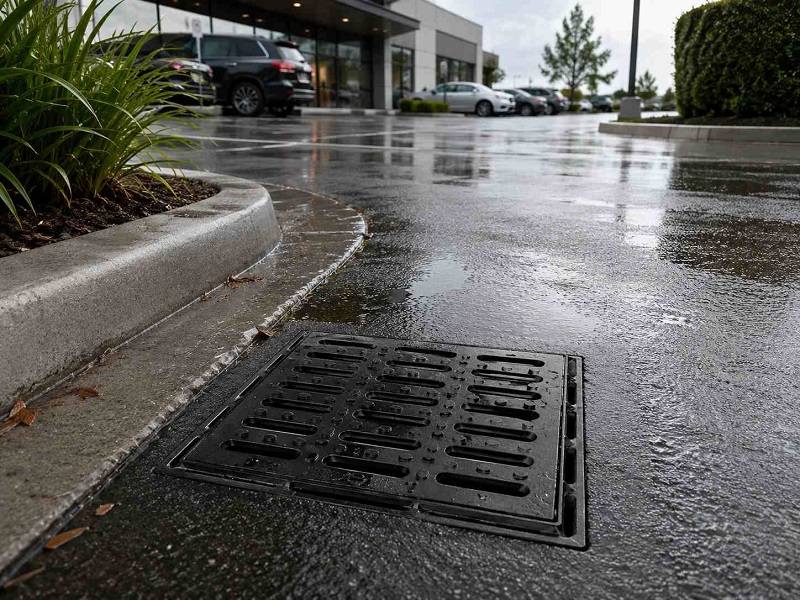
    Hydraulic capture performance of a composite gully grating is evaluated by measuring how effectively the grating intercepts approaching surface water and directs it into the drainage system. The key factors are effective open area, slot geometry, approach flow, installation position, downstream channel capacity, and resistance to blockage. A grating with a high load class does not automatically provide high water capture efficiency. For infrastructure contractors, drainage engineers, municipal procurement teams, and wholesale buyers, a reliable evaluation should combine hydraulic calculations, product geometry checks, and controlled flow testing. The practical indicator is the percentage of approaching water captured by the inlet rather than bypassing it. FLinSky, a composite products brand of Anhui Feilong New Material Co., Ltd., supplies SMC/BMC and FRP composite gully gratings for road drainage, kerbside gullies, parking areas, and municipal infrastructure. What Hydraulic Capture Performance Means Hydraulic capture performance describes the ability of a gully grating to collect surface runoff before it continues downstream. It is different from the structural load capacity of the cover and from the flow capacity of the drainage pipe or channel beneath it. A grating may withstand the required vehicle loading but still capture insufficient runoff if its openings are too small, poorly positioned, or easily obstructed by leaves and sediment. Conversely, a large open area does not guarantee good performance if the downstream gully chamber is undersized or the approach flow bypasses the inlet. For procurement purposes, three performance questions should be considered separately: how much water can enter through the grating, whether the supporting drainage channel can convey that water, and whether the assembly remains safe under the specified traffic load. FLinSky's Composite Gully Grating product range provides different composite configurations for project-specific drainage requirements. Check Effective Open Area and Slot Geometry The effective open area is the portion of the grating surface through which water can enter. It is not the same as the overall external dimensions. Structural ribs, frame edges, locking features, and solid sections reduce the area available for water entry. A useful preliminary indicator is the open-area ratio: Open-area ratio (%) = Total clear opening area ÷ Gross grating surface area × 100 For example, if a grating has a gross surface area of 0.15 m² and a measured clear opening area of 0.045 m², its open-area ratio is 30%. This figure helps compare geometries, but it should not be treated as the actual hydraulic capture efficiency. Water entry also depends on flow depth, velocity, slot orientation, and approach conditions. Slot width, length, spacing, and direction all matter. Narrow openings may reduce the entry of larger debris but can become obstructed more easily by leaves, plastic waste, or sediment. Wider openings may increase the available entry area, but the design must also meet pedestrian safety and structural requirements. FLinSky SMC composite stormwater grating with a slotted surface design. For example, FLinSky's EN124 D400 high-density SMC composite stormwater grating has published dimensions of 500 × 340 × 63 mm. Its anti-slip surface and captive structural design are intended for road and drainage applications. Buyers should request the detailed opening dimensions or an engineering drawing when comparing its effective open area with alternative grating designs. Evaluate Flow Conditions at the Gully Inlet The same grating can perform differently under different site conditions. A level approach surface, a sloped road, and a kerbside channel do not deliver water to the inlet in the same way. Flow depth, approach velocity, road crossfall, longitudinal slope, and inlet position all influence how much runoff reaches the openings. For engineering assessment, the incoming flow rate should be estimated from the contributing catchment area and design rainfall. A simplified rational method is commonly expressed as: Q = C × i × A Where Q is estimated peak runoff, C is the runoff coefficient, i is rainfall intensity, and A is the contributing drainage area. Units must be consistent when applying the formula. The calculated runoff is a catchment estimate; it does not indicate how much water a particular grating will capture. For a kerbside installation, check whether water can reach the inlet without bypassing it. A grating positioned too high, installed at the wrong angle, or separated from the road surface by an uneven joint may lose capture efficiency even when its opening area appears adequate. Measure Capture Efficiency Through Flow Testing A practical way to evaluate a grating is to conduct a controlled hydraulic test. Supply a known flow rate across a representative approach surface, collect the water entering the gully, and measure the water that continues past the inlet. Capture efficiency (%) = Captured flow rate ÷ Total approaching flow rate × 100 For example, if the approaching flow is 10 L/s and the inlet captures 8 L/s, the measured capture efficiency is 80%. The remaining 2 L/s represents bypass flow. This is an illustrative calculation, not a published performance result for any FLinSky product. For meaningful comparison, test conditions should remain consistent. Record the flow rate, water depth, approach slope, grating orientation, installation level, and debris condition. Where possible, test several flow rates to identify when bypass begins to increase. A hydraulic engineer should determine the appropriate test setup and acceptance criteria for the project. Consider the Complete Grating and Drainage Channel Assembly A gully grating should not be evaluated in isolation. Water passing through the openings must enter a chamber or channel with sufficient capacity. If the downstream channel is too small, partially blocked, or poorly graded, water may accumulate beneath the grating and reduce effective drainage. FLinSky's Heavy Duty SMC/BMC Composite Drainage Channel with Grating, model FB200-200-1000, is listed with a main size of 200 × 200 × 1000 mm. The published specifications include SMC/BMC material options, BS EN 1433 and BS EN 124-5 standards, load classes from A15 to D400, a locking system, and a double-seal gastight feature. FLinSky composite drainage channel for linear runoff collection. The product page describes a smooth internal U-shaped profile intended to support water conveyance and reduce sediment accumulation. This is relevant when assessing the complete drainage route, from surface collection through to downstream discharge. Review the FB200-200-1000 SMC/BMC Composite Drainage Channel specifications when the project requires a linear drainage assembly rather than a standalone gully cover. Account for Debris, Maintenance, and Long-Term Performance Hydraulic capture can decline when openings become obstructed. Leaves, plastic packaging, road grit, and sediment can reduce the effective open area and create local ponding. A design that performs well in a clean laboratory test may therefore perform differently in an operating road or industrial site. Evaluate the expected debris type, cleaning frequency, access for maintenance, and ease of lifting or removing the grating. Composite materials can offer corrosion resistance in environments exposed to moisture, salts, and certain chemicals. FLinSky's high-density SMC D400 grating is described as resistant to corrosion, UV exposure, chemicals, and de-icing salts. Its non-metallic construction also provides a practical advantage in locations where metal theft is a concern. However, material durability does not eliminate the need for routine inspection. Maintenance teams should check for blocked slots, damaged edges, loose locking components, and settlement around the frame. Match Hydraulic Requirements with the Correct Load Class Hydraulic performance and structural loading are separate selection criteria. The load class must be appropriate for the installation location, while the grating geometry must satisfy the required water capture performance. FLinSky's EN124 D400 SMC composite stormwater grating is specified at 500 × 340 × 63 mm and is listed as compliant with BS EN 124-5. The D400 classification corresponds to a 400 kN test load under the relevant standard, making it a candidate for specified heavy-traffic applications when the complete installation meets the standard's requirements. For lighter pedestrian-oriented projects, FLinSky also lists BMC composite gully grating options in 300 × 500 × 40 mm and 500 × 500 × 30 mm dimensions. The product page identifies a locking system and customized color options. Confirm the applicable load class and project suitability with the supplier rather than inferring a rating from dimensions or product appearance. See the 500 × 340 mm EN124 D400 SMC Composite Stormwater Grating for its published technical details and application information. What Buyers Should Provide When Requesting a Quotation To help FLinSky evaluate a composite gully grating for a project, buyers should provide the installation location, design rainfall or target flow rate, contributing catchment area, road or pavement slope, required grating dimensions, traffic load class, and downstream drainage arrangement. It is also useful to request product drawings showing clear opening dimensions, material details, load-test documentation, frame compatibility, and any available hydraulic test results. For distributors and infrastructure contractors, confirming these details before bulk ordering reduces the risk of selecting a product that meets the structural requirement but does not capture enough runoff. Frequently Asked Questions How is hydraulic capture efficiency of a composite gully grating calculated?Divide the measured flow entering the gully by the total approaching flow, then multiply by 100. Test conditions such as flow rate, slope, and installation position should be recorded. Does a D400 composite gully grating automatically have high water capture performance?No. D400 describes a structural load classification, not a hydraulic flow rating. Capture performance depends on open area, slot geometry, approach flow, and downstream drainage capacity. What is the open-area ratio of a gully grating?It is the total clear opening area divided by the gross grating surface area. It is a useful geometry indicator but does not equal actual hydraulic capture efficiency. Which FLinSky composite gully grating is suitable for heavy-traffic areas?The 500 × 340 × 63 mm high-density SMC composite stormwater grating is listed as BS EN 124-5 D400 and is designed for applications including urban highways, kerbside gullies, and car parks. Confirm the complete installation requirements before specification. What is the FB200-200-1000 composite drainage channel used for?It is a modular SMC/BMC linear drainage channel with a 200 × 200 × 1000 mm main size, designed for runoff collection in infrastructure such as highways, gas stations, logistics hubs, and industrial facilities. How can debris affect composite gully grating performance?Leaves, sediment, and litter can block openings, reduce effective open area, and increase surface water bypass. Routine inspection and cleaning help maintain drainage performance. What information is needed to select a composite gully grating for a municipal project?Provide the design flow requirement, catchment area, rainfall assumptions, site slope, installation location, required dimensions, load class, and downstream channel details. These inputs allow the supplier and project engineer to assess both hydraulic and structural suitability.
  • How to Prevent Clogging in Iron Grating Drainage Systems
    How to Prevent Clogging in Iron Grating Drainage Systems Nov 10, 2026
      Preventing clogging in iron grating drainage systems comes down to three levers: smart grating design, the right material, and regular maintenance. Design controls what enters the drain. Material determines how long the iron grating lasts. Maintenance keeps every slot clear. After a storm, homeowners often find water standing over debris-packed slots. Effective drainage starts before the first rainfall, with thoughtful design choices.   Key Takeaways   Choose grating with narrow slots and proper placement to keep debris out and water flowing. Select durable ductile iron that matches site conditions for long-lasting performance. Clean grates regularly—inspect monthly and after storms—to prevent clogs and extend drain life.   Iron Grating Design for Debris Control     Design choices decide how much material reaches the drain and how much sheds away at the surface. A well-planned iron grating balances open area against debris capture.   Slot Size and Shape   Slot dimensions control the first filter point. Narrow slots block leaves and twigs from entering the channel. Wider slots pass larger volumes of water but admit more solids. The shape matters as much as the size. Straight parallel slots shed long stems and fibrous material along their length. Curved or tapered slots guide water inward while pushing bulky items aside. A trench drain grate illustrates this principle well. Its linear slot layout runs parallel to the channel, so water enters evenly along the full run. A Linear Stormwater Drain Grating with uniform slot spacing delivers predictable flow across the surface. Each slot acts as a small gate. Material larger than the gap stays on top and washes toward the next slot. This behavior supports minimal debris accumulation at the surface during heavy rain.   Kerb Gully Gratings Placement and Flow   Position determines how water approaches the inlet. Kerb gully gratings sit along road edges, where runoff gathers first. Their placement at the low point of the curb captures flow before it spreads across the pavement. The angle of approach matters too. Water moving parallel to the slots slides across the surface and carries floating debris past the openings. Water moving perpendicular drops straight through. Kerb gully gratings aligned with the road direction therefore shed leaves and litter more effectively. These gully gratings prevent logging of water at the curb line by keeping the entry path clear. A second row of gully gratings at sag points handles pooled runoff. Designers can also set the grate slightly below the pavement level. This small drop encourages fast draining of rainwater into the channel. Correct placement and flow direction limit debris buildup at the drainage inlet and keep the drain working through peak storms. Each layout suits a different site: parallel slots fit long road edges, while cross-flow patterns serve wide catchment areas. Both approaches move rainwater from streets into the pipe network with less manual clearing.   Gully Gratings Material Selection     Ductile Iron Performance   Ductile cast iron outperforms grey cast iron on the properties that matter most in drainage service. Its tensile strength, yield strength, and elongation all run higher, so the metal bends under impact instead of cracking. Grey cast iron offers good compressive strength at lower cost, which suits light footway covers. Ductile iron adds machinability, reliable casting properties, and corrosion resistance. Those traits deliver a long service life in wet, loaded environments.   The FEILONG 250mm x 750mm D400 Medium Duty Gully Channel Trench Grating shows how these properties translate into a product. It measures 250mm wide, 750mm long, and 26mm deep, with a bitumen paint coating for added protection. Its D400 rating withstands a 40-tonne load, which fits carriageways and heavy-traffic areas. FEILONG (Anhui Feilong New Material Co., Ltd.) holds ISO9001, ISO14001, ISO45001, and CE certifications and supplies approval drawings and formal quotes. Buyers should treat this as one quality option among several reputable suppliers.   Load Class Typical Service Load Rating A15 Footways, pedestrian areas 15 kN B125 Car parks, light traffic 125 kN C250 Kerb inlets, road edges 250 kN D400 Carriageways, heavy traffic 400 kN   Matching Material to Site Conditions   Site conditions guide the final choice. Municipal construction and sewerage systems demand robust gully gratings that resist heavy vehicle loads. Water supply and telecommunication networks favor secure, lockable covers that deter theft and vibration. Footways tolerate lighter classes, while rainwater drainage along roads needs a D400 Road Drainage Grating to handle traffic stress. Each setting rewards a different balance of strength, coating, and load class.   Correct selection keeps every grate working as intended. A well-matched gully grating sheds debris, carries storm flows, and resists corrosion for years. The right cast iron grade protects the drain network from premature failure.   Installation and Maintenance of Trench Drain Grates   Secure Installation for Smooth Flow   A stable grating starts with correct seating. The frame must sit level in the channel, with no rocking under load. Workers should bed the frame firmly and check the fit before fixing it in place. A lock system then holds the trench drain grate tight against the frame. The lock stops vibration from shifting the grate during traffic. It also keeps the grate aligned with the slot pattern, so water enters evenly. A loose grate tilts, narrows its openings, and invites blockages. Proper seating and locking keep flow unobstructed and protect the underlying drain from clogging or damage. A lockable ductile iron drain grate also resists removal by unauthorized hands, which supports both security and steady performance.   Preventing Early Clogging of Drains   Routine attention stops small buildup from becoming a real problem. Homeowners should lift each trench drain grate and clear leaves, silt, and litter before storm season. Contractors can schedule inspections after major weather events. Maintenance professionals should check clogged channels at sag points first, since water pools there earliest. A simple routine works well: inspect monthly, clean before heavy rain, and remove debris after every storm. These habits catch early clogging of drains before water pools on the surface.   Cleaning practice matters as much as frequency. Lifting the grate for full access makes the job faster and safer. Ease of removal and cleaning depends on the lock design, so operators should learn the release method. A stiff or seized lock slows every visit. Maintenance and cleaning considerations should therefore include a quick check of hinges, locks, and frame edges. Power washing clears fine grit from slots, and hand tools lift packed material. Workers should bag the removed material rather than sweep it back into the channel. This step keeps the iron grating clear and stops sediment from reaching the pipe. Ease of maintenance rewards teams that record each inspection and note recurring trouble spots. Consistent cleaning protects the drain network and extends the service life of every trench drain grate. Good habits also reduce the risk of a clogged inlet during peak rainwater flows.       Smart design, the right material, and steady maintenance form the full formula against clogging. Each lever reinforces the others. Consistent habits protect drainage performance season after season. A quality manufacturer such as FEILONG, with its certified ductile iron range and custom design support, supplies well-made grating and practical guidance that support long-term drain protection.   FAQ   How often should someone clean a trench drain grate? A monthly inspection works well for most sites. Teams should also clear debris before heavy rain and after every storm. This routine catches early clogging before water pools.   What load class suits a carriageway inlet? A D400 rating fits carriageways and heavy-traffic areas. It withstands a 40-tonne load. Lighter classes serve footways and car parks, so site traffic guides the choice.   Why does ductile iron last longer in wet service? Ductile cast iron offers higher tensile strength, yield strength, and elongation than grey cast iron. It also resists corrosion. A bitumen paint coating adds further protection to each grate.  
  • What EN 124 Load Classes A15 to F900 Really Mean
    What EN 124 Load Classes A15 to F900 Really Mean Nov 04, 2026
    When selecting a manhole cover or gully grating for a construction project, one of the first specifications to check is its EN 124 load class. You may see ratings such as A15, B125, C250, D400, E600, or F900 in product catalogs and technical drawings. But what do these classifications actually mean, and how do you know which one is suitable for your project? EN 124 load classes help engineers, contractors, distributors, and buyers select manhole tops and gully tops according to their intended installation areas and standardized load performance. Choosing the right class is not simply about selecting the strongest cover. It is about matching the product, supporting frame, and installation conditions to the traffic and service environment. As a manufacturer of ductile iron and composite manhole covers, FLinSky works with products designed for different infrastructure applications, from pedestrian areas to roads, industrial sites, and airports. This guide explains the EN 124 classifications, their typical applications, and the factors buyers should consider before placing an order. What Does the EN 124 Standard Cover? EN 124 is a European standard for gully tops and manhole tops installed in areas used by pedestrians and vehicles. It provides requirements for product performance, testing, and classification according to the intended installation location and load category. The standard is divided into different parts according to product materials. For example, EN 124-2 applies to gully tops and manhole tops made of cast iron, while EN 124-5 covers products made of composite materials. Therefore, when purchasing a manhole cover, buyers should check not only its load class but also the relevant part of the standard for its material. One important point is that an EN 124 classification applies to the tested product assembly and its performance under specified test conditions. The cover, frame, and supporting installation all matter. A load-class marking alone should not be treated as proof that every installation will perform correctly. What Do the Load Class Numbers Mean? EN 124 defines six main load classes, from A15 to F900. The number represents the standardized test load expressed in kilonewtons (kN). A higher class indicates a higher test load requirement, but it does not directly represent the maximum weight of a vehicle that can drive over the cover. The following table provides an overview of the six classes and their commonly specified installation areas. EN 124 Class Test Load Approx. Tonne-Force Equivalent Typical Installation Area A15 15 kN 1.53 tf Pedestrian and cycle-only areas B125 125 kN 12.75 tf Footways, pedestrian areas, and car parks C250 250 kN 25.49 tf Gully tops in defined kerbside channels D400 400 kN 40.79 tf Road carriageways and parking areas for road vehicles E600 600 kN 61.18 tf Areas exposed to high wheel loads, such as docks F900 900 kN 91.77 tf Areas exposed to particularly high wheel loads, such as airport pavements Note: The tonne-force figures are mathematical conversions of the standardized test loads. They are not vehicle weight limits, axle-load limits, or permissible operating loads. Always refer to the applicable EN 124 requirements and project specifications when selecting a product. A15 and B125: Which Areas Are Suitable for Light-Duty Covers? A15 and B125 are commonly used for areas where pedestrian activity is the main consideration and heavy road traffic is not expected. A15: This class is intended for areas used exclusively by pedestrians and cyclists. Typical applications include footpaths, pedestrian zones, landscaped areas, and similar spaces where motor vehicles are not expected to pass over the cover. B125: B125 provides a higher load classification and is commonly used in footways, pedestrian areas, and comparable spaces, including car parks and parking decks. It may be suitable where occasional vehicle access is expected, provided the actual installation conditions meet the relevant requirements. For residential developments, sidewalks, landscaping projects, and light-duty drainage systems, buyers may compare A15 and B125 light duty manhole covers according to the location, required dimensions, and material specifications. C250: What Makes This Class Different? C250 is often misunderstood as a general-purpose class for all medium-traffic areas. Under EN 124, Group 3 has a more specific application: gully tops installed in kerbside channels, extending a maximum of 0.5 m into the carriageway and a maximum of 0.2 m into the footway, measured from the kerb edge. This distinction matters when specifying drainage covers near road edges. A product rated C250 should not automatically be selected for every parking area, industrial road, or location with slow-moving heavy vehicles. The actual installation position and project requirements must be checked. For projects that require this classification, FLinSky provides C250 ductile iron manhole covers. Buyers should confirm the clear opening, frame dimensions, sealing design, and supporting test documentation before finalizing a specification. C250 medium-duty ductile iron manhole cover D400: The Common Choice for Road Traffic D400 is one of the most widely specified classes for road infrastructure. It is intended for carriageways, hard shoulders, and parking areas used by road vehicles. Applications may include urban roads, commercial parking areas, access roads, and other locations where vehicles regularly pass over underground access points. D400 products are commonly manufactured from ductile iron because this material offers a combination of strength, toughness, and durability for demanding infrastructure environments. However, the product design, frame support, installation quality, and test documentation are equally important when evaluating performance. FLinSky's D400 medium duty square ductile iron manhole covers include a 600 × 600 mm clear opening option. The product page lists a 735 × 735 × 80 mm frame and road carriageways as an intended application. Project buyers should still verify the required dimensions and product documentation against their own drawings and local specifications. D400 ductile iron manhole cover for road applications E600 and F900: When Are Heavy-Duty Covers Required? E600 and F900 are designed for applications involving higher and particularly high wheel loads. They are generally considered for infrastructure environments where ordinary road-duty specifications may not be sufficient. E600 is intended for areas exposed to high wheel loads. Typical examples include docks, port facilities, and certain aircraft pavement areas. It may also be considered for specialized industrial environments, subject to the project engineer's requirements. F900 is the highest of the six main EN 124 load classes. It is intended for areas exposed to particularly high wheel loads, such as airport pavements. Other possible applications may include demanding transportation or industrial infrastructure, where the specified loading conditions justify this class. For projects involving ports, airports, and other heavy-duty infrastructure, FLinSky offers E600 and F900 heavy duty ductile iron manhole covers and gratings. The selected model should be matched to the required load class, opening size, frame configuration, and verified test results. F900 heavy-duty ductile iron manhole cover for demanding infrastructure How to Choose the Right EN 124 Load Class Choosing a manhole cover based only on its load-class number can lead to incorrect product selection. A practical specification should consider the installation environment, expected traffic, product material, frame design, and project standards together. Check the actual installation location. Determine whether the cover will be installed in a pedestrian area, footway, kerbside channel, carriageway, parking area, dock, or airport pavement. The installation group is a key part of selecting the correct load class. Confirm the material and applicable standard part. Ductile iron and composite products may fall under different parts of EN 124. Make sure the product documentation matches the material being supplied. Verify dimensions and frame compatibility. Check the clear opening, external frame dimensions, cover thickness, seating arrangement, and installation depth. These details affect whether the product fits the chamber and project drawings. Review the complete product documentation. Ask for relevant test reports, material specifications, certificates, and details of the tested cover-and-frame assembly. Do not rely solely on a load-class label in a catalog. Consider site conditions and additional features. Depending on the project, requirements may include locking devices, sealing performance, anti-slip surfaces, corrosion resistance, noise reduction, and drainage capacity. What Should Buyers Confirm Before Ordering? For distributors, contractors, and infrastructure project buyers, providing clear technical information at the quotation stage can help reduce specification errors and avoid unnecessary changes during production or installation. Information What to Provide or Confirm Load class A15, B125, C250, D400, E600, or F900 Installation area Footway, road, parking area, dock, airport, or another specified location Material Ductile iron, cast iron, or composite material Dimensions Clear opening, frame size, cover size, and installation depth Design requirements Round or square shape, locking, sealing, surface pattern, and logo requirements Compliance documents Applicable EN 124 part, test reports, certificates, and project-specific approvals FLinSky supplies ductile iron and composite manhole covers, frames, and gully gratings for different infrastructure requirements. When requesting a quotation, buyers can provide the required load class, drawings, dimensions, material, and installation environment. This helps the technical team evaluate a suitable product configuration rather than relying on a load rating alone. Frequently Asked Questions About EN 124 Load Classes What is the difference between A15 and B125 manhole covers? A15 is intended for areas used exclusively by pedestrians and cyclists. B125 is designed for footways, pedestrian areas, and comparable locations such as car parks and parking decks. The correct choice depends on the actual installation area and expected traffic. Is C250 suitable for all parking areas? No. C250 is intended for gully tops installed in defined kerbside channels under EN 124 Group 3. General parking areas used by road vehicles are typically associated with D400, subject to the project's specifications and installation conditions. Is D400 the standard choice for road manhole covers? D400 is commonly specified for carriageways, hard shoulders, and parking areas for road vehicles. The final selection should still follow local regulations, project drawings, and the required product documentation. What is the difference between E600 and F900? E600 is intended for areas exposed to high wheel loads, such as docks. F900 is intended for areas exposed to particularly high wheel loads, including certain airport pavements. F900 has a higher standardized test load than E600. Does a D400 manhole cover mean it can support a 40-ton truck? Not exactly. The 400 in D400 refers to a standardized test load of 400 kN, not a permitted vehicle gross weight. Vehicle weight, axle configuration, wheel contact, installation quality, and the supporting structure are different considerations. Are ductile iron and composite manhole covers covered by the same EN 124 part? Not necessarily. EN 124 is divided into parts according to material. EN 124-2 covers cast iron products, while EN 124-5 covers composite material products. Buyers should check which part applies to the selected product. What information should I provide when requesting a manhole cover quotation? Provide the required load class, installation location, material, clear opening, frame dimensions, shape, quantity, and any project-specific standards or drawing requirements. Test reports and compliance documents should also be confirmed before ordering. Can I select a higher load class to be safer? A higher class is not automatically the best choice for every project. The product should match the installation group, dimensions, supporting structure, and project requirements. Confirm the specification with the project engineer or relevant authority before ordering. Select the Right Manhole Cover for Your Project Understanding EN 124 load classes is an important first step when specifying manhole covers and gully gratings. A15 and B125 are associated with pedestrian and lighter-duty areas, C250 is intended for a defined kerbside gully zone, D400 is commonly used for road traffic, while E600 and F900 address higher wheel-load environments. The right product is determined by more than the number stamped on the cover. Installation location, material, dimensions, frame design, test documentation, and local project requirements all need to be considered together. FLinSky provides ductile iron and composite manhole covers and drainage products for infrastructure projects with different technical requirements. Contact the team with your drawings, load class, dimensions, and application details to discuss a suitable product configuration. Email: rae.w@feilong-group.com Phone: +86 188 2526 5625 { "@context": "https://schema.org", "@type": "BlogPosting", "headline": "What EN 124 Load Classes A15 to F900 Really Mean", "description": "Learn what EN 124 load classes A15, B125, C250, D400, E600, and F900 mean, where each class is used, and how to select the right manhole cover for your project.", "author": { "@type": "Organization", "name": "FLinSky" }, "publisher": { "@type": "Organization", "name": "FLinSky", "url": "https://www.flmanholecover.com/" }, "mainEntityOfPage": { "@type": "WebPage", "@id": "https://www.flmanholecover.com/" }, "articleSection": "Manhole Cover Knowledge", "keywords": [ "EN 124 load classes", "A15 manhole cover", "B125 manhole cover", "C250 manhole cover", "D400 manhole cover", "E600 manhole cover", "F900 manhole cover", "ductile iron manhole cover" ] } { "@context": "https://schema.org", "@type": "FAQPage", "mainEntity": [ { "@type": "Question", "name": "What is the difference between A15 and B125 manhole covers?", "acceptedAnswer": { "@type": "Answer", "text": "A15 is intended for areas used exclusively by pedestrians and cyclists. B125 is designed for footways, pedestrian areas, and comparable locations such as car parks and parking decks. The correct choice depends on the actual installation area and expected traffic." } }, { "@type": "Question", "name": "Is C250 suitable for all parking areas?", "acceptedAnswer": { "@type": "Answer", "text": "No. C250 is intended for gully tops installed in defined kerbside channels under EN 124 Group 3. General parking areas used by road vehicles are typically associated with D400, subject to the project's specifications and installation conditions." } }, { "@type": "Question", "name": "Is D400 the standard choice for road manhole covers?", "acceptedAnswer": { "@type": "Answer", "text": "D400 is commonly specified for carriageways, hard shoulders, and parking areas for road vehicles. The final selection should still follow local regulations, project drawings, and the required product documentation." } }, { "@type": "Question", "name": "What is the difference between E600 and F900?", "acceptedAnswer": { "@type": "Answer", "text": "E600 is intended for areas exposed to high wheel loads, such as docks. F900 is intended for areas exposed to particularly high wheel loads, including certain airport pavements. F900 has a higher standardized test load than E600." } }, { "@type": "Question", "name": "Does a D400 manhole cover mean it can support a 40-ton truck?", "acceptedAnswer": { "@type": "Answer", "text": "Not exactly. The 400 in D400 refers to a standardized test load of 400 kN, not a permitted vehicle gross weight. Vehicle weight, axle configuration, wheel contact, installation quality, and the supporting structure are different considerations." } }, { "@type": "Question", "name": "Are ductile iron and composite manhole covers covered by the same EN 124 part?", "acceptedAnswer": { "@type": "Answer", "text": "Not necessarily. EN 124 is divided into parts according to material. EN 124-2 covers cast iron products, while EN 124-5 covers composite material products. Buyers should check which part applies to the selected product." } }, { "@type": "Question", "name": "What information should I provide when requesting a manhole cover quotation?", "acceptedAnswer": { "@type": "Answer", "text": "Provide the required load class, installation location, material, clear opening, frame dimensions, shape, quantity, and any project-specific standards or drawing requirements. Test reports and compliance documents should also be confirmed before ordering." } }, { "@type": "Question", "name": "Can I select a higher load class to be safer?", "acceptedAnswer": { "@type": "Answer", "text": "A higher class is not automatically the best choice for every project. The product should match the installation group, dimensions, supporting structure, and project requirements. Confirm the specification with the project engineer or relevant authority before ordering." } } ] }
  • What Is D400 Gully Grating and Where Should You Use It?
    What Is D400 Gully Grating and Where Should You Use It? Oct 27, 2026
      A D400 Gully Grating is a drainage grating rated to load class D400 under EN 124. It covers gully and catch basin openings in trafficked areas. You will find gully gratings like this at the low points of roads, yards, and parking lots. There they collect stormwater runoff and block debris. The D400 rating tells you the grating passes a test load of 400 kilonewtons. That load class suits Group 4 installations such as carriageways and hard shoulders. Cars and trucks can pass over it with confidence. Your choice of D400 gully gratings depends on where you install them, which material you pick, and how you seat them in a compatible frame.   Key Takeaways   D400 gully grating handles 400 kilonewtons of load, making it safe for roads and parking areas. Use D400 grating where cars and trucks drive, like carriageways and industrial sites. Pick ductile iron for heavy traffic and cast iron for lighter, predictable loads. Install the grating on a compatible frame with a level surface to prevent rocking. Clean the slots regularly to keep water flowing and avoid damage.   What Is a D400 Gully Grating?     EN124 Load Classes Explained   EN 124-1:2015 sorts gully tops and manhole tops into six classes based on test load. The en124 load classes run from A 15 at the light end to F 900 at the heavy end. Clause 4.2 links each class to a place of installation, dividing locations into Groups 1 to 6 and stating the minimum class recommended for each group. The specifier picks the class and material, and where in doubt, the stronger class wins.   Class Test load Minimum recommended group Installation area A 15 15 kN Group 1 Areas used only by pedestrians and pedal cyclists B 125 125 kN Group 2 Pedestrian areas, car parks, car parking decks C 250 250 kN Group 3 Gully tops in kerbside channels (max 0.5 m into carriageway, max 0.2 m into pedestrian area) D 400 400 kN Group 4 Carriageways of roads, hard shoulders, parking areas E 600 600 kN Group 5 Areas imposing high wheel loads F 900 900 kN Group 6 Areas imposing particularly high wheel loads     What D400 Means in Practice   The D400 load class means the grating passes a test load of 400 kN. That figure is commonly described as roughly 40 tonnes of test load. You can read the rating as a statement about load-bearing capacity under a defined test, not a guess about real traffic. BS EN standards use this same scale, so a D400 stormwater grating carries a clear, checkable claim.   Group 4 covers carriageways of roads, hard shoulders, and parking areas. D400 is engineered for exactly these installations. Cars and lorries have access, and the grating must survive repeated wheel passes without cracking or sinking. A load classification of D400 therefore suits any spot where full vehicles cross the gully line.   Think of the rating as a floor, not a target. A light footpath needs only A 15, and a car park deck often works with B 125. The D400 gully gratings earn their place where heavy vehicles roll over the inlet every day. This stormwater drainage component protects the opening and keeps the channel clear. Choose the class to match the traffic, and the gully grate will do its job for years.   Where Should You Use D400 Gully Grating?     Roads and Carriageways   Group 4 of BS EN 124 covers carriageways, hard shoulders, and parking areas open to all vehicles. D400 is the minimum load class for that group, which makes it the baseline for most urban road infrastructure. You will see gully gratings rated to D400 along main roads, highways, and hard shoulders where regular vehicle traffic crosses the inlet line every day.     The test itself is demanding. A D400 assembly must withstand a static test load of 400 kN, roughly 40 metric tons. A standardized steel block with a rubber pad simulates tire contact, and the load is held while inspectors watch for cracking or delamination. A permanent-set test then applies about two-thirds of that load over five cycles to measure residual deformation. That repeated-load check confirms suitability for carriageways and heavy traffic.   Highway authorities sometimes go further. CD 534, formerly HA 104/09, adds enhanced requirements for motorways and trunk roads. Its AADT 1500 rule calls for E600 where light goods vehicle traffic exceeds 1,500 per direction. D400 therefore remains the benchmark for municipal and council-maintained roads, while motorway specs may step up a class.   Installation quality matters as much as the rating. A Water Research Centre study found that at least 30% of manhole cover failures stem from disintegration of the bedding mortar, not the cover itself. Professional standards require bedding mortar with compressive strength of at least 50 N/mm² and thickness of at least 15 mm. That bedding resists braking and accelerating forces and prevents sinking hazards.   Noise is another road concern. Modern D400 designs cut rattling through precision machining, elastomeric gaskets, and polyurethane damping pads. A Singapore Land Transport Authority case study recorded a 60% reduction in intersection noise levels after switching to hybrid polyurethane-pad, triple-seal units. That result supports D400 use on noise-sensitive urban carriageways.   Commercial and Industrial Sites   Car parks, access roads, parking lots, and industrial sites with heavy traffic all fall within D400 territory. Municipal roads and commercial areas follow the same logic. A retail park entrance, a logistics yard, or a bus depot access lane each carries vehicles heavy enough to justify the D400 rating. The D400 Medium Duty Top Entry Grating suits these top-entry inlets, and the same range covers kerb inlet grating, side entry gully grating, and combination inlet gully grating layouts.   Load Class Test Load Typical Applications A15 15 kN Pedestrian areas, cycle paths, gardens B125 125 kN Private driveways, parking areas, sidewalks C250 250 kN City roads, roadside drainage, parking lots D400 400 kN Highways, industrial zones, logistics centers E600 600 kN Commercial areas with fork-lift and solid tire traffic F900 900 kN Airports, aircraft pavements, heavy industrial yards   Lighter classes still have a place. A15 and B125 serve footways and private driveways well. C250 fits kerbside channels. D400 fits where full vehicles cross regularly, and E600 or F900 takes over in warehouses, terminals, and yards with forklifts or aircraft. Match the traffic load to the site, and the stormwater system stays clear and safe.   Cast Iron vs Ductile Iron   Cast Iron Gully Gratings   Cast iron gully gratings deliver solid strength at a competitive cost. Gray iron's graphite flakes sit in a rigid matrix, and that structure gives the metal good compressive strength and excellent vibration damping. Many municipal drainage programs specify cast iron gully gratings for standard road inlets, and the material performs well there. You get a stable, hard-wearing cover that resists abrasion from tires and grit.   Cast iron gully gratings suit sites where loads stay within the design envelope and shock impact is rare. A residential street inlet or a low-speed access lane is a good match. The material also machines and casts easily, so cast iron gully gratings come in the full range of standard sizes and slot patterns. Where your traffic profile is predictable, cast iron gully gratings remain a sound, economical choice.   Ductile Iron Performance   Ductile iron changes the microstructure. Spheroidal graphite nodules interrupt crack propagation, so the metal flexes instead of shattering. The numbers show the gap clearly.   Property Gray Cast Iron Ductile Iron Tensile Strength 20,000–60,000 psi 60,000–120,000+ psi Yield Strength Not measurable (brittle) 40,000–90,000+ psi Elongation < 1% 2%–18%+ Impact Resistance ~2 ft-lbs ~7–15 ft-lbs   Ductile iron offers exceptional tensile strength and impact resistance, ensuring construction equipment withstands harsh conditions and heavy loads, translating to longer service life and reduced downtime.   That impact figure matters at a gully line. A D400 gully grating takes repeated wheel strikes, and ductile iron absorbs roughly 7–15 ft-lbs of impact energy versus about 2 ft-lbs for gray iron. Ductile iron also yields before breaking, which warns of overload instead of failing without notice. For heavy-load road work, ductile iron gully gratings are the stronger fit.   Your range also includes GRP/composite gully gratings. They are lightweight, corrosion-resistant, and non-conductive, which suits pedestrian zones and chemically exposed areas. Match each material to its site: composite for light, corrosive duty; cast iron for standard roads; ductile iron for heavy traffic.   Selecting the Right Gully Grating and Frame   Selection Checklist   Start with the required load class. Confirm the traffic load the site will actually carry, then match it to the load classification in BS EN 124. A D400 rating covers carriageways and hard shoulders, and lighter classes serve footways and private drives. Getting this step right prevents overloading later.   Next, choose the material. Ductile iron gully gratings handle heavy traffic and impact, cast iron gully gratings suit predictable loads, and GRP/composite gully gratings fit pedestrian or chemically exposed areas. Then confirm the size and frame depth. Hinged ductile iron designs come in common sizes such as 430 x 370 mm and 420 x 420 mm, with 100 mm and 150 mm frame depths. Specify an anti-theft hinge with an automatic spring lock where security matters. A three-direction hinging frame lets you reverse the grating without digging up the frame when traffic flow changes. A reputable gully grating supplier will confirm exact sizing against your drawing.   Finally, plan the correct installation. Seat the unit on a compatible frame with a level, even bearing surface. Proper installation protects the load class you paid for.   Common Issues and Fixes   Water logging usually traces to debris blocking the slots or the gully pot beneath. Clear both on a regular schedule. Cracking and rocking point to poor support, weak frames, or the wrong load class for the traffic. Prepare the channel first, check frame level and support span, and remove old concrete or rust from the bearing area. Use fixings that match the panel and frame, and never place a pedestrian-grade panel in a vehicle zone.   Issue Fix Grating not sitting flat Clean the bearing surface and check frame level Movement or uplift Match clips and fasteners to the panel type Frame working loose Use textured flange undersides and mortar holes for interlock Stress at frame corners Specify enlarged, rounded frame corners   These details matter as much as material choice. Treat the gully grate and frame as one assembly, and the stormwater system performs as designed.       A D400 Heavy Duty Gully Grating is a drainage cover tested to load class D400 under EN 124, meaning it handles an impressive 400 kN and suits carriageways, hard shoulders, and parking areas. To ensure optimal performance, match the load class to real traffic conditions, pick the material for the site, and seat the unit in a compatible frame. For road projects, ductile iron is a strong fit, while standard cast iron remains economical for predictable loads and tight budgets in low-speed lanes. For pedestrian zones or chemically exposed areas, GRP/composite gratings are the ideal choice.   FAQ   What load class do you need for a road gully?   Match the class to the traffic. EN 124 Group 4 covers carriageways, hard shoulders, and parking areas, and D400 is the minimum for that group. Choose D400 where cars and lorries cross the inlet line regularly.   Should you choose cast iron gully gratings or ductile iron?   It depends on the site. Cast iron gully gratings suit predictable loads and standard road inlets. Ductile iron resists impact and deformation better under heavy traffic. Cast iron gully gratings remain economical for low-speed lanes, and ductile iron fits busy carriageways.   Which sizes and frame options should you specify?   Hinged ductile iron designs come in common sizes such as 430 x 370 mm and 420 x 420 mm, with 100 mm and 150 mm frame depths. Specify an anti-theft hinge with an automatic spring lock. A three-direction hinging frame lets you reverse the unit without digging up the frame.   Why does your grating rock or rattle after installation?   Rocking usually points to poor support or a weak frame. Clean the bearing surface, check frame level, and remove old concrete or rust. Seat the unit on a compatible frame with an even bearing surface. Correct bedding protects the load class you paid for.   How do you keep the drainage slots clear?   Clear debris from the slots and the gully pot beneath on a regular schedule. Blocked slots cause water logging at the inlet. Routine cleaning keeps the stormwater system flowing and protects the gully gratings from unnecessary stress.
  • What Makes a GRP Composite Manhole Cover Lightweight and Durable
    What Makes a GRP Composite Manhole Cover Lightweight and Durable Oct 19, 2026
      A grp composite manhole cover earns its lightweight and durable reputation from two root causes: a fiberglass-and-resin composite makeup and a molded structural design. Cast iron and concrete covers feel heavy and demand constant upkeep. This composite manhole cover stays lightweight, non-metallic, corrosion-resistant. The walkthrough covers lightweight first, then durability, tying each property to material and design.   Lightweight Composite Manhole Cover Construction     Low-Density Fiberglass and Resin   The weight advantage starts with chemistry. A grp composite manhole cover builds its body from high-strength fiberglass reinforcements locked inside a resin matrix. Glass fiber and cured resin both carry a far lower density than cast iron or poured concrete. That density gap is the root of every kilogram saved. The fiber reinforced polymer structure delivers stiffness through fiber orientation, not through mass. Engineers call this a high strength-to-weight ratio, and it explains why a fiberglass manhole cover lifts easily by hand.   The FEILONG φ300*30mm EN124 cover and frame shows the result in practice. One worker can position this small round unit over a chamber without a hoist. Transport costs fall as well, because each truck carries more units per load than ductile iron equivalents allow. Buyers who compare composite manhole covers and frames against metal sets notice the difference at the loading dock and on site.   FRP Manhole Cover Molded Structure   Design compounds the material gain. The molding process forms a hollow, ribbed profile under heat and pressure. Ribs carry load along defined paths. Hollow zones remove material where stress stays low. This lightweight design keeps stiffness high while cutting excess resin and fiber. The frp manhole cover therefore weighs a fraction of a concrete lid of similar size. A lightweight design also speeds inspection routines, since crews open and reseat the frp manhole cover without lifting gear.   Molded composite manhole covers and frames arrive as one matched set. Tolerances stay tight, and the cover seats cleanly in the frame. Contractors install composite manhole covers quickly on pedestrian paths, driveways, and car parks. Maintenance teams appreciate that composite manhole covers resist jamming after years of weather exposure. The frp manhole covers suit municipal programs that specify EN 124 compliance. Each manhole benefits from consistent geometry across a whole project. Specifiers who standardize on composite manhole covers and frames simplify procurement and spare-part planning. The grp frp manhole cover family covers load classes A15 through D400, so one product line serves many manhole locations. Lightweight handling and molded precision together explain why composite manhole covers and frames dominate modern utility specs.   Durable GRP Composite Manhole Cover Performance     GRP SMC Composite Manhole Cover Corrosion Resistance   A grp smc composite manhole cover ignores the enemies that destroy metal lids. The cured resin matrix seals every fiber, so the grp smc composite manhole cover never rusts, never scales, and never reacts with aggressive chemicals and gases. Wastewater lines release hydrogen sulfide. Petrochemical sites spill solvents and acids. The grp smc composite manhole cover shrugs off both. That corrosion resistance explains why composite manhole covers serve petrochemical plants, water and wastewater networks, gas lines, electric vaults, communications ducts, and municipal streets. A corrosion resistant cover also keeps its surface smooth, so debris lifts away cleanly during inspection. The grp composite manhole cover delivers low maintenance & long service life in every one of those settings. Operators who specify composite manhole covers and frames gain corrosion resistance without coatings, paint, or sacrificial layers. The frp manhole cover simply stays intact.   Lightweight but Strong Load Capacity   Lightweight but strong sounds like a contradiction. Molded fiberglass resolves it. The lightweight design carries traffic through ribbed geometry, and the material spreads stress across continuous fibers. Composite manhole covers and frames therefore meet EN 124 load-bearing standards across four classes.   Load class Typical duty A15 Pedestrian and cyclist areas B125 Driveways and car parks C250 Roadside gutters D400 Slow heavy traffic   One load class covers each site, and the same lightweight strength serves pedestrian or heavy vehicle loads. The frp manhole covers hold their load-bearing capacity for a service life of up to two decades. That durability and longevity comes from a material that resists fatigue, weather, and chemical attack at once. Composite manhole covers and frames also carry zero scrap value, so thieves leave them alone. A stolen cast iron lid becomes a dangerous open hole; a grp frp manhole cover stays put. The grp composite manhole cover thus protects both budgets and public safety. Certified production backs the claim: ISO9001, ISO14001, ISO45001, and CE. Buyers who compare composite manhole covers and frames against metal sets see the durability and longevity argument clearly. Every manhole benefits from a cover that resists corrosion, carries rated loads, and resists theft. The grp family gives engineers, contractors, and maintenance crews one dependable specification. Composite manhole covers and frames reward that choice with decades of quiet service. The durable, corrosion resistant grp composite manhole cover proves that lightweight and tough can share one lid.       A grp composite manhole cover combines low-density fiberglass and resin with a smart molded structure. That pairing explains the lightweight build. Corrosion resistance, a high strength-to-weight ratio, and environmental toughness explain the durability. These properties reinforce each other. Easy handling speeds inspection, and composite manhole covers and frames need fewer replacements across a long service life. Engineers, contractors, and DIY users comparing grp against cast iron or concrete should weigh handling ease, corrosion resistance, and durability and longevity together. Composite manhole covers reward that balanced view.   FAQ   How much does a composite manhole cover weigh?   A grp smc composite manhole cover weighs far less than a cast iron lid of the same size. The low-density fiberglass and resin body lets one worker lift and seat the cover by hand.   Which load classes do composite manhole covers and frames meet?   Composite manhole covers and frames meet EN 124 classes A15, B125, C250, and D400. One class covers pedestrian paths, driveways, car parks, and slow heavy traffic. Composite manhole covers and frames hold rated loads for up to two decades.   Why do thieves leave composite manhole covers alone?   A composite manhole cover carries zero scrap value. Scrap dealers pay nothing for cured resin and glass fiber. Composite manhole covers therefore stay in place, and the manhole stays closed and safe. Certified composite manhole covers also resist corrosion, so the manhole needs fewer replacements. Specifiers trust composite manhole covers backed by ISO9001, ISO14001, ISO45001, and CE. The frp manhole covers family serves every manhole duty. Buyers comparing composite manhole covers against metal sets see the handling gain. Each manhole benefits from a light, tough lid. Composite manhole covers suit municipal programs. The grp composite manhole cover proves the point.  
  • How to Choose the Right Manhole Cover for Different Road and Infrastructure Projects
    How to Choose the Right Manhole Cover for Different Road and Infrastructure Projects Oct 13, 2026
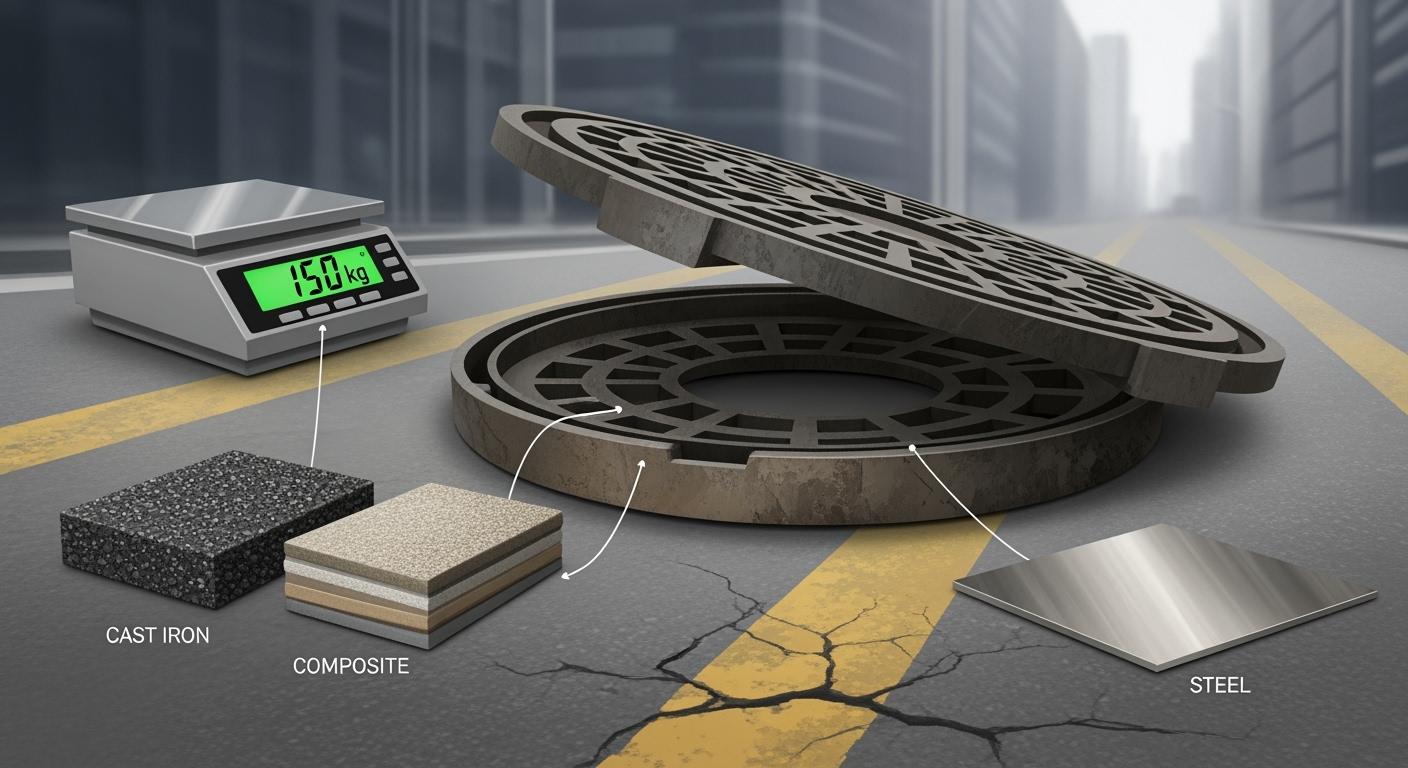
      Choosing the right manhole cover comes down to four factors: traffic load, access frequency, theft risk, and local specifications. Get these wrong, and you risk premature failure, safety hazards, or rejected inspections. Shape matters too. Round, square, and rectangular manhole covers each suit different openings and traffic conditions. Installation quality often determines performance as much as the product itself. A poorly seated frame will shift under load, no matter how strong the cover is. Material, load class, cost, and safety standards all shape your final decision. So does a simple pre-order checklist. Work through these systematically, and you will specify with confidence.   Key Takeaways Consider traffic load, access frequency, theft risk, and local rules when you choose a manhole cover. Match the load class to the traffic conditions to prevent early failure and safety hazards. Compare materials like cast iron, composite, and steel for weight, durability, and theft resistance. Ensure proper installation with a level frame and correct seating to avoid rocking and damage. Use a decision checklist and verify standards to specify the right cover and avoid costly mistakes.   Four Drivers of Manhole Cover Selection Four variables control every specification decision: traffic load, access frequency, theft risk, and local regulations. You cannot treat them independently. A cover that handles heavy loads but invites theft will cost you twice — once at purchase, once at replacement. Traffic Load and Load Class Load class is your first filter. The EN 124 standard assigns a letter and number to each class, and higher classes support heavier traffic conditions. D400, for example, is tested to withstand 400 kN — commonly described as approximately 40 tonnes of test load. You will find D400 manhole cover products specified for carriageways, urban roads, road drainage points, highway shoulders, truck parking areas, and utility access chambers. Load Class Test Load Typical Application A15 1.5 tonnes Pedestrian areas and cycleways only; no vehicle traffic B125 12.5 tonnes Footways, pedestrian areas, car parks for cars, domestic driveways C250 25 tonnes Kerbside gully tops in roadside channels; areas with occasional commercial vehicle overrun D400 40 tonnes Carriageways, hard shoulders, parking areas for all vehicle types including HGVs E600 60 tonnes Industrial areas, docks, and areas with heavy wheel loads F900 90 tonnes Airport runways, taxiways, and aircraft parking aprons Confirm agency acceptance before you order. Many municipalities maintain approved product lists, and a EN 124 D400 load rated manhole cover that meets the standard may still fail local procurement rules. Shape selection follows the same logic. Traffic load, installation location, access needs, and regulatory standards all influence whether you choose a round, square, or rectangular cover. Round cast iron manhole covers self-center under repeated traffic loading, which reduces frame damage. Square covers offer larger clear openings for equipment access.   Access Frequency and Theft Risk How often your crew opens a cover determines the hardware you need. A sealed technical access point in a wastewater zone demands a gasketed or gas-tight design with locking bolts. A pedestrian-area cover at a shopping center needs a flush, slip-resistant finish with heel safety. The required load capacity for each scenario differs, and so does the locking mechanism. Load Scenario Typical Area Design Recommendation Pedestrian Hotels, malls, hospitals, walkways Flush cover with adequate stiffness and slip-resistant finish Light service traffic Utility rooms, back-of-house corridors Reinforced solid top or recessed cover Industrial handling Factories, warehouses, food plants Heavy-duty frame, ribs, thicker plate, controlled deflection Outdoor or municipal service Drainage, utility access, public works Project-specific structure and corrosion grade Sealed technical access Wastewater, chemical, odor-control zones Gasketed or gas-tight design with locking/bolting Theft risk compounds the access question. Philadelphia recorded 2,500 covers stolen in one year, costing at least $300,000 in replacement. Chicago lost 200 covers in a single month, including 40 in one day. Houston spent $126,000 in taxpayer costs over 11 months. Cast iron manhole covers carry high scrap value, which makes them a target. Composite alternatives offer low scrap value and eliminate that incentive. When you specify heavy duty cast iron manhole covers for high-traffic roads, pair them with locking bolts or hinge systems. Hinges reduce manual lifting risk during frequent inspections. Locking bolts prevent unauthorized entry. Both add durability without slowing routine maintenance.   Manhole Cover Weight and Material Comparison Weight tells you a great deal about a manhole cover. It signals material density, load capacity, and how many workers you need on site. A manhole cover weight comparison across cast iron vs. composite vs. steel reveals three very different products.   Cast Iron vs. Composite vs. Steel Cast iron manhole covers range from 70 to more than 400 pounds across common sizes. A standard 24-inch municipal cover typically weighs 100 to 150 pounds. That mass comes from dense metallurgy, and it delivers proven durability under heavy loads. Ductile iron manhole covers add flexibility to that strength, which resists cracking under repeated traffic. Composite covers weigh far less. A 24-inch composite unit runs 30 to 55 pounds, so it is far easier to handle than cast iron. Steel manhole cover weight by application spans 35 to 80 pounds at 24 inches, depending on whether you choose mild or galvanized steel. Each material changes your handling plan. Cast iron manhole covers often require lifting equipment or additional crew members. Composite covers reduce injury risk during routine access. Steel sits between the two. Your choice of right material depends on traffic class, theft exposure, and maintenance frequency.   Cast Iron and Composite Manhole Cover Weight by Diameter Diameter drives weight upward in every material category. A cast iron manhole cover weight by diameter table shows the pattern clearly. At 24 inches, light-duty cast iron runs 70 to 100 pounds while traffic-rated units reach 100 to 250 pounds. At 30 inches, those ranges climb to 100–140 pounds and 140–325 pounds. At 36 inches, expect 140–180 pounds for light duty and 180 to over 400 pounds for traffic-rated service. Composite manhole cover weight by diameter follows the same curve at far lower mass. A 24-inch composite cover weighs 30 to 55 pounds. Larger composite covers remain easy to handle, which makes them popular in utility vaults with frequent access. Material Sub-category Weight Range (24 in) Cast Iron Light Duty (A15/B125) 100 – 150 lbs Cast Iron Standard (C250) 150 – 200 lbs Cast Iron Heavy Traffic (D400) 200 – 275 lbs Composite — 30 – 55 lbs Steel Mild Steel 35 – 70 lbs Steel Galvanized / Coated Steel 40 – 80 lbs Do not stop at the cover. Frames add another 75 to 250 pounds depending on size and design. A complete 24-inch H-20 assembly often weighs 300 pounds or more. That total assembly weight matters for shipping, crane time, and bedding preparation. This weight guide gives you a starting point, not a final number. Actual mass varies with casting design and frame configuration. For heavy-duty road projects, specify heavy duty cast iron manhole covers with matching frames. Suppliers offer castings across these duty classes, so you can compare options against your load requirements. Round cast iron manhole covers self-center under traffic, and their weight keeps them seated. Composite covers trade that mass for easier handling and lower scrap value. Weigh both sides before you commit.   Load Class, Diameter, and Frame Specs Reading Load Class Ratings Load class ratings tell you exactly what traffic a cover can survive. BS EN 124-1:2015 defines six classes: A15 at 1.5 tonnes for pedestrian areas, B125 at 12.5 tonnes for driveways, C250 at 25 tonnes for kerbside zones, D400 at 40 tonnes for roads, E600 at 60 tonnes for industrial areas, and F900 at 90 tonnes for airport aprons. You read the rating, then match it to the installation location. In North American road construction, municipal specifications frequently reference AASHTO M-306 for iron castings. This standard governs material and load-testing requirements, including a 40,000 lb proof load test for H-20 rated covers. Ductile iron serves as the default material for high-traffic installations because of its tensile strength and impact resistance. When you specify a EN 124 D400 load rated manhole cover for a carriageway, confirm that the product meets both the load class and any local material standard.   Diameter, Frame, and Local Specs Diameter and frame dimensions must match your chamber opening. BS EN 124 defines clear opening as the largest circular area inscribed within the frame opening, with a maximum dimensional range up to 1,000 mm. CD 534 requires a minimum 600 mm clear opening for personnel access, with a diagonal of at least 700 mm for rectangular covers or a 700 mm diametric clear opening for circular ones. No part of the frame, hinge, or lug may intrude into the declared clear opening. Frame compatibility with your existing chamber or new construction determines long-term performance. Specify the overall frame size and tolerance limits to fit the structure. Choose frame depth appropriate for concrete or asphalt, including edge details. Manhole placement in roads should be determined with the Engineer of Record (EOR). The EOR confirms final surface type, loading conditions, and bedding requirements. A tilted cover will rock under traffic and fail prematurely, so ensure the manhole frame sits level. Locked covers requiring a key tool are required in public areas to prevent unauthorized access.   Cost, Safety, and Installation Purchase, Installation, and Maintenance Costs Installation quality decides whether your manhole cover reaches its rated life. A D400 product can still fail when crews ignore turning wheels, braking forces, and repeated impact. Match the cover to the application, the load, and the site conditions before you order. Installation Mistake How It Leads to Premature Failure Incorrect load-class assumptions Real traffic conditions exceed the stated class Cover-frame mismatch Poor contact causes rocking and edge wear Poor seating and uneven support One side drops and the opposite side lifts Debris on the seating surface Sand or asphalt prevents flat contact Unverified replacement frames A worn frame makes a new cover rock Transport damage Impact distorts the frame or seating area Place the manhole frame on a stable, level surface and align it with the surrounding area. Set the frame flush with the pavement. Level uneven ground with concrete or filler first. A stable, tightly secured cover prevents vehicle imbalance, pedestrian falls, and two-wheeler skidding in rain. Quality installation also lets crews work without breaking large road sections, which cuts excavation, traffic disruption, and long-term maintenance expenses. Projects in Dubai, Nairobi, Accra, and Kuala Lumpur all reported lower maintenance costs after switching to corrosion-resistant composite or ductile iron covers with anti-theft designs.   Safety Standards and Compliance A manhole, wet well, or lift station is almost always a permit-required confined space. OSHA defines a confined space as large enough to enter, with limited entry or exit, and not designed for continuous occupancy. It becomes permit-required when it adds a hazardous atmosphere, engulfment potential, a trapping layout, or another serious hazard. Most municipal sewer crews work under OSHA's general-industry confined-space requirements. Crews inside an active construction project may fall under OSHA's construction confined-space requirements instead. When the line is unclear, treat the more protective requirement as the floor. Test the atmosphere for oxygen first, then combustible gases, then toxic gases. Keep an attendant outside the space. Guard every open entrance immediately with a railing or temporary cover. Choose cast iron manhole covers or composite units with locking bolts for public areas, and specify a heavy-duty cast iron manhole cover where traffic loads run high. That durability pays for itself.   Decision Framework for Manhole Cover Projects Questions to Ask Before You Specify Start with the worst-case traffic scenario at the site, not the average. Match the load class to that scenario per EN 124, then confirm the cover meets the relevant standard for the installation area. Request an EN 124-1:2015 load test certificate that states the load class tested, the applied test load in kN, and the measured deflection under load. For North American work, name the AASHTO or local standard at the inquiry stage so the documentation matches your project. Then work through the remaining criteria in order. Verify load-bearing capacity under both point and distributed loads. Check dimensional accuracy and frame-to-cover seating tolerances, because a loose fit causes rocking and noise under dynamic loads. Confirm resistance to moisture, sewage-gas corrosion, and weathering. Ask the specifying engineer for an installation zone description, such as "pedestrian sidewalk adjacent to a vehicle crossover point." This single step prevents load class underspecification, the most common and costly error in municipal procurement. Evaluate the supplier, not just the catalog. Confirm in-house molding, custom tooling capability, and accredited load test documentation. Compare unit price against corrosion inspection, theft replacement, and coating maintenance over the full service life. A higher-class cover costs more upfront, yet overspecifying wastes budget. SMC fiberglass covers typically run lower in unit price than equivalent cast iron, and their low scrap value removes the theft replacement incentive.   Trends Shaping Cover Selection Anti-settlement covers are replacing traditional designs on road projects. These covers lock the frame to the pavement structure, which stops the rocking and edge drop that plagues poorly seated units. Specifiers now treat settlement control as a design requirement rather than an afterthought. Composite covers keep gaining ground in infrastructure work. They carry no scrap value, so theft disappears, and they resist soil chemistry, groundwater, and gas condensate. A composite manhole cover also stays quiet under traffic, with no metallic rattle. Smart covers with embedded sensors now report load events and tamper attempts. For most municipal installations, composite covers deliver lower lifecycle cost. SMC composite covers are rated up to D400 in standard comparisons, so F900 airport zones require a cover tested to 90 tonnes. Weigh both paths against your traffic class and theft exposure. A anti-settlement manhole cover paired with the right material often gives you the best of both.   Four drivers decide every manhole cover purchase: traffic load, access frequency, theft risk, and local specifications. Let load class, material, and agency rules guide you. Price alone leads to premature failure and costly replacements. Run through the decision framework questions before you order. Confirm the load class, verify frame tolerances, and request test documentation. This step prevents underspecification, the most common procurement error. Anti-settlement designs and composite covers will shape future infrastructure work. Composite units cut theft and handling weight, while cast iron manhole covers still dominate heavy-duty zones. Match the product to the site, and your installation will last.   FAQ Here are concise answers to frequent specification questions. What EN 124 load class suits a busy carriageway? Use D400 for carriageways, urban roads, highway shoulders, and truck parking. It withstands a 40-tonne test load. Confirm your municipality accepts the class before ordering. Some agencies maintain approved product lists. What does a typical 24-inch cover weigh? A standard 24-inch manhole cover weighs 100 to 150 pounds. Traffic-rated D400 units reach 200 to 275 pounds. Frames add 75 to 250 pounds. Plan your lifting equipment accordingly. When should you choose a composite cover over cast iron? Choose composite in theft-prone areas. Scrap value stays near zero, eliminating replacement costs. A 24-inch composite cover weighs 30 to 55 pounds, while cast iron versions run 100 to 275 pounds. SMC composite covers are rated up to D400 in standard comparisons, so F900 airport zones require a cover tested to 90 tonnes. Which cover shape resists traffic wear best? Round covers self-center under passing wheels, reducing frame damage. Square units provide larger clear openings for equipment access. Base your choice on chamber geometry and the load rating. Which standards govern load ratings and materials? BS EN 124-1:2015 defines six classes from A15 to F900. North American projects frequently cite AASHTO M-306 for iron castings, including the 40,000 lb proof load for H-20. Verify your local agency's requirement before purchase.
  • 4 Easy Benefits of Composite Manhole Covers and Frames
    4 Easy Benefits of Composite Manhole Covers and Frames Aug 04, 2026
      Modern infrastructure projects rapidly transition to advanced access solutions. Advanced GRP (Glass Reinforced Plastic) and high-density SMC BMC Manhole Cover systems outperform traditional cast iron or heavy concrete. High-performance composite manhole covers and frames deliver four key benefits: lightweight structure for safe handling, total corrosion resistance, zero scrap value to eliminate theft, and extreme load-bearing strength. Utility managers deploy these FRP Composite Manhole Covers and certified EN124 Composite Manhole Cover units to optimize long-term network security.   Lightweight Composite Manhole Covers and Frames: Easy Installation   Advanced GRP and SMC materials significantly reduce product weight compared to traditional materials. Municipalities and utility contractors simplify field operations by deploying modern composite manhole covers and frames.   Feature Composite Materials (GRP/SMC) Traditional Cast Iron Precast Concrete Average Weight Low (70% lighter) Very Heavy Extremely Heavy Installation Machinery Manual / Standard Tools Heavy Lifting Equipment Cranes / Hoists Injury Risk Minimal High High Installation Crew Size 1–2 Workers 3–4 Workers 3–4 Workers Note: A standard SMC BMC Manhole Cover weighs up to 70% less than a cast iron unit with identical load capacities.   Reduced Risk of Ergonomic Workplace Injuries   Heavy cast iron access covers cause frequent back strains and foot injuries among utility crews. In contrast, lightweight FRP Composite Manhole Covers weigh substantially less. Technicians lift and position these lightweight units safely with standard hand tools. Reduced physical strain directly decreases workplace injury reports and workers' compensation claims.   Simplified Handling and Lower Labor Costs Heavy concrete or metal lids require multi-person crews and specialized lifting machinery during installation. Lightweight access solutions eliminate these operational bottlenecks completely. A single utility technician can maneuver and align an EN124 Composite Manhole Cover efficiently. Work crews complete site installations in significantly less time. Consequently, contractors reduce labor expenses and speed up project delivery schedules.   Efficient Transportation and Logistics Freight weight directly dictates shipping expenses for infrastructure projects. Transport vehicles carry larger quantities of lightweight composite covers per shipment without exceeding legal weight thresholds. Reduced delivery runs cut fuel consumption and lower overall freight logistics costs. Municipalities achieve major operational savings across large-scale deployment projects.   Superior Corrosion and Chemical Resistance Traditional access covers suffer severe structural degradation when exposed to harsh chemicals, industrial fluids, and corrosive weather conditions. Modern engineering solves this infrastructure vulnerability through advanced thermoset polymer matrix technology.   Immunity to Moisture and De-Icing Salts Winter maintenance crews routinely spread aggressive de-icing salts across roadways and sidewalks. These chloride compounds rapidly corrode conventional metal covers and crumble surrounding concrete structures. Advanced composite manhole covers and frames maintain complete chemical stability under continuous salt exposure. Moisture cannot penetrate the dense glass-fiber matrix. Consequently, underground utility vaults remain secure without oxidation risks or surface scaling.   Key Fact: High-performance GRP access systems withstand continuous exposure to road salts, freeze-thaw cycles, and heavy moisture without surface degradation or structural weakness.   Long-Term Durability in Harsh Environments Engineers require infrastructure materials with high structural longevity for extreme climate installations. High-density resin matrix formulations protect FRP Composite Manhole Covers from ultraviolet radiation damage, extreme temperature fluctuations, and severe humidity.   Corrosion Resistance Index: Metal Covers: High Degradation Risk (Rust/Oxidation) Composite Units: Zero Corrosion (Immune to Acids/Salts/Moisture)   Utility networks achieve maintenance-free performance across decades of continuous service. Civil contractors eliminate costly surface repainting and protective coating treatments entirely.   Ideal for Wastewater and Gas Station Utilities Sewer systems generate highly toxic Hydrogen Sulfide (H₂S) gases that convert into corrosive sulfuric acid inside utility channels. Fuel distribution facilities frequently spill volatile petroleum hydrocarbons during normal operations. Standard cast iron units rust rapidly under these harsh conditions.   An advanced SMC BMC Manhole Cover resists aggressive chemical vapors, petroleum products, and strong acid solutions effortlessly. Commercial gas stations and municipal wastewater facilities utilize every certified EN124 Composite Manhole Cover to guarantee leak-tight containment. Infrastructure managers eliminate premature cover failures and maintain safe underground access points perpetually.   Zero Scrap Value and Theft Prevention Metals carry high value in secondary scrap markets. Criminals frequently target traditional cast iron lids on public roadways. Replacing stolen metal covers drains municipal budgets year after year. Modern composite manhole covers and frames eliminate this economic incentive completely.   Key Takeaway: Non-metallic raw materials possess zero resale scrap value, effectively removing any financial motivation for metal thieves.   Elimination of Scrap Metal Theft Incentives Thieves steal traditional iron covers to sell them quickly at local scrap recycling yards. In contrast, thermoset composite materials contain no recyclable scrap metal. Scrap yards reject these non-metallic units instantly. A high-density SMC BMC Manhole Cover offers zero financial payout for thieves. Consequently, municipal utility departments protect their initial equipment investments permanently.   Security Value Analysis: Cast Iron Cover: High Metal Scrap Value ➔ Frequent Theft Target Composite Cover: Zero Scrap Value ➔ Zero Theft Incentive   Protection for Underground Utility Infrastructure Stolen manhole covers create dangerous open pits on busy city streets. Falling pedestrians and passing vehicles suffer catastrophic injuries or severe structural damage. Unprotected openings also expose expensive fiber optic cables, clean water pipes, and power grids to vandalism. Installing durable FRP Composite Manhole Covers maintains continuous enclosure over vital utility networks. Municipalities protect public safety and preserve subterranean infrastructure integrity simultaneously.   Integrated Locking Systems for Added Security High-security applications require extra protection against unauthorized manual access. Advanced composite manhole covers and frames feature custom mechanical locks and specialized internal latches.   Security Feature Standard Metal Cover Security Composite Unit Material Scrap Value High Cash Value Zero Value Locking Mechanism Heavy Gravity Fit Multi-Point Mechanical Lock Access Control Standard Pry Bar Specialized Key / Tool   Technicians secure each EN124 Composite Manhole Cover with dedicated turn-key fasteners. Uncertified personnel cannot lift or open the locked unit easily. This engineered locking integration safeguards confidential telecom vaults and high-voltage power vaults against tampering.   High Load Capacity and Structural Durability Modern manufacturing techniques give composite materials structural strength equal to standard metal options. Utility networks install high-density composite manhole covers and frames to handle extreme mechanical stress on busy municipal roadways.   Exceptional Load-Bearing Strength Under Heavy Traffic Advanced thermoset matrix engineering enables heavy-duty load performance across commercial highways, ports, and industrial facilities. Certified products easily meet strict global benchmarks, including the EN124 D400 load rating. An EN124 Composite Manhole Cover withstands up to 40 tons of test load without permanent deformation or structural failure.   Industry Standard: D400 rated composite covers reliably support heavy commercial truck traffic, municipal buses, and highway vehicles during continuous operations.   Engineers deploy these versatile structural polymers in various utility configurations: Telecom trench covers protecting fiber optic connections Composite gully gratings directing surface runoff Drainage systems managing highway stormwater Water meter protection boxes safeguarding residential and commercial connections   Load Rating Standard: Classification: EN124 D400 Proof Load Capacity: 400 kN (40 Tons) Target Environment: Main Roads, Highways, Heavy Commercial Zones   Rattling Noise Reduction and Smooth Surface Fit Vehicles driving over loose cast iron lids generate loud, disturbing metallic clattering sounds in urban neighborhoods. In contrast, high-precision molding techniques give each SMC BMC Manhole Cover exact dimensional tolerances. The seamless fit between the frame and cover eliminates unwanted movement under heavy tires. Furthermore, composite materials naturally absorb road vibrations, creating quieter urban environments near busy roadways.   Non-Conductive Properties for Electrical Safety Subterranean electrical distribution networks require non-conductive access lids to protect pedestrians and utility crews. Lightweight FRP Composite Manhole Covers act as total electrical insulators, preventing dangerous stray voltage hazards during underground cable faults or power surges. Additionally, non-metallic composite manhole covers and frames eliminate thermal conductivity, shielding underground telecommunication cables and power lines from extreme surface heat.   Switching to modern access solutions delivers exceptional long-term ROI for municipal infrastructure networks. High-density SMC and GRP formulations outperform legacy materials across every operational metric. Utility operators drastically cut maintenance costs, improve worker safety, and eliminate metal theft permanently by choosing advanced access systems. Upgrade your infrastructure with high-performance composite manhole covers and frames today to guarantee lasting operational efficiency.   FAQ What load ratings do composite access covers achieve?Certified EN124 Composite Manhole Cover units satisfy heavy-duty D400 standards. They reliably support up to 40 tons of traffic weight on commercial roadways and municipal highways. Note: Engineers select D400 rated covers for main roads, highways, and commercial transportation hubs.   How do composite covers resist chemical corrosion?Advanced thermoset resin matrix formulations protect FRP Composite Manhole Covers from road salts, moisture, and aggressive hydrogen sulfide gases. These materials completely prevent rust and oxidation.   Why do non-metallic covers prevent urban theft?An SMC BMC Manhole Cover contains zero recyclable scrap metal. Scrap recycling yards reject non-metallic polymers, removing any financial incentive for potential metal thieves.
  • The Benefits of Using SMC Manhole Covers in Modern Construction Projects
    The Benefits of Using SMC Manhole Covers in Modern Construction Projects Jul 30, 2026
    You can transform your civil construction projects by upgrading underground utility access. Advanced composite manhole covers outperform traditional cast iron units across every structural metric. Engineered Sheet Molding Compound provides exceptional corrosion resistance, high strength, and zero scrap value to eliminate theft. These corrosion-resistant utility covers meet strict EN 124 load rating standards and AASHTO M306 specifications for heavy traffic. Modern composite technology delivers superior electrical safety and site security. Select an SMC manhole frame with a durable manhole cover to replace heavy iron covers and lower lifecycle costs.   Key Takeaways SMC composite covers match heavy cast iron strength while weighing up to 70 percent less. Composite covers resist severe chemical corrosion, road salts, and toxic garbage leachate. Non-conductive materials prevent electrical hazards and eliminate noisy street clatter. Lightweight designs allow single workers to install covers without heavy machinery. Zero scrap metal value stops infrastructure theft and lowers lifetime maintenance costs.   Structural Performance of Composite Manhole Covers Engineers evaluate structural materials based on long-term performance under demanding traffic loads. Modern Sheet Molding Compound (SMC) manufacturing combines high-strength fiberglass filaments with thermosetting resin under elevated heat and high mechanical pressure. This dense cross-linked molecular network yields exceptional mechanical strength while dramatically reducing structural weight. High Strength-to-Weight Ratio and Load Ratings You deploy modern composite manhole covers in high-traffic zones to maximize load capacity. Traditional cast iron relies on heavy mass to achieve structural rigidity. Each heavy manhole cover requires proper mechanical handling in traditional settings. In contrast, SMC technology engineers strength directly into the structural material through multi-directional fiber orientation. 💡 Engineering Note: SMC materials achieve load capabilities equivalent to heavy cast iron while weighing up to 70% less. Crew members maneuver lighter covers without needing heavy hydraulic cranes. The thermosetting composite matrix locks structural fiberglass fibers in place. This robust structural matrix delivers impressive durability under intense dynamic stress. SMC utility lids routinely pass rigorous international testing protocols: EN 124 Class D400: Withstands 400 kN (40 tonnes) test load for arterial roads, highway shoulders, and heavy commercial parking areas. EN 124 Class F900: Handles extreme 900 kN (90 tonnes) test loads designed for airport taxiways, docks, and specialized industrial facilities. AASHTO M306: Complies fully with American traffic standard requirements for H-20 and H-25 heavy vehicle load passes. Performance Parameter Traditional Cast Iron SMC Composite Material Project Advantage Material Weight ~80 - 120 kg ~20 - 35 kg Up to 70% weight reduction Load Capacity (EN 124) Up to D400 / F900 Up to D400 / F900 Identical load performance Handling Safety High strain risk Low injury risk One-person manual installation Structural Memory Permanent bending Elastic recovery Retains original shape under impact You protect the underground manhole structure against severe physical shocks. Flexible resin formulations allow slight deflections under sudden heavy wheel impacts. The material recovers its shape instantly without cracking or permanent plastic deformation.   Resistance to Corrosion and Garbage Leachate Underground municipal networks present extremely aggressive chemical environments. Standard iron components corrode rapidly when exposed to moist ambient air, dissolved oxygen, and industrial chemicals. Engineers select SMC composite material for long-term project success. Hydrogen Sulfide ($H_2S$) Immunity: Sewer gas transforms into sulfuric acid inside municipal wastewater collection networks. Sulfuric acid eats through iron plates and concrete frames rapidly. SMC materials resist chemical oxidation completely. De-icing Salt Resistance: Highway authorities apply sodium chloride and calcium chloride salts during winter road maintenance. These harsh salts penetrate metal structures and cause spalling. SMC components remain totally unaffected by concentrated salt solutions. Garbage Leachate Protection: Solid waste collection networks generate toxic garbage leachate containing organic acids, heavy metals, and active biological compounds. These protective covers seal city utility vaults against water influx and resist acidic leachate destruction. Chemical inertness guarantees prolonged structural integrity across hostile environments. You eliminate frequent replacement cycles and prevent structural failures inside chemical processing plants, coastal infrastructure, and municipal sewer lines.   SMC Manhole Cover Advantages in Urban Safety Modern city streets demand smart infrastructure. Traditional metal lids expose pedestrians and utility crews to severe hazards. Advanced SMC products transform public spaces into safer surfaces by eliminating electrical and physical risks. Electrical Non-Conductivity and Hazard Prevention Underground electrical grids constantly risk power leakage. Aging cables create dangerous stray voltage on surface hardware. You safeguard busy walkways by specifying non-metallic composite units for utility networks. These advanced composite covers offer exceptional insulation properties: Dielectric Strength: Premium SMC composite formulations deliver a dielectric strength rating greater than 12 kV/mm, providing effective protection for high-voltage utility setups. Electrical Insulation: Being inherently non-conductive, SMC materials obstruct stray current interference, eliminating voltage leakage hazards around electrical cabling infrastructure. You protect maintenance crews during routine inspection work. Non-conductive lids prevent short circuits and catastrophic explosions inside power vaults.   Noise Mitigation, Anti-Slip, and Settlement Reduction Vehicle traffic creates continuous noise pollution over loose cast iron lids. Precision-molded SMC products fit flush into frames. Perfect manufacturing tolerances eliminate frame clatter completely. You improve urban livability while securing underground access points with a composite manhole frame engineered for silent performance. Standard metal lids become extremely slick during heavy rain. SMC surface patterns feature deeply embossed tread designs to optimize traction. You lower pedestrian trip risks and vehicle skidding accidents near crosswalks. Engineered composite frames also protect asphalt pavement integrity. Light composite materials distribute traffic loads evenly across base layers. This uniform load distribution prevents uneven pavement settlement around the frame. You extend road service life and reduce ongoing asphalt road manhole cover repair costs. Upgrade your municipal infrastructure specifications today with high-performance heavy duty SMC manhole covers to enhance city composite drainage cover safety.   Ergonomics, Installation, and Anti-Theft Benefits Traditional access lids demand heavy machinery and multi-person crews. Modern material engineering simplifies field logistics while maximizing site security. Reduced Transport and Labor Costs You optimize field operations dramatically by switching to engineered access hardware. Ergonomic composite access covers weigh significantly less than legacy iron units. Single technicians easily lift and install these components without crane trucks or specialized hydraulic tools. 🛠️ Installation Tip: One utility worker maneuvers lightweight components independently. Reduced crew requirements yield immediate labor savings and cut overall fleet fuel consumption. Lower unit weight reduces shipping expenses across project sites. You truck substantially more units per shipment, cutting total freight cost. Crew members avoid severe lumbar strain and lifting injuries during daily tasks. Lower injury rates protect your workforce and decrease workers' compensation claims.   Zero Scrap Value to Prevent Infrastructure Theft Metal theft plagues municipal networks globally. Criminals remove iron lids to sell them at scrap yards for quick cash. Open underground vaults create extreme hazards for street traffic and pedestrians. Feature Legacy Cast Iron Modern Composite Solution Scrap Resale Value High monetary value Zero recycling scrap value Vandalism Risk Frequent target for scrap Virtually zero target risk Locking System Basic drop latch Advanced engineered locks You eliminate infrastructure theft completely by deploying non-metallic thermoset products. Raw durable composite chemistry carries zero financial value in recycling markets. Opportunistic thieves ignore these non-metallic covers, preserving open street safety. Specialized anti-theft utility lids protect critical underground assets against intrusion. Engineered non-metallic manhole frames prevent structural tampering. Replacing one standard manhole cover removes metal scrap value from street surfaces. You secure vital utility vaults permanently. Investing in engineered non-metallic lids eliminates unexpected replacement expenses and maintains uninterrupted public safety.   Lifecycle Cost Savings of Composite Solutions Financial analysis in modern civil engineering extends far beyond initial purchase prices. When you evaluate composite manhole covers for long-term municipal projects, total lifecycle expenses reveal substantial economic advantages over legacy materials. Traditional iron units create recurring maintenance expenses, high transportation fees, and expensive replacement cycles. Total Cost of Ownership Comparison You lower overall project expenses by analyzing the complete operational lifespan of underground utility hardware. Traditional cast iron infrastructure incurs high hidden costs over two or three decades. Heavy traffic covers fail under constant exposure to traffic shocks and harsh road chemicals, requiring repeated maintenance calls. Total Cost of Ownership (20-Year Lifecycle) │ ├── Cast Iron: High Purchase Price + Heavy Lifting Equipment + Theft Replacement + Corrosion Repairs └── SMC Solution: Lower Transport Costs + Single-Worker Installation + Zero Theft + Zero Maintenance This specialized composite formulation eliminates rust and chemical degradation entirely. You avoid expensive concrete repair jobs, repainting projects, and emergency cover replacements. Expense Category Traditional Cast Iron Lids Modern SMC Systems Financial Impact for You Initial Freight & Delivery High freight fees due to weight Low shipping fees per batch Cuts shipping expenses by up to 60% Installation Hardware Requires cranes or multi-worker crews Manual one-person installation Eliminates heavy machinery rentals Routine Maintenance Frequent rust treatments and unsticking Zero surface maintenance Minimizes municipal labor hours Theft Replacement Rate Moderate to severe replacement frequency Zero theft replacement rate Eliminates unexpected hardware repurchases Pavement Maintenance High frame settlement and cracking Balanced load transfer to ground Extends surrounding asphalt lifespan Single-worker installation teams handle lightweight units quickly. You cut labor hours on site and eliminate expensive crane rentals. Reduced unit mass also reduces structural strain on the surrounding manhole chamber, preventing cracked asphalt repairs around frame borders.   Application Environments and Specification Checklist Engineers specify advanced composite access covers across diverse infrastructure sectors. Severe operating conditions ruin conventional metal hardware, making composite materials the ideal choice for challenging applications: Wastewater Treatment Systems: Harsh sewer gases destroy cast iron infrastructure rapidly. Non-reactive lids withstand concentrated sulfur gases effortlessly. Coastal Infrastructure: Marine air accelerates salt oxidation. Deploying corrosion resistant utility covers prevents structural degradation near ocean fronts. Urban Power Substation Lids: Stray voltage poses severe public safety risks. Non-metallic hardware isolates underground high-voltage cabling safely. Fuel Depots and Chemical Facilities: Combustible gas collection requires spark-free access points. Non-sparking surfaces protect high-risk environments during routine servicing. 📋 Specification Tip: Review structural requirements early during your design phase. Ensure selected products comply with recognized standard EN 124 load ratings to match expected axle loads before finalizing vendor documentation. Municipal specifications demand strict performance standards. You streamline procurement decisions by confirming key physical properties before submitting final project documents: Confirm Load Classifications: Select class B125 for sidewalks, D400 for city streets, or F900 for airport aprons. Installing certified heavy duty manhole covers guarantees long-term traffic safety. Verify Chemical Inertness: Confirm material resistance ratings against sulfuric acid, motor oils, and road salts. Inspect Anti-Slip Tread Patterns: Check surface friction coefficients to protect pedestrians and cyclists during wet weather conditions. Select Locking Hardware: Choose stainless steel mechanical locks to prevent unauthorized entry into sensitive utility vaults. You secure predictable long-term budgets by modernizing infrastructure specifications. Specifying high-grade composite materials reduces operational costs and delivers reliable street access for decades.   Modern SMC technology transforms municipal infrastructure performance. You eliminate metal theft permanently while gaining non-conductive safety, total chemical immunity, and superior structural strength. Upgrading your project specifications to composite material lowers lifetime maintenance expenses. Follow these practical steps to modernize your utility network: Update legacy specifications with non-metallic access hardware. Factor total lifecycle savings into project procurement budgets. Deploy certified durable utility lids across high-traffic zones. Partner with trusted suppliers for heavy duty manhole frames. Select an SMC manhole cover today to protect underground utilities and maintain public safety with reliable covers.   FAQ 💡 Quick Answers: Explore practical insights about specification, durability, and site security for modern composite access hardware. How long do SMC composite covers last under heavy traffic? SMC manhole covers last over 30 years under severe traffic conditions. Thermoset resins resist heavy impacts, UV radiation, and continuous load cycles without cracking. You gain long-term performance without requiring frequent hardware replacements. Can composite covers withstand extreme temperature changes? Yes, premium composite utility covers perform reliably between -40°C and 150°C. You protect underground infrastructure from extreme thermal expansion and freezing cycles. The composite matrix maintains structural stability during freezing winters and boiling summers. How do non-metallic covers stop urban vandalism? Non-metallic materials hold zero monetary value in recycling markets. You eliminate scrap theft completely across municipal networks. Criminals target valuable cast iron units, but they ignore modern composite access covers entirely. Are composite solutions safe for chemical plants and coastal areas? SMC materials offer total chemical resistance against ocean saltwater, acidic leachate, and corrosive hydrogen sulfide gas. Installing an SMC manhole alongside a durable SMC manhole frame protects utility vaults from severe environmental erosion forever.
  • GRP FRP manhole cover choices for safer streets
    GRP FRP manhole cover choices for safer streets Jun 30, 2026
    Street safety depends on reliable infrastructure. Cities now choose the GRP FRP manhole cover for strength, corrosion resistance, and theft prevention. FEILONG’s φ700*70 EN124 Composite Manhole Cover sets a new standard in durability and ergonomic handling, ensuring urban environments remain safe for both pedestrians and vehicles.   What is a GRP FRP manhole cover?   Material overview   A GRP FRP manhole cover uses advanced composite materials to deliver superior performance in urban infrastructure. GRP stands for Glass Reinforced Plastic, while FRP means Fiberglass Reinforced Plastic. Both materials combine glass fibers with a polymer resin, creating a strong and lightweight structure. Manufacturers mold these materials into covers and frames that fit a variety of applications. The result is a product that resists corrosion, handles heavy loads, and maintains its shape over time. Many cities now choose a GRP FRP manhole cover for its durability and efficiency. Products like the 700Mm Grp Manhole Cover and the Round Fiberglass Manhole Cover demonstrate the versatility of these composites. The composite manhole cover also allows for customization in size, color, and surface texture.   Safety relevance   Safety remains a top priority for any street or public space. The GRP FRP manhole cover offers several features that enhance safety. Its non-slip surface reduces the risk of slips and falls, especially in wet conditions. The lightweight design allows workers to lift and install covers without heavy machinery, lowering the chance of workplace injuries. These covers resist theft because they have no scrap value, unlike metal alternatives. Their corrosion resistance ensures long-term reliability, even in harsh environments. Cities benefit from fewer replacements and less maintenance, which keeps streets safer for everyone.   Types and features   Load classes and uses   A GRP FRP manhole cover comes in several load classes, each designed for specific environments.   A15: Suitable for pedestrian walkways, parks, and green areas. B125: Used in driveways, parking lots, and areas with light vehicle traffic. C250: Ideal for curbside drainage and areas with moderate traffic. D400: Built for roads, highways, and locations with heavy vehicles.   The 700Mm Grp Manhole Cover meets a wide range of these classes, making it adaptable for both new projects and replacements. Engineers select the right load class based on expected traffic and site requirements.   Surface and anti-slip   Safety on streets depends on surface design. Most covers, including the Round Fiberglass Manhole Cover, feature textured or patterned surfaces. These designs provide excellent grip, reducing the risk of slips in wet or oily conditions.   Note: Anti-slip surfaces help prevent accidents for both pedestrians and workers during installation.   Customizable options allow cities to choose colors and textures that match their environment or branding.   Frame options   Frame design affects installation and long-term performance. Composite Manhole Cover frames come in various shapes and sizes to fit different chambers.   Round frames offer easy alignment and sealing. Square or rectangular frames suit specific site layouts.   Manufacturers like FEILONG provide frames that match existing infrastructure, ensuring a secure fit and reliable performance.   Benefits for safer streets     Strength and durability   A GRP FRP manhole cover provides exceptional strength for urban infrastructure. Engineers design these covers to withstand heavy loads and constant traffic. The composite structure resists cracking and deformation, even under challenging conditions. Products like the 700Mm Grp Manhole Cover demonstrate long service life, often lasting up to two decades. This durability reduces the need for frequent replacements, which helps cities maintain safer streets with less disruption.   Corrosion and theft resistance   Composite materials offer superior resistance to corrosion. Rain, chemicals, and road salts do not affect the integrity of a Round Fiberglass Manhole Cover. Unlike metal covers, these products do not rust or deteriorate over time. The lack of scrap value also deters theft, which remains a common issue with traditional metal covers. Cities benefit from fewer replacements and reduced risk of open or missing covers, which improves public safety.   Lightweight handling   A Composite Manhole Cover weighs much less than a cast iron alternative. Workers can lift and install these covers without mechanical equipment. This ergonomic advantage lowers the risk of back injuries and speeds up maintenance tasks. The lightweight design also simplifies transportation and storage. FEILONG’s covers meet international certifications such as ISO9001 and CE, which ensures consistent quality and safety standards.   Tip: Lightweight covers help maintenance teams respond quickly to emergencies, keeping streets safe and accessible.   Choosing the right GRP FRP manhole cover   Assessing site needs   Selecting the correct GRP FRP manhole cover starts with a careful evaluation of the installation site. Engineers must consider the type and volume of traffic that will pass over the cover. For pedestrian zones, a cover with an A15 load class often provides sufficient strength. Areas with light vehicle movement, such as parking lots, require a B125 load class. Streets with moderate or heavy traffic need C250 or D400 covers. Environmental factors also play a role. Locations exposed to chemicals, saltwater, or extreme weather benefit from the corrosion resistance of composite materials. The size and shape of the chamber opening must match the cover and frame. Customizable options, such as those available for the 700Mm Grp Manhole Cover, allow for a precise fit in both new and replacement projects.   Tip: Always measure the clear opening and frame dimensions before ordering to ensure compatibility and safety.   Safety standards   Compliance with safety standards ensures reliable performance and public protection. International certifications, such as ISO9001 and CE, indicate that the product meets strict quality and safety requirements. Local regulations may specify minimum load classes or anti-slip surface ratings. Engineers should verify that the selected cover meets or exceeds these standards. The Round Fiberglass Manhole Cover, for example, features a textured surface that reduces slip hazards in wet conditions. Proper labeling and traceability also help with future inspections and maintenance. Choosing certified products demonstrates a commitment to safety and regulatory compliance.   Check for EN124 or equivalent certification. Confirm anti-slip surface requirements. Ensure the product includes clear identification marks.   Maintenance and value   Long-term value depends on durability, ease of maintenance, and total lifecycle cost. A Composite Manhole Cover resists corrosion and does not rust, even in harsh environments. This feature reduces the need for frequent replacements and lowers maintenance expenses. The lightweight design allows workers to handle and install covers without special equipment, which minimizes labor costs and reduces the risk of injury. Many covers, such as the GRP FRP manhole cover, offer a service life of up to twenty years. Customization options, including color and logo, add value for municipalities and utility companies. Over time, the initial investment pays off through reduced downtime, fewer replacements, and improved safety.   Note: Investing in high-quality composite covers supports sustainable infrastructure and delivers cost savings over the product’s lifespan.   Comparison table of options   Selecting the right GRP FRP manhole cover requires a clear understanding of available options. Engineers and city planners often compare covers based on their features, load capacity, and safety enhancements. The table below outlines the main characteristics of popular types, including the Round Fiberglass Manhole Cover, 700Mm Grp Manhole Cover, and Composite Manhole Cover.   Product Type Load Class Range Surface Feature Frame Compatibility Safety Benefit Typical Application Round Fiberglass Manhole Cover A15–D400 Anti-slip textured Round, square Corrosion and theft resistant Urban streets, sidewalks 700Mm Grp Manhole Cover A15–D400 Customizable finish Multiple shapes Lightweight, easy handling Driveways, car parks Composite Manhole Cover A15–D400 Patterned surface Custom sizes Long service life Utility chambers, parks Note: All options in the table meet international safety standards and offer customizable features to suit different site requirements.   City planners should review the table to match product features with project needs. The anti-slip surface on each cover type improves pedestrian safety. Lightweight construction allows for easier installation and maintenance. Corrosion resistance ensures long-term performance, even in challenging environments. These covers support sustainable infrastructure by reducing replacement frequency and minimizing maintenance costs.   Careful comparison helps decision-makers select the most effective solution for safer streets and reliable infrastructure.       A GRP FRP manhole cover improves street safety through strength, corrosion resistance, and theft prevention. Decision-makers should match cover features to site needs and safety standards. Certified, customizable solutions deliver reliable performance. For best results, they should consult industry experts or suppliers for tailored recommendations.   FAQ What makes a Composite Manhole Cover safer than traditional options? Composite Manhole Covers resist corrosion and theft. Workers handle them easily due to their lightweight design. Cities benefit from improved safety and reduced maintenance.   Where can engineers use a 700Mm Grp Manhole Cover? Engineers install the 700Mm Grp Manhole Cover in driveways, car parks, and areas with slow-moving heavy traffic. Its load class range suits multiple urban applications.   How does a Round Fiberglass Manhole Cover prevent accidents? The anti-slip surface on a Round Fiberglass Manhole Cover reduces slip risks for pedestrians and workers. Textured patterns enhance grip in wet or oily conditions.
  • What Are the Standard Weights and Materials for Manhole Covers in 2026
    What Are the Standard Weights and Materials for Manhole Covers in 2026 Jun 25, 2026
    When you ask what is a manhole cover, you need to consider both weight and material. In 2026, most manhole covers use cast iron, duct iron, or composite materials. The table below shows standard weight ranges by type and diameter: Type of Manhole Cover Diameter Weight Range Composite 18 in 15 – 30 lbs Composite 24 in 30 – 55 lbs Composite 30 in 50 – 70 lbs Composite 36 in 65 – 90 lbs Cast Iron 18 in 80 – 130 lbs Cast Iron 24 in 150 – 275 lbs Cast Iron 30 in 240 – 375 lbs Cast Iron 36 in 340 – 500 lbs Mild Steel 24 in 35 – 70 lbs Mild Steel 30 in 70 – 100 lbs Mild Steel 36 in 110 – 150 lbs Galvanized Steel 24 in 40 – 80 lbs Galvanized Steel 30 in 80 – 120 lbs Galvanized Steel 36 in 120 – 160 lbs You see cast iron dominating where strength matters, while composite covers suit lighter, low-traffic placements. Knowing what is a manhole cover and its material helps you match the right product to your site. Standards exist to protect safety and durability. These requirements prevent accidents, lengthen infrastructure life, and shield utilities from damage. Cast iron: strong, handles heavy loads. Duct iron: lighter, resists cracking. Composite: light, corrosion-resistant. Always follow local standards when selecting a manhole cover to keep your project safe and compliant.   Key Takeaways Manhole covers come in various materials like cast iron, ductile iron, and composite. Each material has unique properties that affect weight and performance. Weight standards for manhole covers vary by type and application. Cast iron covers are heavier and suited for high-traffic areas, while composite covers are lighter and ideal for low-traffic locations. Always match the manhole cover's load rating to its intended use. For roads, an H-20 rating is standard, while lighter ratings are suitable for sidewalks and green spaces. Local regulations dictate minimum weight and load capacity for manhole covers. Always verify compliance to ensure safety and avoid penalties. Trends in 2026 show a shift towards sustainable materials and smart technology in manhole covers, enhancing safety and reducing maintenance costs.   Manhole Cover Weight Standards How Much Does a Manhole Cover Weigh? You often ask how much does a manhole cover weigh when planning a project. The answer depends on the material, diameter, and load class. Standard cast iron manhole cover options weigh much more than composite or steel covers. You see standard round manhole covers in cast iron ranging from 80 to 500 lbs, while composite covers weigh between 15 and 90 lbs. Steel covers fall in the middle, and FRP covers offer lightweight alternatives. Square manhole covers may weigh slightly more due to their shape and reinforcement. Here is a quick summary of typical weight ranges for manhole covers by material: Material Typical Weight Range (24 in) Cast Iron 150 – 275 lbs Composite 30 – 55 lbs Mild Steel 35 – 70 lbs FRP (Fiberglass) 25 – 50 lbs You must consider the weight of a manhole cover for installation and maintenance. Heavy-duty manhole covers require special handling equipment. Lightweight composite covers allow easier access and reduce labor costs. Feilong offers a wide range of manhole covers to suit every weight and load class requirement.   Load Ratings & Weight Classes Manhole cover weight standards rely on load ratings and load class. You need to match the load class to the expected traffic and application. The most common load rating systems in 2026 include H-20, H-25, and EN124. These standards define the minimum load a manhole cover must withstand. Load Rating Axle Weight Wheel Weight Application H-20 32,000 lbs 16,000 lbs Minimum for road installations H-25 40,000 lbs 20,000 lbs Heavy industrial roads, ports, container yards You select an H-20 load rating for most road installations. This rating ensures the manhole cover weight and structure can handle a 32,000 lb axle load. For heavy-duty manhole covers in industrial areas, you choose H-25 load class. EN124 defines load classes from A to F, covering pedestrian to special applications. Load Class Description Minimum Compressive Test Load Class A Pedestrian areas 1.5 kN Class B Light vehicular areas 5 kN Class C Medium vehicular areas 12 kN Class D Heavy vehicular areas 25 kN Class E Very heavy vehicular areas 40 kN Class F Special applications 60 kN You must always check the standard specification for manhole cover standards before selecting a product. The right load class prevents premature failure and ensures safety.   Minimum Weight Requirements You need to understand minimum weight requirements for manhole covers and rings. According to 2026 standards, manhole covers with an H-20 load rating must withstand a proof load of 40,000 lbs. This requirement gives you a safety margin above the design load of 16,000 lbs, which matches a standard 20-ton truck. The minimum combined weight of a manhole cover and ring ensures the structure resists deformation and cracking under traffic. You find that cast iron manhole covers meet these requirements for most urban roads. Composite and FRP covers suit lighter applications but must still comply with the minimum load class. Local regulations may set higher standards for critical infrastructure. Feilong engineers design manhole covers to exceed these minimums, giving you peace of mind and long-term durability. Always verify the weight of a manhole cover and its load class before installation. You protect your project and ensure compliance with manhole cover standards.   Types of Manhole Covers and Materials When you consider what is manhole cover made of, you find several main types in 2026. Each material brings unique properties that affect performance, weight, and cost. Understanding the types of manhole covers helps you select the right solution for your project.   Cast Iron and Ductile Iron Cast iron manhole covers remain a popular choice for many urban and industrial settings. You see these covers where strength and durability matter most. Ductile iron manhole covers offer improved flexibility and shock resistance, making them ideal for high-traffic areas. Feilong, a leader in the industry, manufactures both cast iron and ductile iron covers that meet strict standards. Feature Cast Iron Manhole Covers Ductile Iron Manhole Covers Corrosion Resistance Non-corrosive but limited in harsh environments Very high resistance to corrosion Strength Sturdier but brittle, limited impact resistance Strong, flexible, and shock-resistant Weight Heavier, making transport and installation harder Lighter, easier to transport and install Cost Generally cheaper to produce and distribute More expensive due to advanced manufacturing process Best Use Areas Suitable for moderate environments Ideal for busy areas like highways and airports You benefit from the high load capacity of these manhole cover types, but you must consider the extra weight and handling needs.   Composite and FRP Covers Composite manhole cover options have grown rapidly from 2020 to 2026. You now see these covers in more municipal and commercial projects. FRP (Fiberglass Reinforced Plastic) covers, a type of composite, offer lightweight, rust-resistant solutions. Advantages of Composite Manhole Covers Traditional Materials Limitations Lightweight with high load-bearing capacity Heavy weight Excellent corrosion and chemical resistance Corrosion risks Non-conductive and anti-theft properties High transportation costs Stable quality and repeatable production   Lighter weight: Composite covers can be up to 70% lighter than ductile iron. Corrosion resistance: Composites do not rust, reducing maintenance. Non-conductive: Safe for use near electrical utilities. Low theft incentive: No scrap value, so fewer thefts. Safer surfaces: Molded anti-slip textures improve safety. Lower total cost of ownership: Less maintenance and fewer replacements. Higher initial cost: You may pay more upfront. Limited awareness: Some users still prefer traditional types. The growing use of FRP manhole covers improves safety and reduces maintenance. You reduce worker strain and avoid theft risks. Feilong leads the market with advanced composite and FRP covers designed for modern infrastructure.   Steel Manhole Covers Steel manhole cover products offer a balance between strength and design. You often choose these covers for facilities that require both durability and a modern look. Advantages Disadvantages Long lasting More costly to produce compared to cast iron or concrete Visually appealing due to contemporary design   Durable structure   Suitable for facilities requiring functionality and perception   You find steel covers in commercial complexes and areas where aesthetics matter.   Pros and Cons of Each Type You need to compare the main manhole cover types to make the best choice: Material Weight (kg) Durability Cost Cast Iron 75 Medium Cheaper Ductile Iron 80 High Moderate Stainless Steel N/A Very High More Expensive Fiberglass 50 High Middle-range Concrete 100 Medium Affordable Concrete manhole covers remain an affordable option for low-traffic areas, but you face challenges with their weight and installation. You see that manhole cover types like composite and FRP now dominate where lightweight, corrosion resistance, and safety matter most. When you ask what is manhole cover made of, you must consider the application, weight, and long-term costs. Feilong continues to innovate across all types of manhole covers, offering solutions for every need.   Factors Affecting Manhole Cover Weight Size and Shape You must consider size and shape when selecting manhole covers for your project. Larger covers require more material, which increases their weight and enhances their load-bearing capacity. The thickness of a manhole cover also plays a critical role in supporting heavy vehicles. Round covers remain the most common choice because they cannot fall through their openings, providing extra safety. The shape affects how well the cover fits and functions in different environments. You see round covers in sizes like 18, 24, and 30 inches, while square or rectangular covers are used for specialized access points. Shape Common Sizes (mm) Common Sizes (inches) Round 450, 600, 750 18, 24, 30 Square/Rectangular 300x300, 400x400, 900x900 N/A   Application and Load Needs The application determines the required load and capacity for manhole covers. You must match the cover to the expected traffic and environment. Roadways demand heavy-duty manhole covers with high load ratings, such as H-20, to withstand vehicle traffic. Sidewalks and green spaces require lighter covers, but you must ensure they can handle occasional maintenance vehicles. Interior mechanical rooms and building vaults need covers designed for foot traffic and equipment loads. The load-bearing capacity must align with the application to prevent premature failure. Application Type Required Load Rating Notes Roadways H-20 Minimum requirement for any cover in or adjacent to traveled roadways. Sidewalks or pedestrian access Light/Medium Duty Suitable unless vehicles can mount the curb. Interior mechanical rooms/building vaults Foot traffic only Designed for foot traffic and equipment loads. Green spaces Light Duty Adequate unless maintenance vehicles cross the cover. Load Class Typical Application A15 Pedestrian areas, gardens, and light foot traffic zones B125 Sidewalks, pedestrian streets, and small parking areas C250 Kerbside areas, road shoulders, and light traffic zones D400 Main roads, carriageways, and heavy vehicle traffic areas E600 Industrial yards, docks, and heavy-duty working areas F900 Airports, ports, and extreme load environments You protect your infrastructure by choosing manhole covers with the right load-bearing capacity for each application. Feilong engineers design covers to meet these demands, ensuring safety and durability.   Local Regulations Local regulations set minimum standards for manhole cover weight and load capacity. You must comply with these rules to avoid penalties and ensure public safety. Regulations specify the minimum load a cover must withstand, often based on traffic patterns and environmental conditions. You find that urban areas require heavy-duty manhole covers, while rural or low-traffic zones allow lighter options. Feilong provides covers that meet or exceed local standards, helping you achieve compliance and long-term reliability. Always check local codes before installation. You ensure your manhole covers meet all requirements and deliver lasting performance.   Choosing the Right Manhole Cover Matching Weight to Application Selecting the right manhole covers for your project starts with understanding the application. You need to confirm the load rating from your project drawings. For municipal roadway applications, you must use H-20 as the minimum standard. Sidewalks or non-traffic areas can use lighter ratings. The material matters as well. Cast iron works best for traditional service, while composite covers offer corrosion resistance. Steel covers suit non-traffic access points. You should choose round covers for roadways and square or rectangular shapes for vaults. Always verify the clear opening dimension to ensure compatibility. Include all necessary accessories in your submittal to avoid costly change orders. When heavy vehicles like buses or trucks pass over a cover, the pressure can cause movement or even open a hole in the road. This creates hazards for both pedestrians and vehicles. Lightweight covers are easier to tamper with or steal, which increases accident risk. You should always select load-rated and weight-appropriate covers for safety and compliance.   Balancing Cost, Durability, and Compliance You must balance cost, durability, and compliance when choosing manhole covers. Start by evaluating material performance. Cast iron provides strength for heavy-duty manhole covers in high-traffic zones. Composite materials reduce weight and resist corrosion, making them ideal for lighter uses. Design features like anti-slip surfaces and secure fastening improve safety and help you meet regulations. Compliance with standards such as EN 124 and AASHTO ensures durability and reduces future costs from accidents or replacements. Feilong offers a range of covers that meet these requirements, giving you reliable options for every project. Trends in Manhole Covers for 2026 In 2026, you see a shift toward sustainable and durable materials. Ductile iron and composite covers are popular for their long service life. The market values longevity to lower maintenance costs. Enhanced grip designs and reflective elements improve safety in urban areas. Aesthetic appeal matters more, with custom designs reflecting local culture. Smart technology features, such as locking mechanisms and sensors, are becoming standard. Compliance with load ratings remains critical, as many regions enforce strict standards to protect public safety. Feilong leads with innovative solutions that address these trends and help you meet every project requirement.   You now understand the standard weights and materials for manhole covers in 2026. Feilong offers solutions that help you meet safety and durability requirements. Always match the manhole cover to your application and follow local regulations. Monroe County provides detailed resources for specifications and selection criteria, ensuring you stay compliant. Review these documents before starting your project to avoid costly mistakes.   FAQ What is the most common material for manhole covers in 2026? You see cast iron as the most common material for manhole covers. It provides excellent strength and durability for urban and industrial environments. How do you choose the right manhole cover weight? You match the cover weight to the expected traffic and application. Heavier covers suit roads and highways. Lightweight options work best for sidewalks and green spaces. Are composite manhole covers safe for heavy traffic? Composite covers can handle heavy loads if you select the correct load rating. Always check the manufacturer’s specifications and local standards before installation. Where can you find reliable manhole covers? You can find reliable manhole covers from trusted brands like Feilong. They offer a wide range of products that meet international standards and local regulations.
  • Are Composite Manhole Covers and Frames Safer Than Iron Ones?
    Are Composite Manhole Covers and Frames Safer Than Iron Ones? Jun 15, 2026
    You can rely on Composite Manhole Covers and frames manhole cover for improved safety in public spaces and work environments. Composite materials offer lightweight design, corrosion resistance, and durability. These features protect workers from lifting injuries and prevent rust-related failures. Molded anti-slip surfaces ensure safer pedestrian access, even during wet conditions. Key Takeaways Composite manhole covers are lightweight and easy to handle, reducing the risk of worker injuries during installation and maintenance. These covers resist corrosion and theft, making them safer and more durable for public infrastructure compared to traditional iron covers. Composite materials provide superior slip resistance, ensuring safer pedestrian access in wet conditions, which enhances public safety. Composite Manhole Covers and Frames Overview What Is a Composite Manhole Cover? You encounter composite manhole covers in many modern infrastructure projects. These covers use advanced materials to deliver safety and performance. Unlike traditional options, composite manhole covers rely on a blend of engineered materials that include resin, fiberglass, and polyethylene. You benefit from their lightweight design, which makes handling and installation much easier. These covers offer a secure fit, helping you keep contaminants out of sewer or stormwater systems. Their non-conductive nature also protects you in environments with electrical or communication lines. Materials and Key Properties You should understand the importance of materials when selecting manhole cover materials. The right materials ensure safety, durability, and ease of use. Here is a table that highlights the main materials used in composite manhole covers and frames, along with their benefits and safety contributions: Material Benefits Contribution to Safety Fiberglass Resistant to corrosion, lightweight, strong enough for substantial loads Reduces risk of injuries during installation and maintenance Resin Provides a longer lifespan in corrosive environments Prevents corrosion that can weaken covers Polyethylene Lightweight and durable Easier handling reduces back injuries Composite manhole covers feature several key physical properties. Their lightweight nature means you can move and install them with less effort, reducing the risk of back injuries. The high strength-to-weight ratio of these materials ensures durability while keeping the covers easy to handle. Corrosion resistance makes these covers ideal for harsh environments, such as sewer systems exposed to chemicals or saltwater. You also gain safety from their non-conductive and non-magnetic properties, which are essential for electrical and communication infrastructure. The ability to engineer these materials for specific load-bearing needs further enhances safety and reliability. Safety Comparison: Composite vs. Iron Manhole Covers   Strength and Load Capacity You need to consider strength and load capacity when selecting covers for stormwater systems or stormwater manholes. Composite manhole covers and frames manhole cover products, such as the CO Dia 600*100 EN124 D400 GRP SMC Composite Manhole Cover and Frame Direct Sale, meet international standards for a wide range of load classes. According to EN 124, composite covers support classes from A15 to C250, making them suitable for lighter to medium loads. Traditional iron covers, on the other hand, cover a broader range, from A15 to F900, and can handle very heavy loads, such as those found in airports or freight terminals. Material Type EN 124 Load Class Range Description of Load Capacity Composite Covers A15 to C250 Suitable for lighter to medium loads Cast Iron Covers A15 to F900 Suitable for light to very heavy loads Field studies show that composite manhole covers and frames manhole cover solutions resist fatigue cracking and edge chipping better than iron in many municipal applications. While iron covers may suffer from corrosion and impact stress, composites maintain their structural integrity, especially in harsh environments. Material Failure Mechanisms Cast Iron Fatigue cracking, edge chipping, corrosion weakening Composite UV degradation (low-grade), resin fatigue, improper installation Slip Resistance and Surface Safety You want to ensure public safety and security, especially in areas with high pedestrian traffic. Composite manhole covers and frames manhole cover products, including Composite Gully Channel Trench Gratings, feature engineered anti-slip surfaces. These surfaces provide superior slip resistance compared to untreated traditional iron covers, which can become slick and hazardous when wet. Feature FRP Manhole Covers Cast Iron Covers Anti-slip properties Superior, effectively prevents slipping Generally less effective Corrosion resistance Excellent, not prone to rust Prone to rust Weight Lightweight, easier to handle Heavier Maintenance frequency Lower, longer service life Higher, more frequent You reduce the risk of accidents and injuries by choosing composite solutions for stormwater systems, especially in public walkways and busy intersections. Theft and Tampering Risks You face significant risks of theft with traditional iron covers due to their scrap value. Major cities have reported thousands of stolen iron covers, leading to dangerous open manholes and increased maintenance costs: In Beijing, China, approximately 240,000 manhole and street-drain covers were stolen in 2004. In Kolkata, India, over 10,000 manhole covers were stolen within two months in 2004. In Newham, East London, nearly 200 grates and covers were reported stolen in 2004. Ajax and Niagara Falls, Ontario, experienced dozens of manhole cover thefts in March and April 2012. Chatham County, Georgia, reported 30 manhole covers stolen in a single day in December 2021. Composite manhole covers and frames manhole cover products have no scrap value, which greatly reduces theft and tampering risks. This feature enhances safety and security for both the public and utility workers. Corrosion and Longevity You need covers that withstand harsh environments, especially in stormwater systems exposed to chemicals, saltwater, or hydrogen sulfide. Composite manhole covers and frames manhole cover solutions offer superior durability and longevity compared to traditional iron covers. Composite manhole covers have a significantly longer lifespan than metal covers. Metal covers are susceptible to rust and corrosion, requiring frequent replacement. Composite materials maintain their integrity for decades. Composite systems are corrosion-free, which enhances their longevity in corrosive environments. Corrosion in iron covers leads to rust, surface degradation, and structural weakening. Composite covers, especially those made from fiberglass reinforced plastic, resist corrosion and require less maintenance. This resistance results in lower maintenance needs and a longer service life, making them ideal for stormwater systems and municipal infrastructure. Electrical and Thermal Safety You must consider electrical and thermal safety, especially when covers are installed near electrical or communication lines. Composite manhole covers and frames manhole cover products are non-conductive and non-sparking, which protects workers and the public from electrical hazards. Feature Composite Manhole Covers Iron Manhole Covers Electrical Conductivity Non-Conductive Conductive Safety in Electrical Hazards Enhanced Lower Heat Transfer Reduced Standard Non-conductive properties make composite covers safe for electrical utilities and stormwater systems with integrated sensors. You also avoid the risk of sparking, which is crucial in environments with flammable gases. Installation and Handling Safety You improve worker safety and efficiency by choosing composite manhole covers and frames manhole cover solutions. Composite covers are lightweight, which reduces the risk of back injuries and fatigue during installation and maintenance. According to industry reports, handling heavy iron covers is a leading cause of workplace injuries in the utility sector. Composite manhole covers are significantly lighter than iron covers, making them easier to handle and reducing the risk of workplace injuries during installation and maintenance. The lighter weight of composite manhole covers reduces the risk of back injuries and fatigue for workers. Compliance with occupational safety regulations is supported, leading to lower injury-related costs for municipalities and contractors. Faster handling of lighter covers increases productivity, allowing crews to complete more maintenance tasks in less time, which is crucial in high-traffic areas. Installation of lightweight access covers eliminates the need for cranes and extra crew, allowing for quicker and safer handling. This efficiency frees up labor and equipment for other tasks, enhancing overall job site productivity and reducing workers' compensation risks. Back strain injuries from traditional manhole covers can cost utility operations between $700,000 to over $1,000,000 annually, with each incident averaging $70,000. The reduced weight of composite covers leads to lower injury rates, creating a safer and more cost-efficient work environment. You can see these benefits in products like the People Passby Light Weight FRP Composite Gully Channel Trench Gratings, which are designed for easy installation and safe handling. Maintenance and Lifecycle You want to minimize maintenance and maximize the service life of your infrastructure. Composite manhole covers and frames manhole cover solutions require less maintenance than traditional iron covers. Over a 10-year period, you will find that composites offer a maintenance-free experience, with no rusting or pollution. Feature Composite Manhole Cover Cast Iron Manhole Cover Maintenance Requirements Maintenance free, no rusting, no pollution Requires regular maintenance, prone to rusting Service Life 20-50 years 5-10 years Corrosion Resistance High resistance to corrosion Moderate resistance, can corrode over time Theft Resistance Anti-theft properties, no recycling value Prone to theft due to material value Customization Customizable patterns and designs Limited customization options You should regularly check for debris, cracks, or damage, and verify that the structure is sound and securely connected. However, composite covers require fewer interventions, which reduces manhole maintenance costs and disruptions to stormwater systems. When you factor in lifecycle costs, composite manhole covers and frames manhole cover solutions offer clear advantages: Factor Composite Manhole Covers Cast Iron Manhole Covers Replacement Frequency 20–50 years 5–10 years Maintenance Costs No painting, no rust Requires regular upkeep Theft Replacement Costs Lower risk Higher loss rates Worker Injury Costs Fewer handling injuries More handling injuries Transport Efficiency 3–4× more per truck load Less efficient You benefit from no corrosion maintenance, fewer injuries, reduced theft risk, and extended service life. Composite manhole covers and frames manhole cover products, such as the CO Dia 600*100 EN124 D400 GRP SMC Composite Manhole cover and Frame in Round Shape Manufacturer Direct Sale, deliver durability and longevity for stormwater systems and public infrastructure. Composite covers are often touted for their environmental benefits. They are typically made from recyclable materials and require less energy to produce than iron or steel covers. Additionally, their lighter weight reduces transportation costs and associated carbon emissions. Summary Table: Safety Aspects Comparison Safety Aspect Composite Manhole Covers and Frames Manhole Cover Traditional Iron Covers Strength & Load Medium to heavy loads, high durability Light to very heavy loads, can corrode Slip Resistance Superior, anti-slip surface Less effective, can be slippery Theft Risk Very low, no scrap value High, valuable for scrap Corrosion Resistance Excellent, no rust Prone to rust and corrosion Electrical Safety Non-conductive, non-sparking Conductive, sparking risk Installation Safety Lightweight, easy to handle Heavy, injury risk Maintenance Minimal, long service life Frequent, shorter service life Environmental Impact Sustainable, recyclable Higher carbon footprint You can see that composite manhole covers and frames manhole cover solutions provide clear advantages in safety and security, durability and longevity, and maintenance for stormwater systems and public safety. By choosing advanced GRP/composite products, you ensure reliable performance, reduced risks, and lower long-term costs for your infrastructure.   You gain superior safety with composite manhole covers and frames. Their corrosion resistance, theft-proof design, and lightweight handling make them ideal for: Wastewater and drainage systems Telecom access chambers Coastal, industrial, and public spaces You improve worker safety and reduce maintenance costs by choosing composites for demanding environments. FAQ How do composite manhole covers improve safety in stormwater systems? You gain safer access to stormwater manholes because composite manhole covers resist corrosion, reduce theft, and offer slip-resistant surfaces. Workers handle them easily, lowering injury risks. Can you use composite manhole covers in sewer environments? You can install composite manhole covers in sewer manholes. These covers resist chemicals and moisture, ensuring long-lasting performance and reducing maintenance needs in harsh sewer conditions. Are composite manhole covers part of eco-friendly practices? You support eco-friendly practices when you choose composite manhole covers. Their lightweight design reduces transport emissions, and many covers use recyclable materials for sustainable stormwater and sewer solutions.
  • What Makes Gully Grating So Important for Roads?
    What Makes Gully Grating So Important for Roads? Jun 08, 2026
      Gully Grating plays a crucial role in ensuring road safety and long-term durability. Heavy duty options, such as FEILONG’s D400 model, provide reliable drainage and structural support for roads exposed to intense traffic. These solutions help prevent hazards and maintain smooth operation in modern infrastructure projects.   Gully Grating and Road Safety   Accident Prevention   Road safety depends on effective drainage systems. Gully grating plays a vital role in preventing accidents by allowing water to drain quickly from the road surface. When rainwater accumulates, it creates slippery conditions that increase the risk of skidding and hydroplaning. Properly installed grating ensures that water does not pool on the roadway, reducing the likelihood of vehicles losing control.   Heavy-duty solutions, such as the D400 Gully Grating, withstand the pressure of constant traffic and heavy loads. These products maintain their structural integrity even under challenging conditions. Ductile iron drain grates, known for their strength, resist deformation and breakage. This reliability helps keep roads safe for all users, especially in high-traffic urban areas.   Note: Consistent drainage performance reduces the risk of unexpected hazards, such as potholes and surface cracks, which often result from standing water.   Vehicle and Pedestrian Protection   Gully grating not only protects vehicles but also safeguards pedestrians and cyclists. Roads often serve a diverse group of users, including those with prams, trolleys, scooters, and bicycles. Poorly designed grates can trap wheels or cause trips and falls. Modern ductile iron gully grating manufacturers design their products with safety in mind, ensuring that the openings are small enough to prevent wheels from becoming stuck.   Pedestrian-friendly grates help prevent: Prams and strollers from getting trapped Trolleys and carts from tipping over Scooter and bicycle wheels from becoming lodged   These features make urban environments safer for everyone. The FEILONG D400 Gully Grating, for example, uses a robust ductile iron construction that supports both vehicular and pedestrian traffic. Its design minimizes the risk of accidents by providing a stable, slip-resistant surface. The bitumen coating adds another layer of protection, making the grating resistant to corrosion and extending its service life.   Municipalities and infrastructure planners rely on high-quality grating to meet safety standards. By choosing products from reputable ductile iron gully grating manufacturers, they ensure that roads remain accessible and secure for all users.   Road Longevity   Structural Support   Gully Grating plays a vital role in maintaining the structural integrity of road surfaces. Engineers rely on products like the D400 Gully Grating to enhance drainage efficiency and prevent water accumulation. Roads exposed to heavy traffic require robust solutions. Ductile Iron Drain Grate designs withstand intense loads, ensuring stability even during peak usage. Municipalities select these gratings because they facilitate quick water drainage, which helps preserve the road’s foundation and reduces the risk of damage caused by standing water.   Enhances drainage efficiency, preventing water accumulation. Withstands heavy loads, ensuring stability under high traffic conditions. Maintains structural integrity by facilitating rapid water removal.   Water Damage Prevention   Water damage remains a leading cause of road deterioration. Kerb gully gratings act as gateways for rainwater, directing it into the drainage system while trapping debris that could clog pipes. Ductile Iron Gully Grating Manufacturer designs prioritize strategic placement to capture surface water early. This prevents hazards such as longer braking distances and aquaplaning. Their design allows for quick drainage during heavy rainfall, which preserves road structure and reduces maintenance costs.   Provides a direct path for surface water to enter the drainage system. Removes water promptly, preventing collection on the road. Helps avoid costly repairs by managing surface water effectively. Regular maintenance of gully drains significantly reduces the risk of water damage to properties and infrastructure. Effective grating solutions help municipalities save on repair costs and extend the lifespan of their roads.   Gully Grating Features   Heavy duty gully grating forms the backbone of modern road drainage systems. Engineers and municipal planners rely on advanced products like the D400 Gully Grating to deliver performance and reliability. The following table presents general specifications commonly found in high-performance gully grating:   Feature Specification Material Ductile Iron Surface Coating Bitumen Paint Load Class D400 Aperture Size 400mm x 400mm Certification ISO9001, ISO14001, ISO45001, CE Customization Available Maintenance Easy Access   Load Capacity   Roads experience a wide range of traffic, from light vehicles to heavy trucks. Gully grating must withstand these loads without deforming or failing. The D400 Gully Grating, manufactured by FEILONG, meets medium load capacity requirements, making it suitable for urban carriageways and municipal projects. The following table illustrates typical load class ratings:   Load Class Description C250 Light load capacity D400 Medium load capacity F600 Heavy-duty capacity   Ductile Iron Drain Grate products offer superior strength compared to traditional materials. Their robust construction ensures that roads remain safe and functional, even under intense traffic conditions. Municipalities trust Ductile Iron Gully Grating Manufacturer standards to deliver consistent performance.   Durability   Durability remains a critical factor in selecting gully grating for infrastructure projects. Ductile iron provides exceptional resistance to mechanical stress and environmental factors. Bitumen coating enhances this durability by forming a protective layer that resists high temperatures up to 65°C and maintains flexibility at low temperatures down to 0°C. This prevents brittleness and chipping, allowing the grating to withstand various climates. Installations in corrosive soil benefit from an extra layer of bituminous coating, which extends the service life of the product.   FEILONG’s D400 Gully Grating features a bitumen-coated surface, ensuring long-term protection against corrosion and chemical exposure. Certification under ISO9001, ISO14001, ISO45001, and CE standards guarantees quality and safety. Customization options allow engineers to tailor the grating to specific project needs, while easy maintenance ensures minimal downtime.   Note: Durable gully grating reduces the frequency of repairs and replacements, saving municipalities time and resources.   Anti-Clog Design   Efficient drainage depends on the ability of gully grating to prevent debris accumulation. Anti-clog designs, such as slot opening patterns, minimize the risk of blockages. Removable, hinged, or lockable structures provide easy access for cleaning. The choice of slot design and frame structure significantly influences maintenance frequency.   Slot opening patterns reduce debris buildup. Removable or hinged gratings simplify cleaning. Proper frame structure lowers maintenance needs.   FEILONG’s D400 Gully Grating incorporates these features, supporting efficient water flow and reducing the risk of flooding. Engineers value products that combine high performance with easy maintenance, ensuring roads remain safe and operational.   Municipal planners select Ductile Iron Gully Grating Manufacturer products for their reliability and adaptability. Customization and straightforward installation make these gratings ideal for diverse infrastructure projects.   Risks of Inadequate Gully Grating   Flooding   Inadequate gully grating poses a significant risk of flooding in urban environments. When drains and gullies become blocked, water cannot flow freely. Leaf litter, silt, and debris often accumulate, causing water to back up onto the road surface. Collapsed or displaced pipework from aging infrastructure also contributes to drainage failures. Grease and fat buildup in areas near food establishments further restricts water movement. As cities expand, drainage capacity sometimes fails to keep pace with increased demand. Pump station failures can lead to effluent backup, worsening the situation.   Blocked drains and gullies from debris buildup Collapsed pipework due to ground movement Grease and fat accumulation in food-related zones Insufficient drainage capacity in expanding sites Pump station failures causing effluent backup   Many urban areas, such as Gurugram, experience severe flooding during monsoon seasons. Obstructed stormwater channels result in prolonged street flooding. Cities with well-maintained drainage, like Noida and Mumbai, manage heavy rainfall more effectively.   Road Collapse   Flooding caused by poor drainage can weaken road foundations. Water seeps beneath the surface, eroding soil and destabilizing the structure. Over time, this process leads to potholes, cracks, and eventual road collapse. Engineers rely on D400 Gully Grating and Ductile Iron Drain Grate products to prevent these issues. Proper grating ensures water flows away quickly, preserving the integrity of the road.   Roads with inadequate drainage face higher risks of collapse, especially during heavy rainfall or rapid snowmelt.   Maintenance Costs   Inadequate gully grating increases maintenance costs for municipalities. Safety concerns arise when water pools on the road, requiring frequent repairs. Poor drainage performance leads to standing water, which damages the surface and substructure. Small issues, such as loose gratings, can escalate into larger problems, demanding unexpected maintenance work.   Higher maintenance costs from safety concerns Road damage caused by standing water Escalation of minor issues into major repairs Ductile Iron Gully Grating Manufacturer products help reduce these risks by providing reliable drainage solutions. Investing in quality grating minimizes repair expenses and extends the lifespan of road infrastructure.   Choosing Gully Grating for Roads   Traffic and Load Needs   Engineers assess traffic patterns and load requirements before selecting gully grating for municipal roads. High-strength materials, such as ductile iron, provide excellent load-bearing capacity. These gratings withstand heavy vehicles and pedestrian traffic, making them suitable for urban environments. Superior corrosion resistance ensures durability in harsh conditions. Optimized grid designs allow efficient drainage and debris filtration, reducing maintenance needs. FEILONG’s D400 Gully Grating offers a robust solution for areas exposed to intense traffic, supporting up to 40 tonnes and maintaining structural integrity.   Municipal planners prioritize products that deliver reliable performance under heavy loads and frequent use.   Material Selection   Material choice impacts the lifespan and performance of gully grating. The following table summarizes common materials and their properties:   Material Properties Ductile Iron Grates Ideal for heavy-duty and high-traffic areas. Stainless Steel Grates Excellent corrosion resistance for long-term use. FRP (Fiberglass Reinforced Plastic) Lightweight, durable, and non-corrosive, suitable for chemical and food industries.   Factors such as load-bearing capacity, corrosion resistance, maintenance needs, compliance with standards, and surface finish influence durability and safety. Ductile Iron Drain Grate products from reputable manufacturers, like FEILONG, meet stringent benchmarks and offer customization for specific project requirements.   Installation and Maintenance   Proper installation and maintenance extend the service life of gully grating. Best practices include leveling storm drain grates with pavement, using advanced surveying tools for precision, and ensuring a tight fit between the grate and frame. Routine inspections after rainfall events help identify debris accumulation and corrosion. Maintenance teams use high-pressure water jetting, suction vacuum trucks, and manual cleaning for hard-to-reach areas. FEILONG’s Ductile Iron Gully Grating Manufacturer designs products for easy access and straightforward upkeep, supporting efficient urban infrastructure management.   Selecting the right gully grating ensures safety, longevity, and cost-effective maintenance for municipal projects.     Gully grating ensures road safety and longevity by maintaining surface stability under heavy traffic. D400 Gully Grating from FEILONG, crafted by a leading Ductile Iron Gully Grating Manufacturer, delivers durability and reliability. Recent studies confirm that high-quality Ductile Iron Drain Grate solutions reduce lifecycle costs and support robust infrastructure.   FAQ   What is a D400 Gully Grating used for? D400 Gully Grating supports drainage in urban roads. Engineers select it for areas with heavy traffic. Its robust design ensures safety and efficient water management.   Why choose a Ductile Iron Drain Grate over other materials? Ductile Iron Drain Grate offers superior strength and durability. It resists corrosion and deformation. Municipalities trust this material for long-lasting road infrastructure.   How does a Ductile Iron Gully Grating Manufacturer ensure product quality? Manufacturers follow strict standards like ISO9001 and CE. They use advanced casting techniques and quality checks. This process guarantees reliable performance for every project.
1 2 3 4
A total of4pages
  • 3 production bases and 4 series products
  • 9 standardized digital workshops and 7 digital automatic production lines.
  • More than 200 sets of hydraulic equipment and More than 600 employees.
  • 200.000㎡ factory area.
  • Passed the CE,ISO9001, ISO14001 and ISO45001 certificates.
facebook linkedin youtube Tiktok
Subscribe

Please read on, stay posted, subscribe, and we welcome you to tell us what you think.

Submit

Copyright © 2026 Anhui Feilong New Material Co., Ltd All Rights Reserved. Sitemap | Blog | Xml | Privacy Policy Network Supported

Leave A Message

Leave A Message
If you are interested in our products and want to know more details,please leave a message here,we will reply you as soon as we can.
Submit

Home

Products

whatsApp

contact